➲ Press Release ~ Canadian Hospitals Prepare to Test the Final Step in Engineered Infection Prevention (EIP): Real-Time Disinfection of the Air

ACCESS Newswire (Canada) • 28 October 2026

“We have engineered our way to cleaner rooms, cleaner sinks and cleaner surfaces.


The air is the last and most important piece.


Real-time disinfection of the air, continuously, while patients and staff are in the room, is the step that ties the whole system together.”

✾
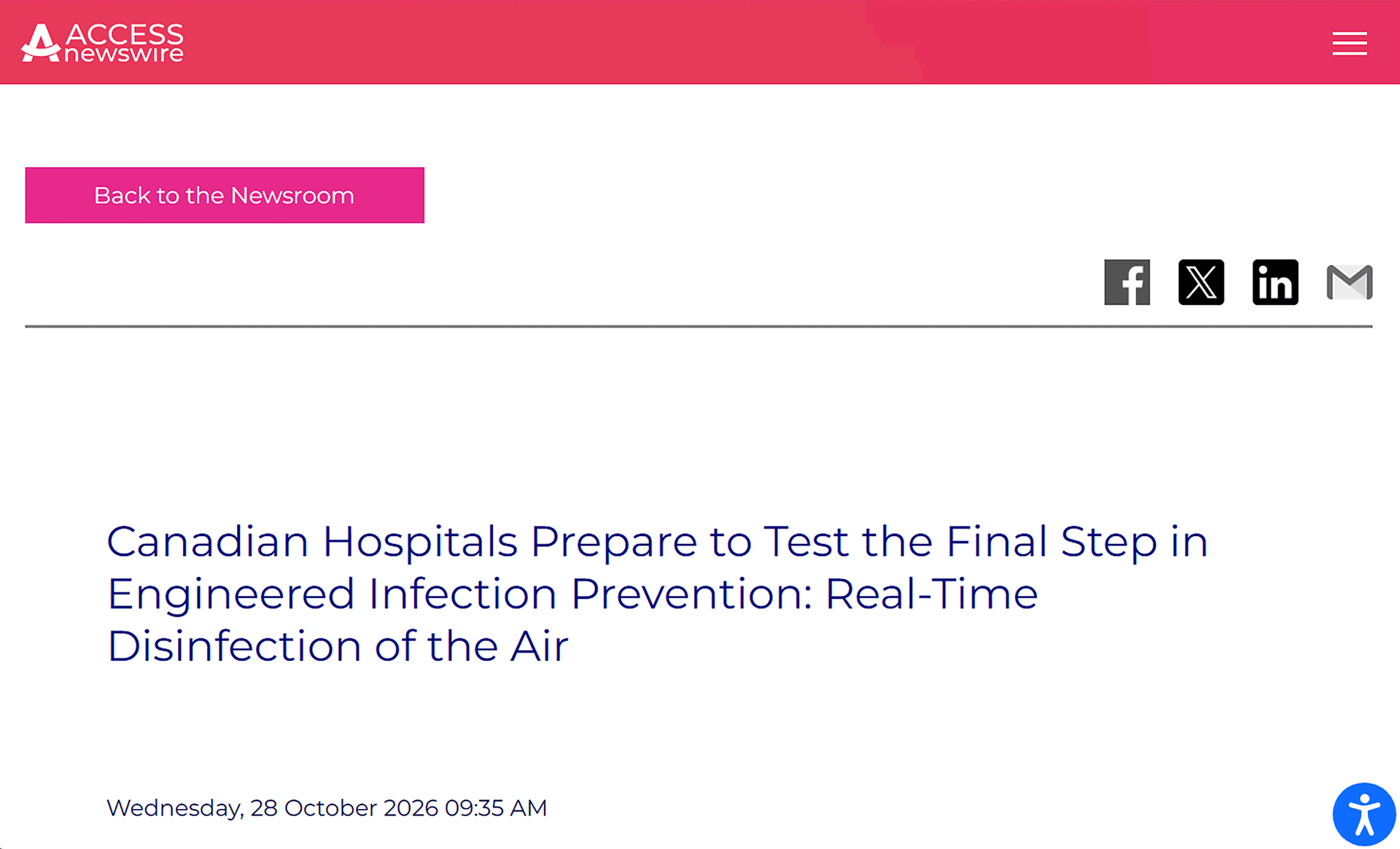
‘Canadian Hospitals Prepare to Test the Final Step in Engineered Infection Prevention (EIP): Real-Time Disinfection of the Air’ ~ Press Release.


© ACCESS Newswire (Canada).


❦ Canadian Hospitals Prepare to Test the Final Step in Engineered Infection Prevention (EIP): Real-Time Disinfection of the Air


By ACCESS Newswire (28 Oct 2026)


‘CHAIR announces facility-wide pilots of SaniLume upper-air UV with Winnipeg’s Health Sciences Centre and British Columbia’s PHSA, building on University of Leeds results showing up to 99.7% reduction of airborne pathogens.’


‘xxx White xxx light xxx


xxx.’


✾ SIMCOE, ONTARIO / ACCESS Newswire:


‘The Coalition for Community & Healthcare Acquired Infection Reduction (CHAIR) today announced a national pilot program to test whether continuous, real-time disinfection of hospital air can measurably reduce airborne pathogens, surface contamination and the spread of respiratory viral illness in Canadian hospitals.


The program will evaluate SaniLume, a Canadian-made, Health Canada-registered, fan-assisted upper-air ultraviolet (UV) device manufactured by Ottawa-based Illumisoft, in facility-wide installations. CHAIR has signed letters of intent with Shared Health and Winnipeg’s Health Sciences Centre, and with the Provincial Health Services Authority (PHSA) in British Columbia.’


✾ The final step in engineered infection prevention


‘For more than a decade, Canadian hospitals have been adopting engineered infection prevention (EIP): controls built into the environment so that protection does not depend solely on human behaviour.


Each step has taken on a different route of transmission:


  • Automated UV room disinfection gave hospitals a reliable, no-touch way to disinfect bathrooms after every use and procedure rooms between occupants.


  • Self-disinfecting sinks addressed the hand hygiene sink as a reservoir of drug-resistant organisms such as Candida auris and carbapenem-resistant Enterobacterales.


  • Self-disinfecting surfaces, such as antimicrobial copper, reduced contamination on bed rails, overbed tables, door handles and other high-touch points.


Each of these measures protects patients between exposures.


However, none of them treats the air patients and staff breathe while care is underway.


Respiratory viruses such as influenza, COVID-19 and RSV spread through shared indoor air, often from people who do not yet know they are infected.


According to weekly reporting by Public Health agency of Canada, up to 40% of hospital patients with COVID or Flu acquire their disease while in hospital.


“We have engineered our way to cleaner rooms, cleaner sinks and cleaner surfaces,” said Barry Hunt, Co-Founder and Executive Director of CHAIR.


“The air is the last and most important piece. Real-time disinfection of the air, continuously, while patients and staff are in the room, is the step that ties the whole system together.


That is what this program is designed to prove.”.


✾ The laboratory evidence


In testing at the University of Leeds aerobiology chamber, reported by Dr. Louise Fletcher of the School of Civil Engineering in August 2022, SaniLume reduced airborne concentrations of Staphylococcus aureus, Pseudomonas aeruginosa and the virus surrogate Phi-6 bacteriophage by 97% to 98% at its lowest aperture setting and by 99.1% to 99.7% at its maximum setting.


Organisms were released continuously into a patient-sized room ventilated at 6 air changes per hour while the device ran, so the results reflect real-time protection while the source of contamination is still present.


The Leeds report described SaniLume as the best-performing upper-room UV device tested in its chamber to date.


SaniLume delivered between 216 and 1,994 equivalent air changes per hour (ACH), depending on organism and setting.


The best single upper-room device previously tested at Leeds was estimated at about 8 to 12 ACH.


“SaniLume is roughly 15 to 30 times the air disinfection of the best upper-room devices previously tested at Leeds, and about 300 times that of typical ceiling-mounted units,” said Hunt. “That is why we are excited to put it to the test in real hospitals. We intend to initiate these studies in November, subject to funding.”


“Our goal is to give hospitals a practical way to continuously disinfect the air while patients and staff remain in the room,” said Ehsan Agahi, CEO of Illumisoft.


“We have worked closely with CHAIR in developing this program. The proposed research is intended to help hospitals assess SaniLume’s performance in clinical settings, understand its operational value and make informed decisions about potential broader adoption.”


✾ Why this matters


Roughly one in ten hospital inpatients acquires an infection during their stay.


A patient who would have stayed one week may stay two or three.


As a result, as many as one in five hospital beds can be occupied by someone who was infected in hospital.


Those blocked beds back up emergency departments and delay care for everyone else.


“Allowing 10% of our patients to get infected is unsustainable,” said Hunt.


“The cost is simply too high. Billions of dollars are spent on treatment, and many billions more are lost to the inefficiency of blocked beds.”


Each new hospital bed costs about CAN$1 million to build – and another CAN$500K to CAN$1 million annually to staff and operate.


Protecting a bed with upper-air UV costs about CAN$5,000 initially and a few hundred dollars a year to maintain and operate.


Between 10,000 and 20,000 Canadian hospital beds are blocked on any given day, and CHAIR believes universal airborne protection could cut that number in half.


The pilot is designed to test that hypothesis with measured data.


✾ 13 studies, one co-ordinated program


The pilot project combines facility-wide installations with 13 linked studies starting with two studies in partnership with the University of Waterloo:


  • A large bioaerosol chamber study comparing 6 air changes per hour against 3 air changes per hour plus upper-air UV, each challenged with real-time exposure to influenza and coronavirus. HVAC is the single largest energy consumer in healthcare – and it could potentially be cut in half while significantly increasing airborne protection with UV.


  • A computational fluid dynamics (CFD) study modelling how air moves through patient rooms, waiting rooms and clinical spaces while being treated with upper-air UV to inform the healthcare design community and future CSA standards.


Other studies will cover real-time airborne monitoring of particles, bacteria, and viruses in clinical spaces, surface contamination, infection outcomes, staff and operational impacts, and health economics.


✾ What the program will measure


CHAIR’s targets for the program are:


  • More than 90% reduction of airborne pathogens, measured in real time in clinical spaces;


  • More than 50% reduction in surface contamination; and


  • More than 30% reduction in onward transmission of respiratory viral illness, including influenza, COVID-19 and RSV.


Airborne measurements are the primary outcome.


Infection, operational and economic outcomes will be analyzed against baseline conditions and will inform provincial capital planning and future CSA national standards.


✾ Built on a decade of standards and partnership


CHAIR was founded in 2014 by Barry Hunt and Richard Dixon to advance engineered solutions to healthcare- and community-acquired infection.


Its members, a coalition of scientists, physicians, engineers and infection prevention professionals, have been active volunteer contributors to Canada’s national standards for healthcare facilities:


  • CSA Z8000, Canadian health care facilities. The first edition in 2011 required single-patient rooms in new hospitals and specified hand hygiene sinks designed to reduce splash and aerosolization. The 2024 edition requires sinks engineered to prevent biofilm and the release of pathogenic bioaerosols. It also directs planners to consider new and emerging infection prevention technologies, and it includes a dedicated annex on UV disinfection covering device types, commissioning, maintenance, safety and training.


  • CSA’s 2015 guidance on evaluating emerging infection prevention technologies, which set out how hospitals can assess innovations like UV and self-disinfecting surfaces.


  • CSA Z317.12, Cleaning and disinfection of health care facilities, and CSA Z94.4, Selection, use and care of respirators, where CHAIR continues to contribute to the current revisions.


CHAIR has also worked with provincial ministries of health and health authorities to bring engineered controls from the standards page into hospitals.


“Ontario, British Columbia and Manitoba have been leaders in the adoption of engineered infection prevention in Canada,” said Hunt.


“Their willingness to look at the evidence and act on it has helped make Canada a world leader in hospital design. We thank them, and we thank our partners at Shared Health, Health Sciences Centre and PHSA for helping take the next step.”


✾ About CHAIR


The Coalition for Community & Healthcare Acquired Infection Reduction (CHAIR) is a Canadian not-for-profit coalition of scientists, physicians, engineers and other stakeholders.


Its mission is to inspire and guide engineered solutions to infection, with a vision of safe spaces, free from pathogens.


CHAIR’s work spans upper-air UV, automated UV room disinfection, sinks, ventilation and filtration, antimicrobial surfaces, occupational respiratory protection and CSA standards development.’


✾ Media contact


➲ Barry Hunt | barry@chaircoalition.org | (519) 749-5267 | www.chaircoalition.org ➤


✾

✾


More... on Hospitals, Nosocomial Infections (HAI), Patients, and the Medical Workforce
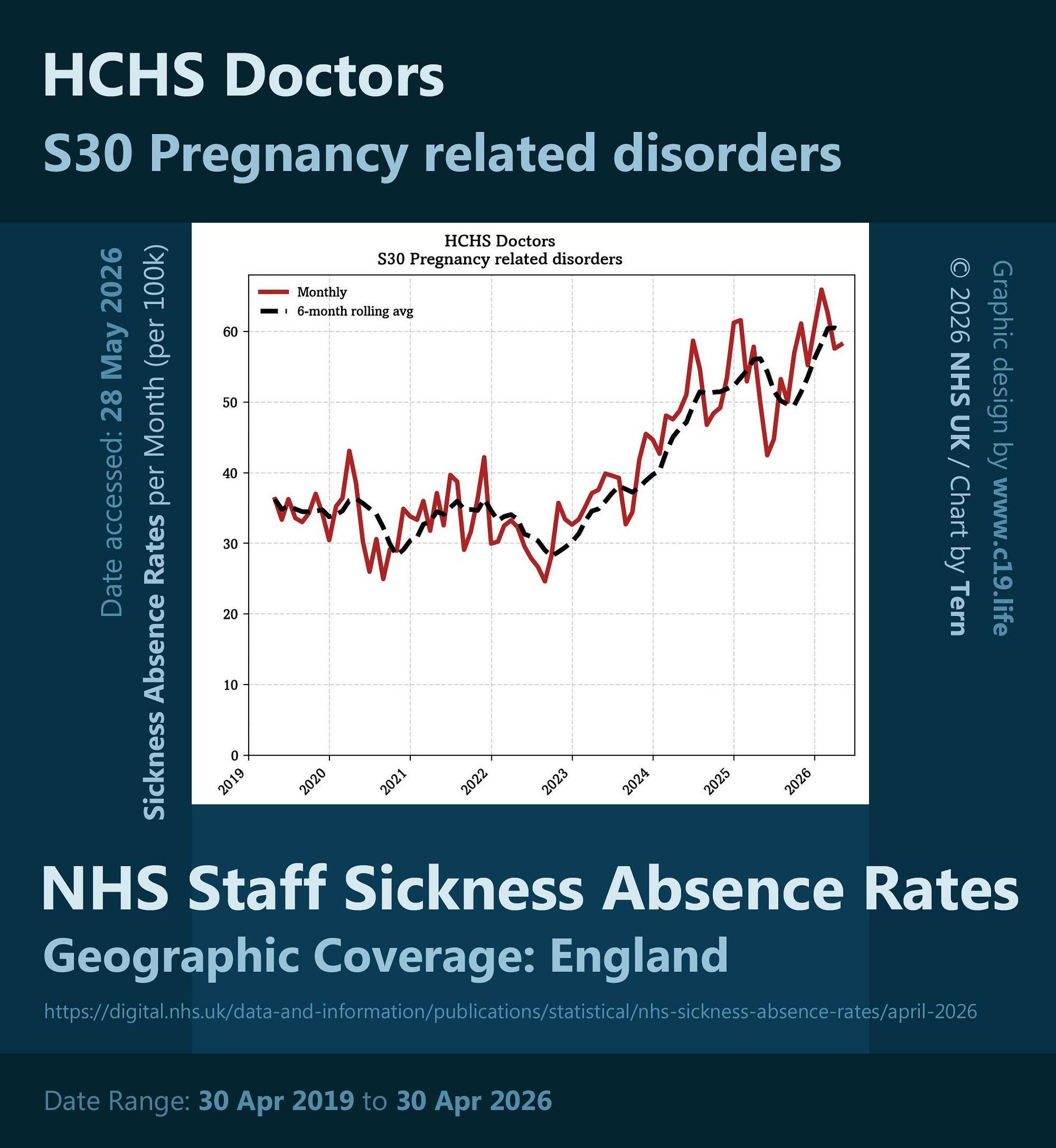

by National Health Service (NHS) England / Charts by Tern / Graphics by C19.Life • Data accessed 28 May 2026 • 18 August 2026
— “What?! Binned by a cold?” NHS (England) Staff Sickness Absence Rates per Month (per 100k) by Staff Group and Condition 2019–2026.
by C Raina MacIntyre, Noor Bari et al / Respiratory Medicine • 13 February 2026
‘Breathing, speaking, coughing, and sneezing produce infectious aerosols in clinical environments. Coughing produces more aerosols than endotracheal intubation.’
'The Approved List of biological agents'. Advisory Committee on Dangerous Pathogens / UKHSA.
by United Kingdom Health Security Agency (UKHSA) / Health & Safety Executive (HSE) / Control of Substances Hazardous to Health Regulations (COSHH) / C19.Life • Accessed 23 Oct 2025 • 23 October 2025
The Health and Safety Executive (HSE) has designated SARS-CoV-2, the virus that causes COVID-19, a Hazard Group 3 (HG3) pathogen that can cause severe human disease. The United Kingdom’s Health Security Agency (UKHSA) classifies SARS-CoV-2 as a notifiable organism, and COVID-19 as a notifiable disease (2026).
by The British Occupational Hygiene Society ~ COSHH and Healthcare Respiratory Protection • 20 October 2025
‘FRSMs [Surgical Masks] have never been considered either adequate or suitable equipment for protection against inhalable or respirable risks under COSHH.’
by C19.Life • 20 October 2024
❦ If parents, and politicians and teachers, and healthcare workers and public health bodies wanted things to change, all they need do is read . It’s all there. But they don’t. They won’t. And they insist on their medical and scientific flat-earthing – hand-sanitiser for aerosol-transmitted disease – because they prefer the world to be flat. So let them walk off the edge of the world. [ Caveat: The earth is not flat, and doing nothing will not flatten the curve – but walk far enough, and you are likely to fall off a cliff.] © 2024 C19.Life
by Dempsey et al / BMJ Journals ~ Occupational and Environmental Medicine • 8 October 2024
‘This study included 5248 healthcare workers. While 33.6% reported prolonged COVID-19 symptoms consistent with PCS, only 7.4% reported a formal diagnosis of PCS. Fatigue, difficulty concentrating, insomnia, and anxiety or depression were the most common PCS [Post-COVID-19 Syndrome] symptoms. Baseline risk factors for reporting PCS included screening for common mental disorders, direct contact with COVID-19 patients, pre-existing respiratory illnesses, female sex and older age.’
‘The Ventilation and Warming of School Buildings’ (1887) by Gilbert B. Morrison.
by Gilbert B. Morrison (1887) • 10 April 2024
‘In those school-rooms where ventilation is imperfect and the air impure, six sevenths of the money expended to educate a child is wasted.’ ❂ The Ventilation and Warming of School Buildings (1887) By Gilbert B. Morrison Published by D. Appleton and Company, New York. 1887. Accessed 10 Apr 2024 Preface (p.xxii) ❦ ‘I am fully convinced that people are prematurely dying by thousands simply from a lack of correct and positive convictions concerning impure air; for, when the true nature of a danger is fully appreciated, the requisite means to avert it will generally be found.’ ❂ Chapter II: The Effects Of Breathing Impure Air (pp.20-23) ❦ ‘Impure air is also believed by the best authorities to be one of the principal causes of epidemics. Dr. Carpenter, than whom there is no abler authority, says: “It is impossible for anyone who carefully examines the evidence to hesitate for a moment in the conclusion that the fatality of epidemics is almost invariably in precise proportion to the degree in which an impure atmosphere has been habitually respired.” The Board of Health of New York conclude that forty per cent of all deaths are caused by breathing impure air. In view of such alarming facts, this same board declares: “Viewing the causes of preventable diseases, and their fatal results, we unhesitatingly state that the first sanitary want in New York and Brooklyn is ventilation .” Direct experiment proves that the air in our school-rooms is impure in almost all cases, and in a majority of them to a degree far beyond the danger line. In view of these facts, and the results as proved by the authorities above cited, why is it regarded by the public with such indifference? When a school-house is blown down by a hurricane, killing and maiming a score of children, it is justly regarded as a great calamity; a vacation is given to quiet the excited fears of parents and children; investigating committees are appointed to locate the responsibility, and the faces of the whole populace are blanched with apprehension. Why is this? Why does the intelligent parent send his child to a school-room poorly ventilated and crowded with children, some of whom are breathing into a stagnant air the germs of disease and death, while others, from unwashed bodies, are delivering into it their deadly emanations, and all without a protest on the part of those even who provide proper hygienic conditions at home? It is because the effects of the one are immediate, occupy little time, the number killed can be actually counted, and the exact magnitude of the calamity estimated all at once. In the other case the process is slower, but of far greater extent; the actual results are by the general public less definitely known, and custom and attention to other matters divert the attention, and the deadly destruction of the innocents by impure air goes on silently, constantly, and powerfully. While noisy demonstrations like that of the cyclone attract attention, and inspire fear and terror, it is in the silent forces that the danger lies. Nature’s most destructive forces, as well as her strongest constructive ones, are silent in their operations; but when Science detects a silent, insidious enemy to human welfare, it is not only our duty to assume an attitude of self-defense and self-protection, but it should be regarded as folly not to do so.’ ❦ On high CO₂ levels connected to poor performance in schools: ‘The effects of breathing impure air thus far considered are pathological, but it has its pedagogical and economical aspects. Every observing teacher knows the immediate relation between the vitiated air in the school-room and the work he wishes the pupils to perform. Much of the disappointment of poor lessons and the tendency to disorder are due directly to this cause. The brain unsupplied with a proper amount of pure blood [oxygen] refuses to act, and the will is powerless to arouse the flagging energies; the general feeling of discomfort, dissatisfaction, and unrest which always accompanies a bad state of the blood. From an economical standpoint it would, of course, be impossible to estimate the financial waste of breathing impure air, but it can not but be enormous. In any discussion of the feasibility of incurring the additional expense of the most perfect ventilation, this loss occasioned by the want of such ventilation must not be ignored.’ ❂ Chapter III: The Air (pp.25-26) ❦ On ventilation, air filtration, and the super-spreading of diverse diseases in classrooms: ‘Wherever an unusual amount of unwholesome matter is being evolved, there especially should the purifying conditions be present; air in such places, to remain pure, must be changed in rapid succession, in order that dilution, diffusion, and oxidation may fulfill their legitimate functions. In a school-room the contaminating process can not but be rapid, and wherever ample provision is not made for rapidly changing the air of the room a dangerous condition of affairs is sure to exist. Bacteria of many forms, and spores of fungi, are also found in the air, and all these organisms are known to thrive in the organic impurities found in the air.’ ❂ Chapter IV: Examination Of The Air (p.33) ❦ On measuring CO₂ levels as a proxy to establishing content of (infectious) re-breathed air: ‘A complete analysis of impure air comprehends the quantitative and qualitative tests for carbonic [sic] dioxide, free ammonia, and other nitrogenous matter, oxidizable matters, nitrous and nitric acids, and hydrogen sulphide; but for ordinary practical purposes the determination of the CO₂ is by far the most important, and is ordinarily the only one which need be made. While the poisonous qualities of the air are not wholly due to the presence of the CO₂ per se, the amount of this gas found to be present is, in air made impure by respiration, generally a good measure for other impurities to which the poisonous quality is principally due. Owing to this fact, a careful test for the amount of CO₂ contained in a given atmosphere is generally the only one which need be made where air is tested merely to determine its respiratory purity.’ ❂ 📖 (Accessed 10 Apr 2024 ~ D. Appleton & Company / Google Books) The Ventilation and Warming of School Buildings ➤ ❂ My thanks to Maarten De Cock for alerting me to this gem of a book. ➲
COVID is Airborne
by Jonathan Mesiano-Crookston.. et al • 4 March 2024
❦ A comprehensive collection of review articles from 1987 to 2022 regarding airborne transmission of pathogens , curated by Jonathan Mesiano-Crookston. ❂ Accessed : 4 March 2024 . 📖 (November 2022 ~ Geoscience Frontiers) Aerosol Transmission of Human Pathogens: From Miasmata to Modern Viral Pandemics and Their Preservation Potential in the Anthropocene Record ➤ 📖 (21 Aug 2022 ~ Indoor Air) What were the historical reasons for the resistance to recognizing airborne transmission during the COVID-19 pandemic? ➤ 📖 (31 Jan 2022 ~ Indoor Air: Editorial) Hypothesis: All respiratory viruses (including SARS-CoV-2) are aerosol-transmitted ➤ 📖 (November 2021 ~ Interface Focus) How Did We Get Here: What Are Droplets and Aerosols and How Far Do They Go? A Historical Perspective on the Transmission of Respiratory Infectious Diseases➤ 📖 (27 Aug 2021 ~ Science ) Airborne Transmission of Respiratory Viruses ➤ 📖 (August 2021 ~ Nature Reviews: Microbiology) Transmissibility and Transmission of Respiratory Viruses ➤ 📖 (July 2021 ~ Annual Review of Biomedical Engineering) Fluid Dynamics of Respiratory Infectious Diseases ➤ 📖 (14 May 2021 ~ Science) A Paradigm Shift to Combat Indoor Respiratory Infection ➤ 📖 (1 May 2021 ~ The Lancet) Ten Scientific Reasons in Support of Airborne Transmission of SARS-CoV-2 ➤ 📖 (18 Jan 2021 ~ Clinical Infectious Diseases) Airborne Transmission of SARS-CoV-2: What We Know ➤ 📖 (12 Jan 2021 ~ The Journal of Hospital Infection) Dismantling Myths on the Airborne Transmission of Severe Acute Respiratory Syndrome Coronavirus-2 (SARS-CoV-2) ➤ 📖 (1 Jan 2021 ~ Canadian Medical Association Journal) Mitigating Airborne Transmission of SARS-CoV-2 ➤ 📖 (November 2020 ~ Environment International) Aerosol Transmission of SARS-CoV-2? Evidence, Prevention and Control➤ 📖 (16 Oct 2020 ~ Science) Airborne Transmission of SARS-CoV-2 ➤ 📖 (1 Sep 2020 ~ Environment International) How Can Airborne Transmission of COVID-19 Indoors Be Minimised? ➤ 📖 (August 2020 ~ Anaesthesia) Airborne Transmission of Severe Acute Respiratory Syndrome Coronavirus-2 to Healthcare Workers: A Narrative Review ➤ 📖 (6 July 2020 ~ Clinical Infectious Diseases) It Is Time to Address Airborne Transmission of Coronavirus Disease 2019 (COVID-19) ➤ 📖 (June 2020 ~ Environment International) Airborne Transmission of SARS-CoV-2: The World Should Face the Reality➤ 📖 (May 2020 ~ Risk Analysis) Consideration of the Aerosol Transmission for COVID‐19 and Public Health➤ 📖 (16 April 2020 ~ The Journal of Infectious Diseases) Airborne or Droplet Precautions for Health Workers Treating Coronavirus Disease 2019? ➤ 📖 (26 March 2020 ~ JAMA) Turbulent Gas Clouds and Respiratory Pathogen Emissions: Potential Implications for Reducing Transmission of COVID-19 ➤ 📖 (28 Aug 2019 ~ Encyclopedia of Microbiology) Airborne Infectious Microorganisms ➤ 📖 (31 Jan 2019 ~ BMC Infectious Diseases) Recognition of Aerosol Transmission of Infectious Agents: A Commentary➤ 📖 (September 2016 ~ American Journal of Infection Control) Generic Aspects of the Airborne Spread of Human Pathogens Indoors and Emerging Air Decontamination Technologies ➤ 📖 (15 Nov 2011 ~ Advances in Preventive Medicine) Preventing Airborne Disease Transmission: Review of Methods for Ventilation Design in Health Care Facilities ➤ 📖 (October 2006 ~ The Journal of Hospital Infection) Factors Involved in the Aerosol Transmission of Infection and Control of Ventilation in Healthcare Premises ➤ 📖 (January 1987 ~ Critical Reviews in Environmental Control) Spread of Viral Infections by Aerosols➤ ✾ © 2024 Jonathan Mesiano-Crookston ➤
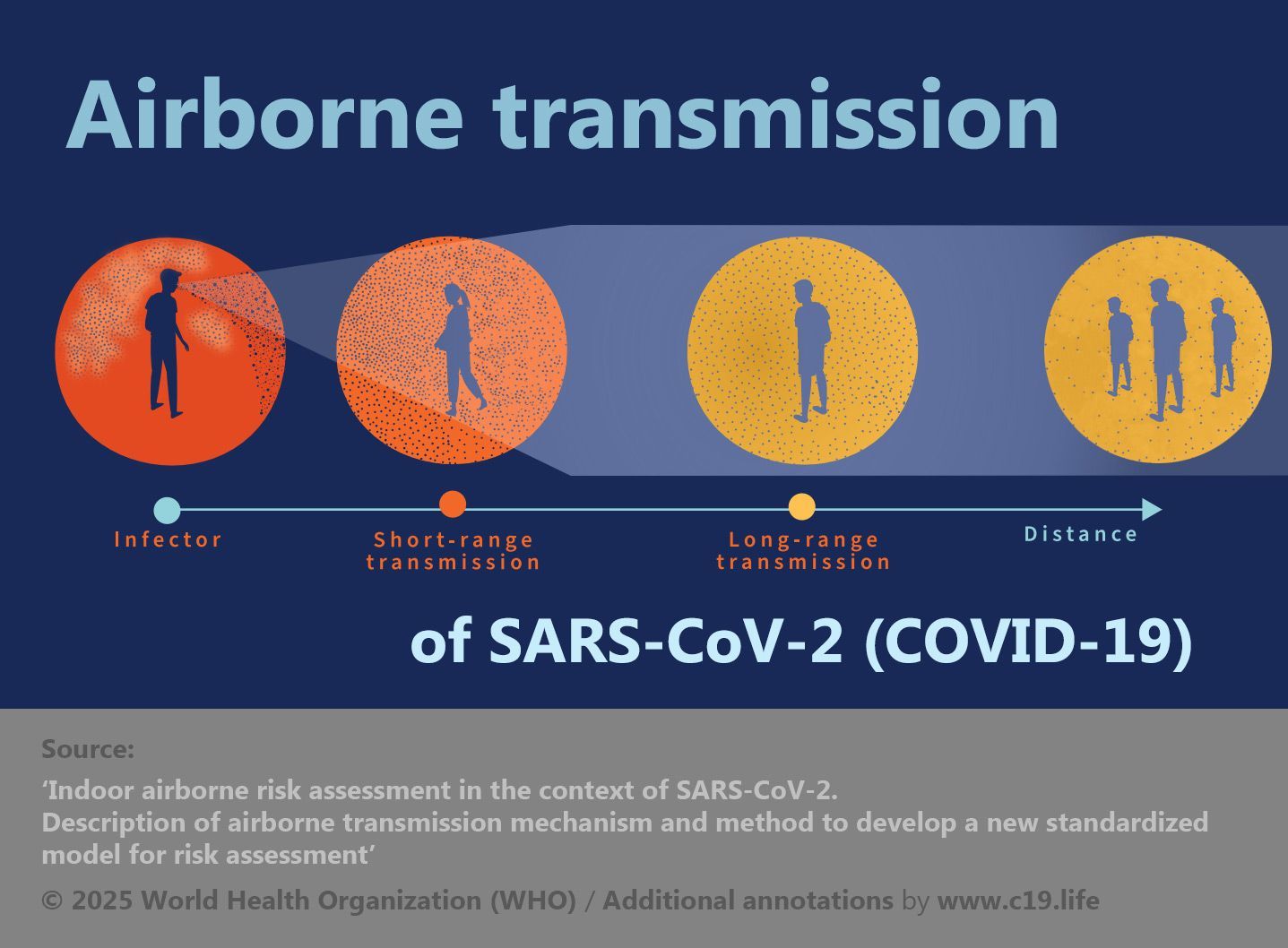
Infographic illustrating short- and long-range airborne aerosol transmission of SARS-CoV-2 COVID-19.
by C19.Life • 28 February 2024
In late October 2020 , the World Health Organization ( WHO ) belatedly admitted that SARS-CoV-2 – the virus that causes COVID-19 – is airborne . SARS-CoV-2 is airborne , without any shadow of scientific doubt – and is primarily and predominantly transmitted via infectious microscopic aerosols through the air at both short and long range . To extol hand-washing as a primary defence against SARS-CoV-2 infection is about as stupid as promising a two-pack-a-day smoker that the simple formula of soap + water will prevent chronic obstructive pulmonary disease and lung cancer.
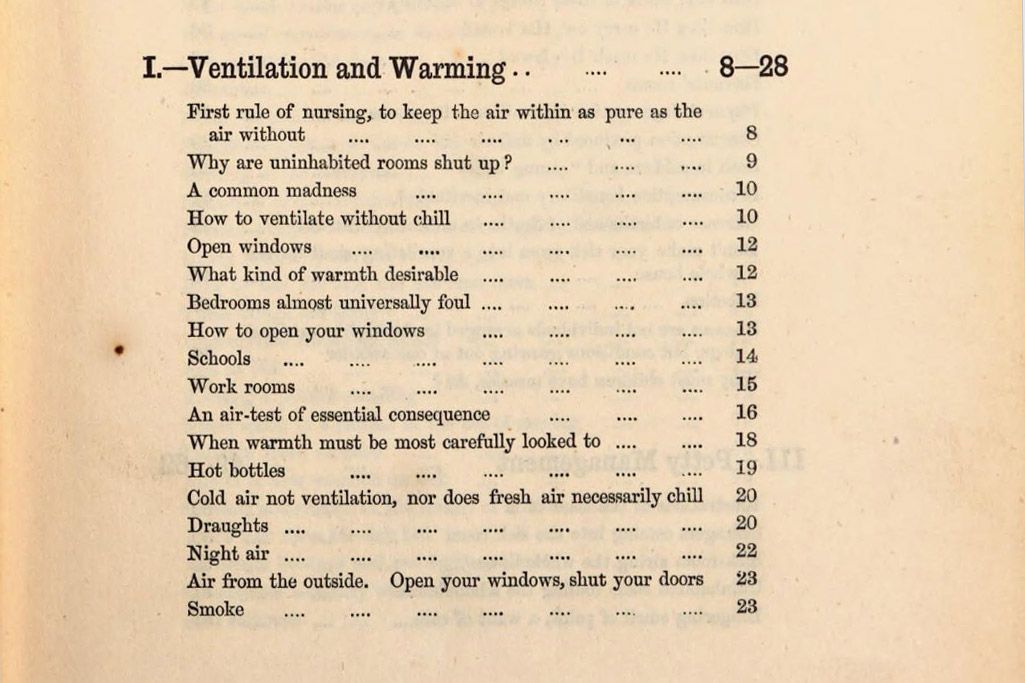
by Florence Nightingale (1859/1860) • 19 February 2024
‘The very first canon of nursing... the first essential to the patient... is this: to keep the air he breathes as pure as the external air, without chilling him .’ ❂ Notes on Nursing (1860 edition) By Florence Nightingale First Published 1859. Revised edition reprinted in 1860 by Harrison of Pall Mall Accessed 19 Feb 2024 ❦ Chapter I – Ventilation and Warming ‘The very first canon of nursing, the first and the last thing upon which a nurse’s attention must be fixed, the first essential to the patient, without which all the rest you can do for him is as nothing, with which I had almost said you may leave all the rest alone, is this: TO KEEP THE AIR HE BREATHES AS PURE AS THE EXTERNAL AIR, WITHOUT CHILLING HIM. Yet what is so little attended to? Even where it is thought of at all, the most extraordinary misconceptions reign about it. Even in admitting air into the patient’s room or ward, few people ever think where that air comes from. It may come from a corridor into which other wards are ventilated, from a hall, always unaired, always full of the fumes of gas, dinner, of various kinds of mustiness; from an underground kitchen, sink, wash-house, water-closet, or even, as I myself have had sorrowful experience, from open sewers loaded with filth; and with this the patient’s room or ward is aired, as it is called – poisoned, it should rather be said. Always air from the air without, and that, too, through those windows, through which the air comes freshest. From a closed court, especially if the wind do not blow that way, air may come as stagnant as any from a hall or corridor. I know an intelligent humane house surgeon who makes a practice of keeping the ward windows open. The physicians and surgeons invariably close them while going their rounds; and the house surgeon, very properly, as invariably opens them whenever the doctors have turned their backs. I have known a medical officer keep his ward windows hermetically closed, thus exposing the sick to all the dangers of an infected atmosphere, because he was afraid that, by admitting fresh air, the temperature of the ward would be too much lowered. This is a destructive fallacy. To attempt to keep a ward warm at the expense of making the sick repeatedly breathe their own hot, humid, putrescing atmosphere is a certain way to delay recovery or to destroy life.’ ❂ ‘I have known cases of hospital pyæmia quite as severe in handsome private houses as in any of the worst hospitals, and from the same cause, viz., foul air. Yet nobody learnt the lesson. Nobody learnt anything at all from it.’ ❂ ✪ C-19: On schools ‘Of all places, public or private schools, where a number of children or young persons sleep in the same dormitory * , require this test of freshness to be constantly applied.’ * [ C-19 Note: You might substitute ‘sleep’ and ‘dormitory’ with ‘study’ and ‘classroom’ in this section.] ‘If it be hazardous for two children to sleep together in an unventilated bedroom, it is more than doubly so to have four, and much more than trebly so to have six under the same circumstances. People rarely remember this; yet, if parents were as solicitous about the air of school bedrooms as they are about the food the children are to eat, and the kind of education they are to receive, at school, depend upon it due attention would be bestowed on this vitally important matter, and they would cease to have their children sent home either ill, or because scarlet fever or some other “current contagion” had broken out in the school. There are schools where attention is paid to these things, and where “children’s epidemics” are unknown.’ ❂ ✪ C-19: Offices, shops, factories, and other workplaces ‘How much sickness, death, and misery are produced by the present state of many factories, warehouses, workshops, and workrooms!’ ‘How much sickness, death, and misery are produced by the present state of many factories, warehouses, workshops, and workrooms! The places where poor dressmakers, tailors, letter-press printers, and other similar trades have to work for their living, are generally in a worse sanitary condition than any other portion of our worst towns. Many of these places of work were never constructed for such an object. They are badly adapted garrets, sitting-rooms, or bedrooms, generally of an inferior class of house. No attention is paid to cubic space or ventilation. The poor workers are crowded on the floor to a greater extent than occurs with any other kind of over-crowding. The constant breathing of foul air, saturated with moisture, and the action of such air upon the skin renders the inmates peculiarly susceptible of the impression of cold, which is an index indeed of the danger of pulmonary disease to which they are exposed. The result is, that they make bad worse, by over-heating the air and closing up every cranny through which ventilation could be obtained. In such places, and under such circumstances of constrained posture, want of exercise, hurried and insufficient meals, long exhausting labour and foul air – is it wonderful that a great majority of them die early of chest disease, generally of consumption? Intemperance is a common evil of these workshops. The men can only complete their work under the influence of stimulants, which help to undermine their health and destroy their morals, while hurrying them to premature graves. Employers rarely consider these things. Healthy workrooms are no part of the bond into which they enter with their work-people. They pay their money, which they reckon their part of the bargain. And for this wage the workman or workwoman has to give work, health, and life. Do men and women who employ fashionable tailors and milliners ever think of these things? And yet the master is no gainer. His goods are spoiled by foul air and gas fumes, his own health and that of his family suffers, and his work is not so well done as it would be, were his people in health. And the time will come when it will be found cheaper to supply shops, warehouses, and work-rooms with pure air than with foul air.’ ‘And the time will come when it will be found cheaper to supply shops, warehouses, and work-rooms with pure air than with foul air.’ ❂ ✪ C-19: On ‘air-tests’, and measuring CO₂ as a proxy for estimating prevalence of airborne disease indoors ‘Dr. Angus Smith’s air-test, if it could be made of simple application, would be invaluable to use in every sleeping and sick room. Just as without the use of a thermometer no nurse should ever put a patient into a bath, so, if this air-test were made in some equally simple form, should no nurse, or mother, or superintendent, be without it in any ward, nursery, or sleeping-room. But to be used, the air-test must be made as simple a little instrument as the thermometer, and both should be self-registering. ‘...the air-test must be made as simple a little instrument as the thermometer, and both should be self-registering.’ The senses of nurses and mothers become so dulled to foul air that they are perfectly unconscious of what an atmosphere they have let their children, patients, or charges sleep in. But if the tell-tale air-test were to exhibit in the morning, both to nurses and patient and to the superior officer going round, what the atmosphere has been during the night, I question if any greater security could be afforded against a recurrence of the misdemeanour.’ ❂ ✪ C-19: ... And back to the school-room, testing its air, and combatting airborne pathogens ‘And, oh! the crowded national school! where so many children’s epidemics have their origin; and the crowded, unventilated work-room, which sends so many consumptive men and women to the grave; what a tale its air-test would tell! We should have parents saying, and saying rightly, “I will not send my child to that school. I will not trust my son or my daughter in that tailor’s or milliner’s workshop, the air-test stands at ‘Horrid.’” ‘We should have parents saying, and saying rightly, “I will not send my child to that school... the air-test stands at Horrid .”’ And the dormitories of our great boarding schools! Scarlet fever would be no more ascribed to contagion but to its right cause, the air-test standing at “Foul.” We should hear no longer of “mysterious dispensations,” nor of “plague and pestilence” being “in God’s hands,” when, so far as we know, He has put them into our own. The little air-test would both betray the cause of these “mysterious pestilences,” and call upon us to remedy it.’ ❂ ❦ Chapter II – Health of Houses ‘There are five essential points in securing the health of houses:– Pure air. Pure water. Efficient drainage. Cleanliness. Light. Without these, no house can be healthy. And it will be unhealthy just in proportion as they are deficient. To have pure air, your house must be so constructed as that the outer atmosphere shall find its way with ease to every corner of it. ‘To have pure air, your house must be so constructed as that the outer atmosphere shall find its way with ease to every corner of it.’ House architects hardly ever consider this. The object in building a house is to obtain the largest interest for the money, not to save doctor’s bills to the tenants. But, if tenants should ever become so wise as to refuse to occupy unhealthily constructed houses, and if Insurance Companies should ever come to understand their interest so thoroughly as to pay a Sanitary Surveyor to look after the houses where their clients live, speculative architects would speedily be brought to their senses. As it is, they build what pays best. And there are always people foolish enough to take the houses they build. And if in the course of time the families die off, as is so often the case, nobody ever thinks of blaming any but Providence for the result. Ill-informed medical men aid in sustaining the delusion, by laying the blame on “current contagions”. Badly constructed houses do for the healthy what badly constructed hospitals do for the sick.’ ‘Badly constructed houses do for the healthy what badly constructed hospitals do for the sick.’ ❂ ❦ Conclusion ‘The whole of the preceding remarks apply even more to children and to puerperal women than to patients in general. They also apply to the nursing of surgical, quite as much as to that of medical cases. Indeed, if it be possible, cases of external injury require such care even more than sick. In surgical wards, one duty of every nurse certainly is prevention. Fever, or hospital gangrene, or pyæmia, or purulent discharge of some kind may else supervene. If she allows her ward to become filled with the peculiar close fœtid smell, so apt to be produced among surgical cases, especially where there is great suppuration and discharge, she may see a vigorous patient in the prime of life gradually sink and die where, according to all human probability, he ought to have recovered. The surgical nurse must be ever on the watch, ever on her guard, against want of cleanliness, foul air, want of light, and of warmth.’ ‘In surgical wards, one duty of every nurse certainly is prevention.’ ❂ 📖 (Accessed 19 Feb 2024 ~ Original text copied from FiftyWordsForSnow.com) Notes on Nursing (1860) ➤ 📖 (Accessed 19 Feb 2024 ~ Original scanned pages from Google Books) Notes on Nursing (1860) ➤ ❂
by National Institutes for Health (NIH) / National Center for Biotechnology Information (NCBI) / U.S. National Library of Medicine (NLM USA) • 18 February 2024
❦ LitCovid is the most comprehensive online resource on SARS-CoV-2 / COVID-19, providing access to 417,800+ relevant articles on PubMed. The library of scientific articles is updated daily, and categorised by different research topics (e.g. transmission), as well as geographic locations. ➲ Date accessed: 18 Feb 2024 . ❂ ❦ Useful Categories ✪ Transmission ➤ Characteristics and modes of SARS-CoV-2 transmission. ✪ Prevention ➤ Prevention, control, response and management strategies. ✪ Long Covid ➤ Post-COVID-19 Conditions/Complications (PCC) / Post-Acute Sequelae of COVID-19 (PASC). ✪ Case Reports ➤ Descriptions of specific patient cases. ✪ Treatments ➤ Treatment strategies, therapeutic procedures, and vaccine development. ✪ Forecasting ➤ Modelling, and estimating the trend of SARS-CoV-2 spread. ❂ ➲ LitCovid Online Library ➤ © 2024 National Institutes for Health (NIH) / National Center for Biotechnology Information (NCBI) / U.S. National Library of Medicine (NLM USA).
by Cat in the Hat • 17 February 2024
❦ Mitigation = ‘Lessening the force or intensity of something unpleasant; the act of making a condition or consequence less severe.’ 1. Clean indoor air . The priority should be air filters in schools and hospitals . New ventilation and air filtration standards for all public spaces . Grants made available to businesses to upgrade ventilation and air filtration . 2. FFP2/3 [N95/N99] respirators (masks) in all healthcare settings . 3. Free Covid vaccines available to everyone. 4. Wider access to Covid anti-viral treatments . 5. Free LFT/PCR testing . 6. Improved Covid surveillance , including wastewater monitoring and Long Covid prevalence . 7. Paid sick-leave , so that people don’t go to work when ill. 8. Respirators (masks) on public transport , including flights . 9. Better support and treatments for Long Covid patients . ... and last, but by no means least: 10. A public education campaign on the long-term risks of Covid – and why people should do more to protect themselves. ❦ Addendum : Allocate adequate research funding for a sterilising vaccine as well as treatments/cure for Long Covid . ❂ © 2024 Cat in the Hat . ➲
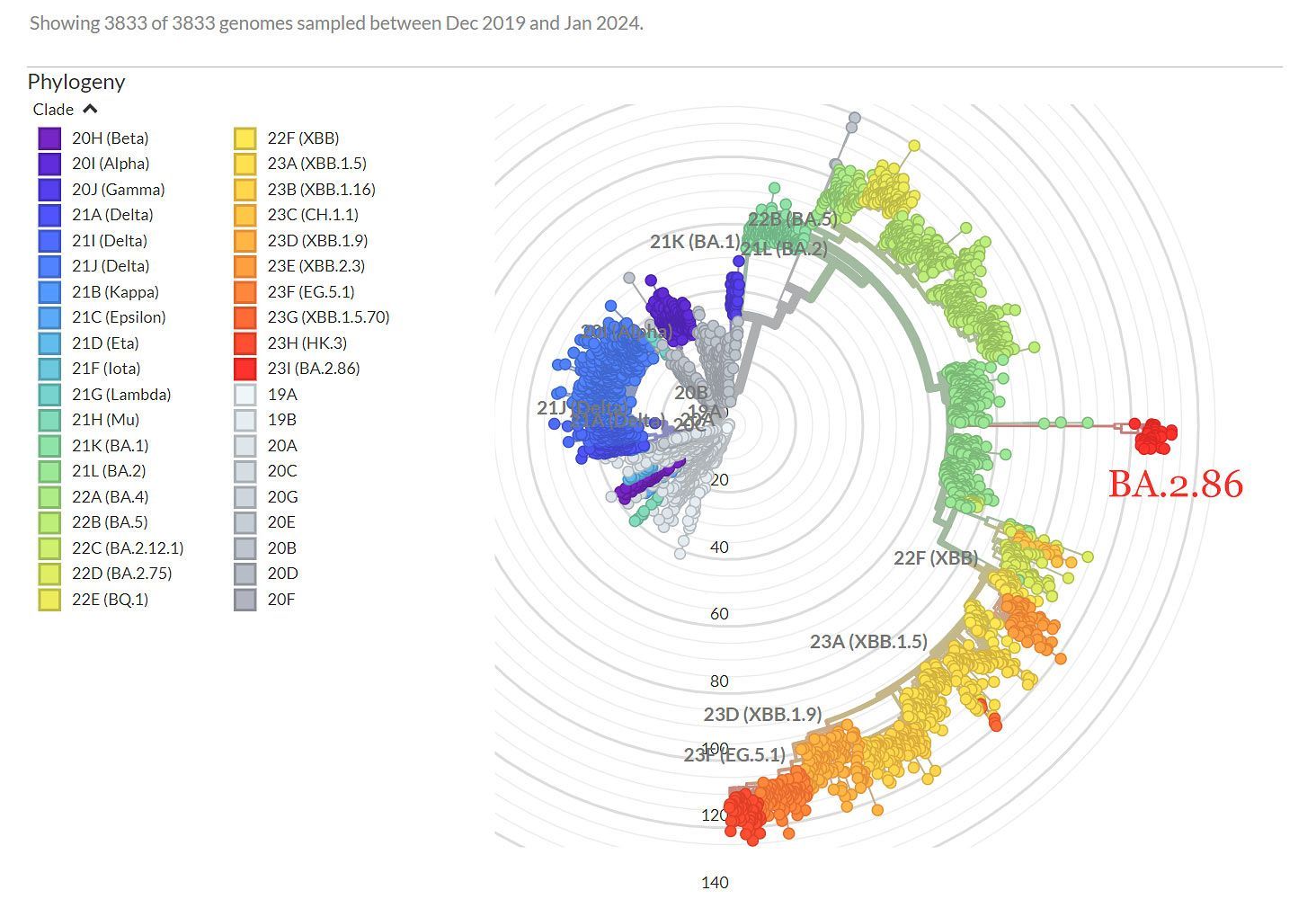
Genomic mapping of SARS-CoV-2 / COVID-19 variants and subvariants for 2020, 2021, 2022, 2023, 2024.
by NextStrain.org / GISAID.org • 21 January 2024
❦ Genomic epidemiology of SARS-CoV-2 with subsampling focused globally since pandemic start. All data and data visualisation by © 2025 NextStrain.org / GISAID.org .
by Professor Steve Robson MPH MD PhD ~ President, Australian Medical Association (AMA) • 20 January 2024
❦ “Every single case in which a person with COVID-19 infects another person in a healthcare setting – patient, relative, or hospital staff member – is a significant failure of hospital procedures. Every single instance .”
Show More Articles

More... on cumulative damage, SARS-CoV-2 infections, and increased risk of all-cause mortality
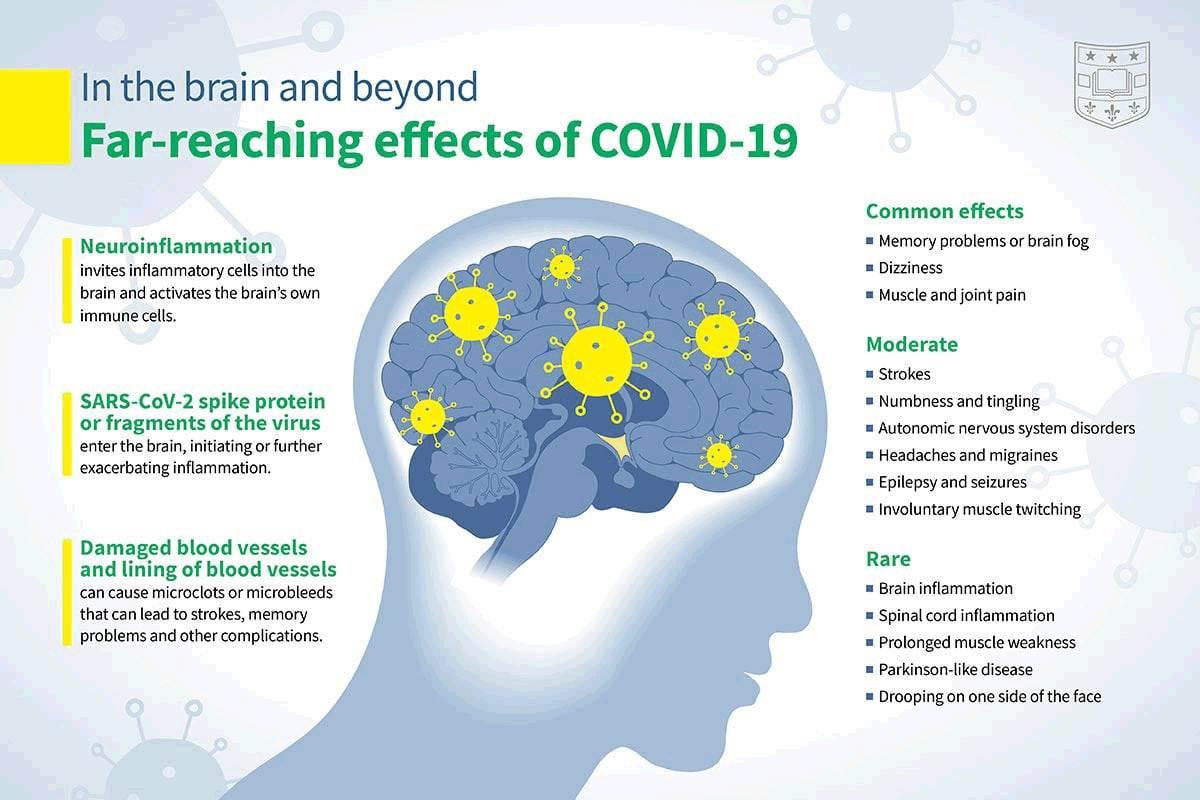

by C19.Life... et al • 21 November 2025
‘Although COVID-19 was originally considered a respiratory illness, it is now well established that SARS-CoV-2 infection can have far-reaching impacts on the nervous system. Common neurological symptoms in Long COVID [PASC] include new-onset cognitive difficulties, dysautonomia, fatigue, and peripheral neuropathy.’ from ‘Neuroimmune pathophysiology of long COVID’ by Moen et al / Psychiatry and Clinical Neurosciences (2025).
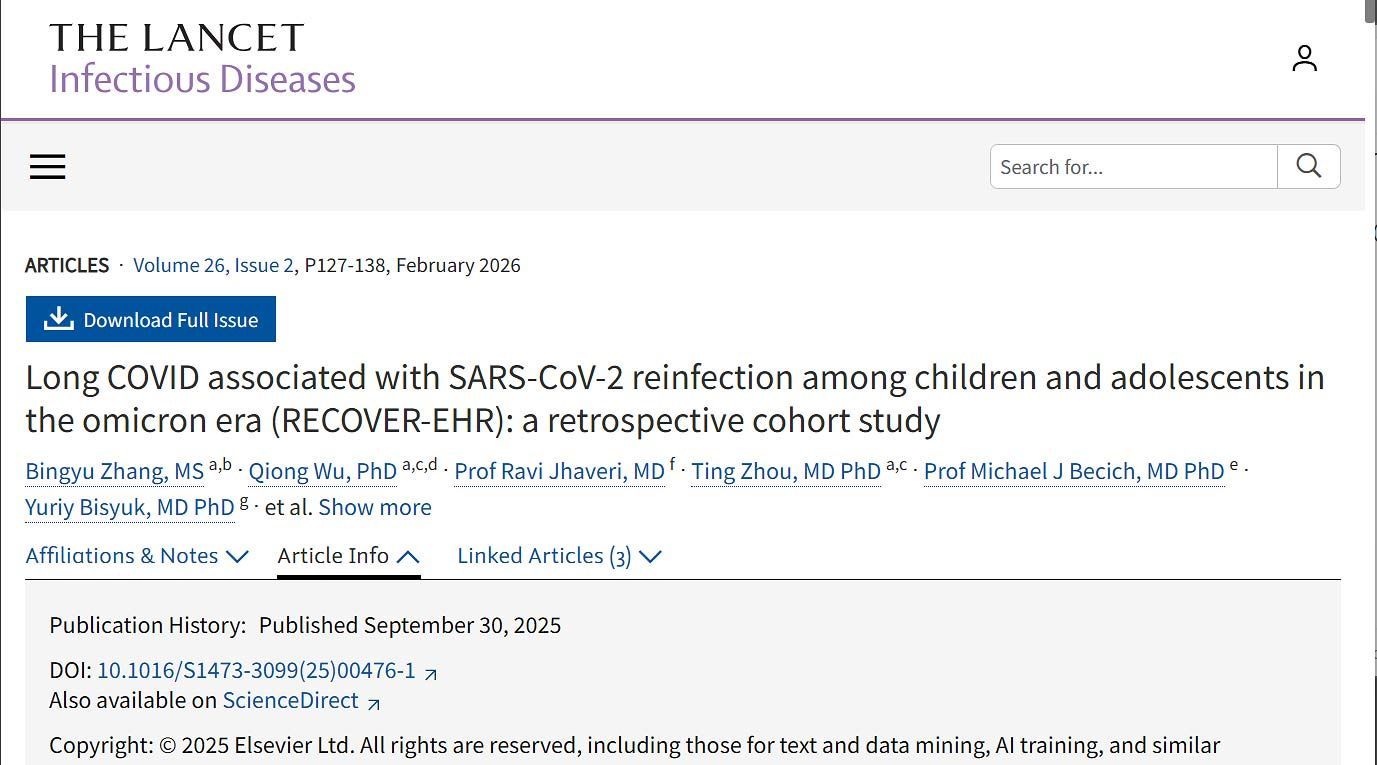
by Zhang et al / The Lancet: Infectious Diseases • 30 September 2025
‘Children and adolescents face a significantly higher risk of various PASC outcomes after reinfection with SARS-CoV-2. Our paediatric findings also align with adult studies.  Research in adults shows that long COVID [PASC] symptoms often worsen with repeated infections, suggesting potential shared mechanisms across age groups.’
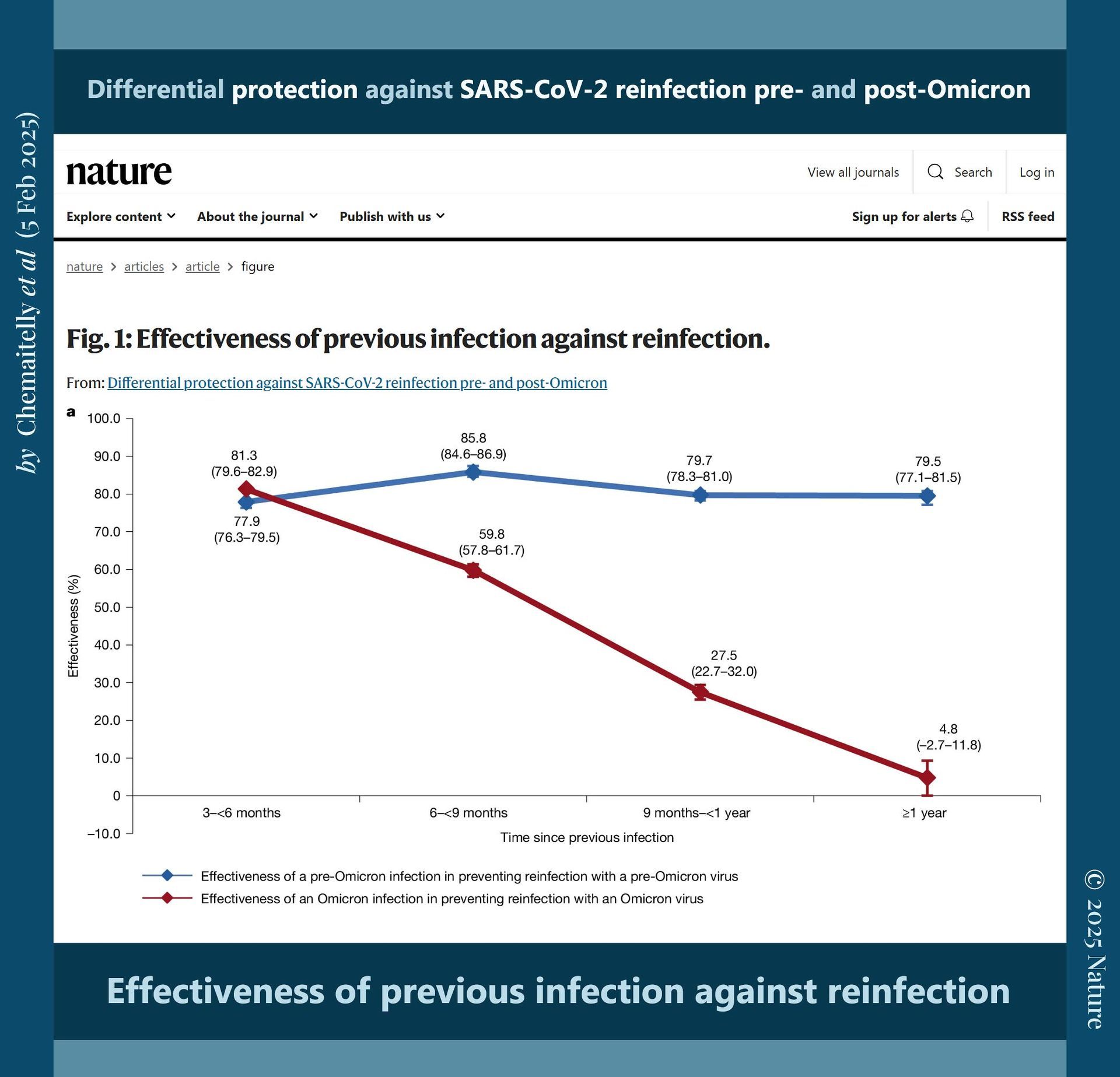
by C19.Life... et al • 29 September 2025
‘The arrival of the Omicron variant marked a major shift, introducing numerous extra mutations in the spike gene compared with earlier variants. Before Omicron, natural infection provided strong and durable protection against reinfection, with minimal waning over time. However, during the Omicron era, protection was robust only for those recently infected, declining rapidly over time and diminishing within a year.’
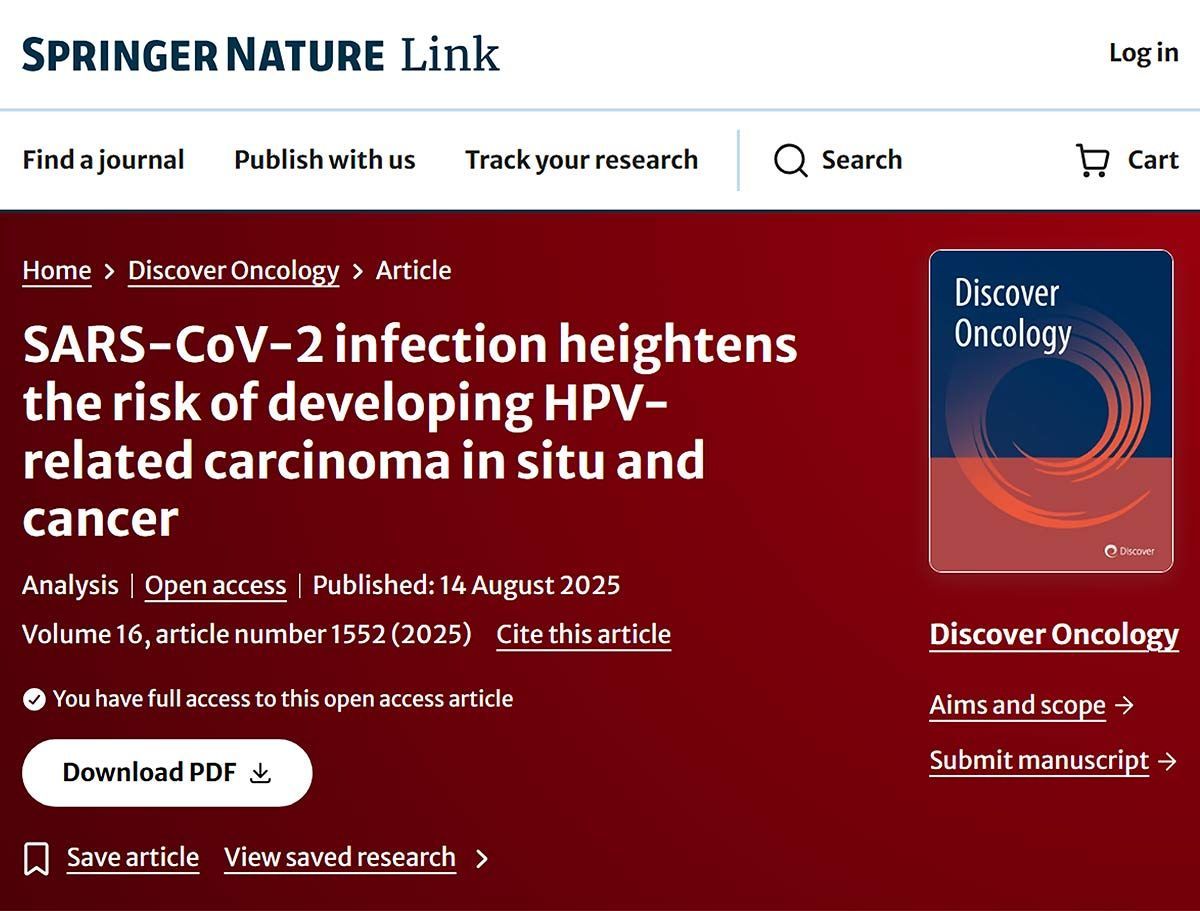
by Shih et al / Springer Nature ~ Discover Oncology • 14 August 2025
‘Over a 3-year follow-up period, individuals with SARS-CoV-2 infection had significantly higher risks of developing HPV-related cancers compared to those without infection: a 67% increase in cervical cancer, 131% in vaginal cancer, 98% in vulvar cancer, 92% in anal cancer, and 78% in oropharyngeal cancer. Similar trends were observed for carcinoma in situ, with increased risks of 34% for cervical, 61% for vaginal, 74% for vulvar, 96% for anal, and 78% for oropharyngeal carcinoma in situ.’
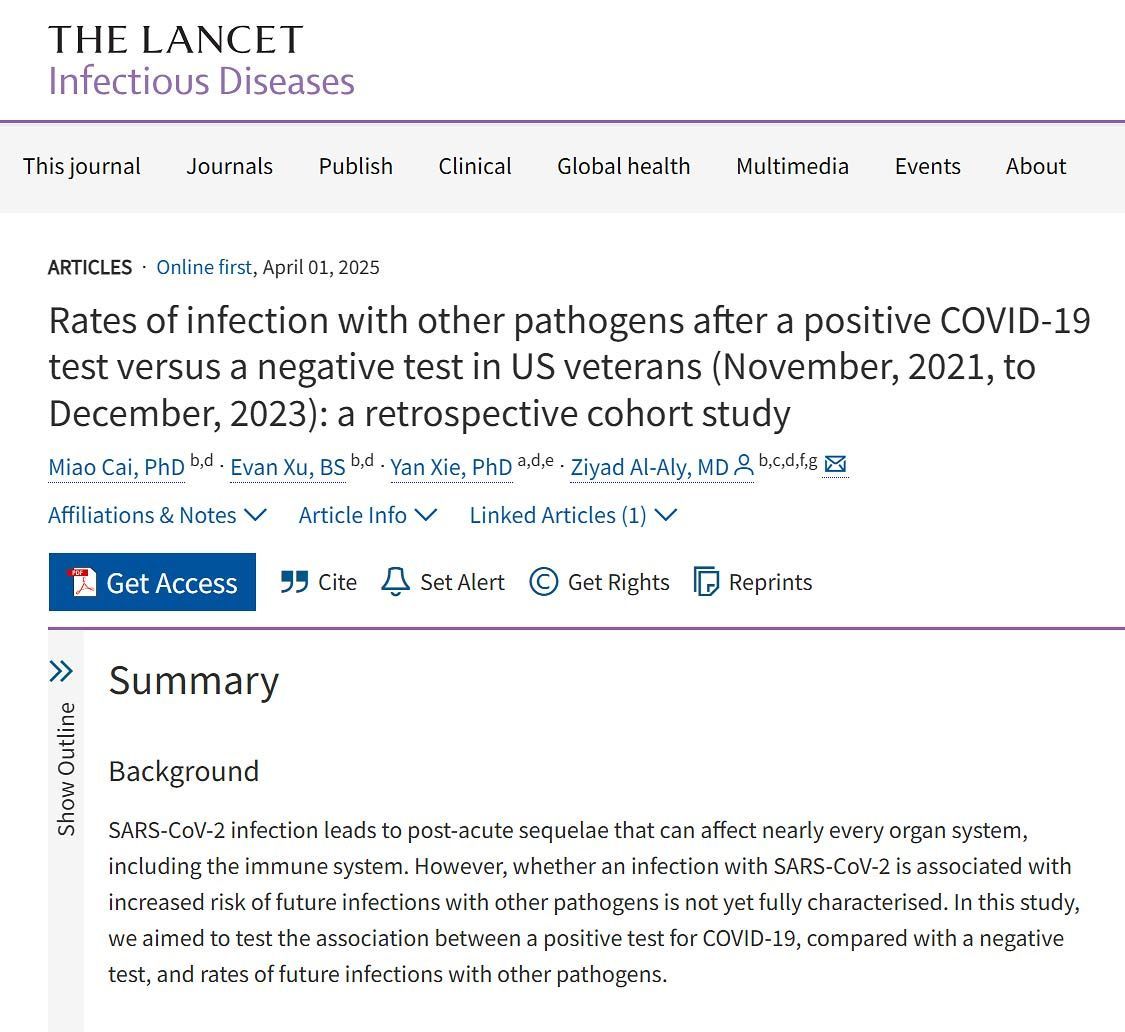
by Cai et al / The Lancet: Infectious Diseases • 1 April 2025
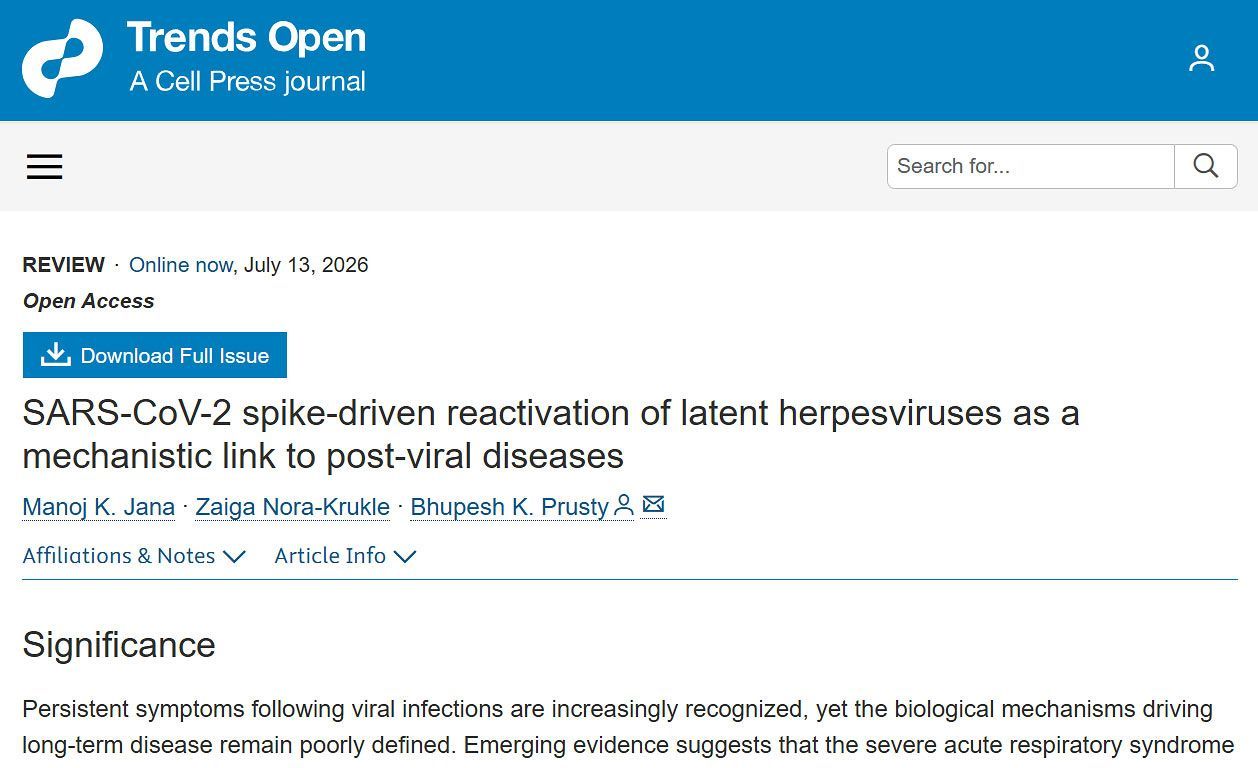
‘In the 12 months of follow-up, people with COVID-19 who did not require admission to hospital during the acute phase of infection had increased test-positivity rates for bacterial infections (in blood, urine, and respiratory cultures) and viral diseases (including Epstein–Barr virus, herpes simplex virus reactivation, and respiratory viral infections). Compared with people admitted to hospital for seasonal influenza, those admitted for COVID-19 had higher rates of admission to hospital for infectious illnesses (increased risk of 24%), admission to hospital for sepsis (increased risk of 35%), and in-hospital use of antimicrobials (increased risk of 23%).’
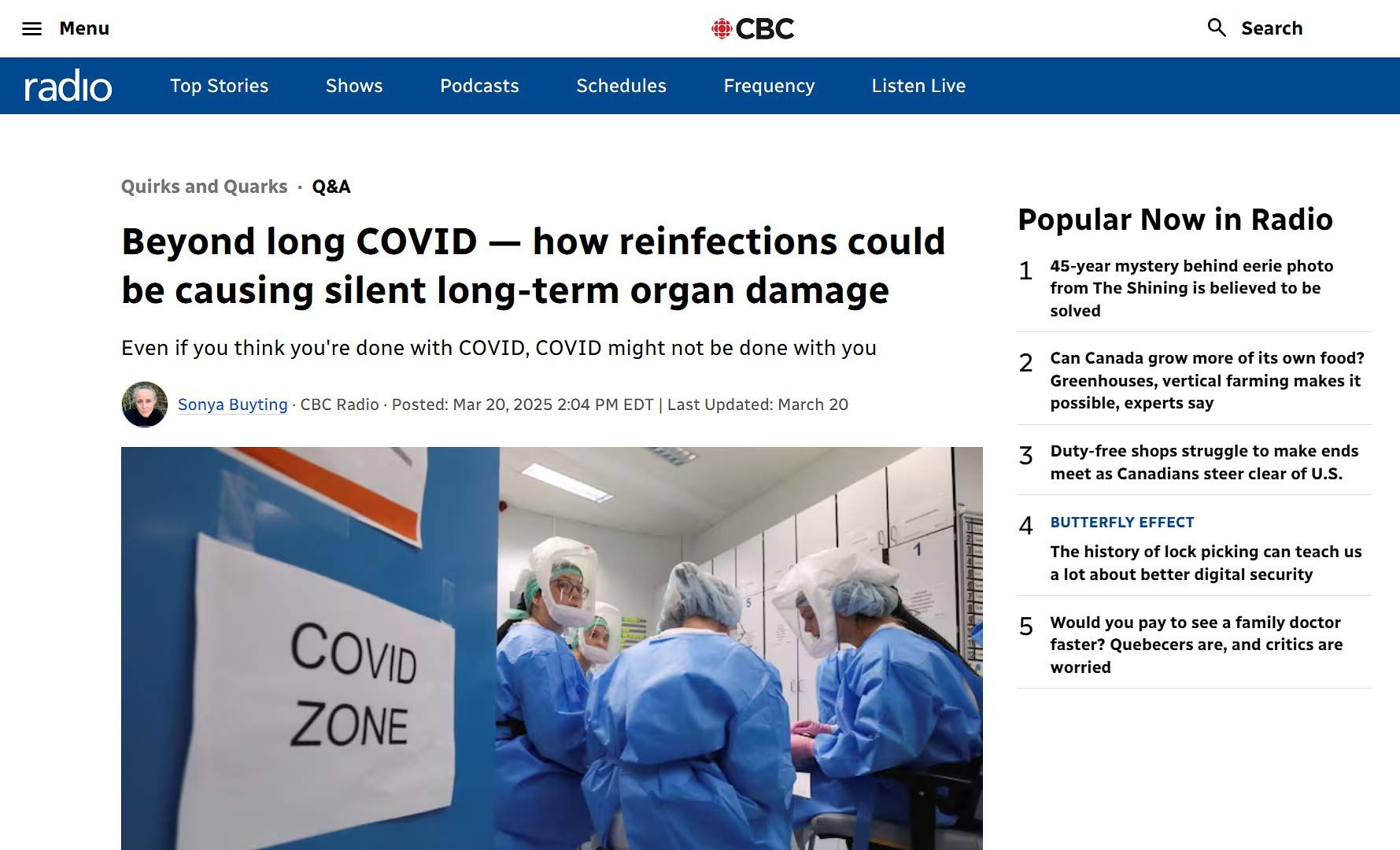
by David Putrino ❂ Sonya Buyting ~ Radio-Canada / Canadian Broadcasting Corporation • 20 March 2025
CBC Radio-Canada interview with long COVID [PASC] researcher David Putrino from the Icahn School of Medicine at Mount Sinai in New York.
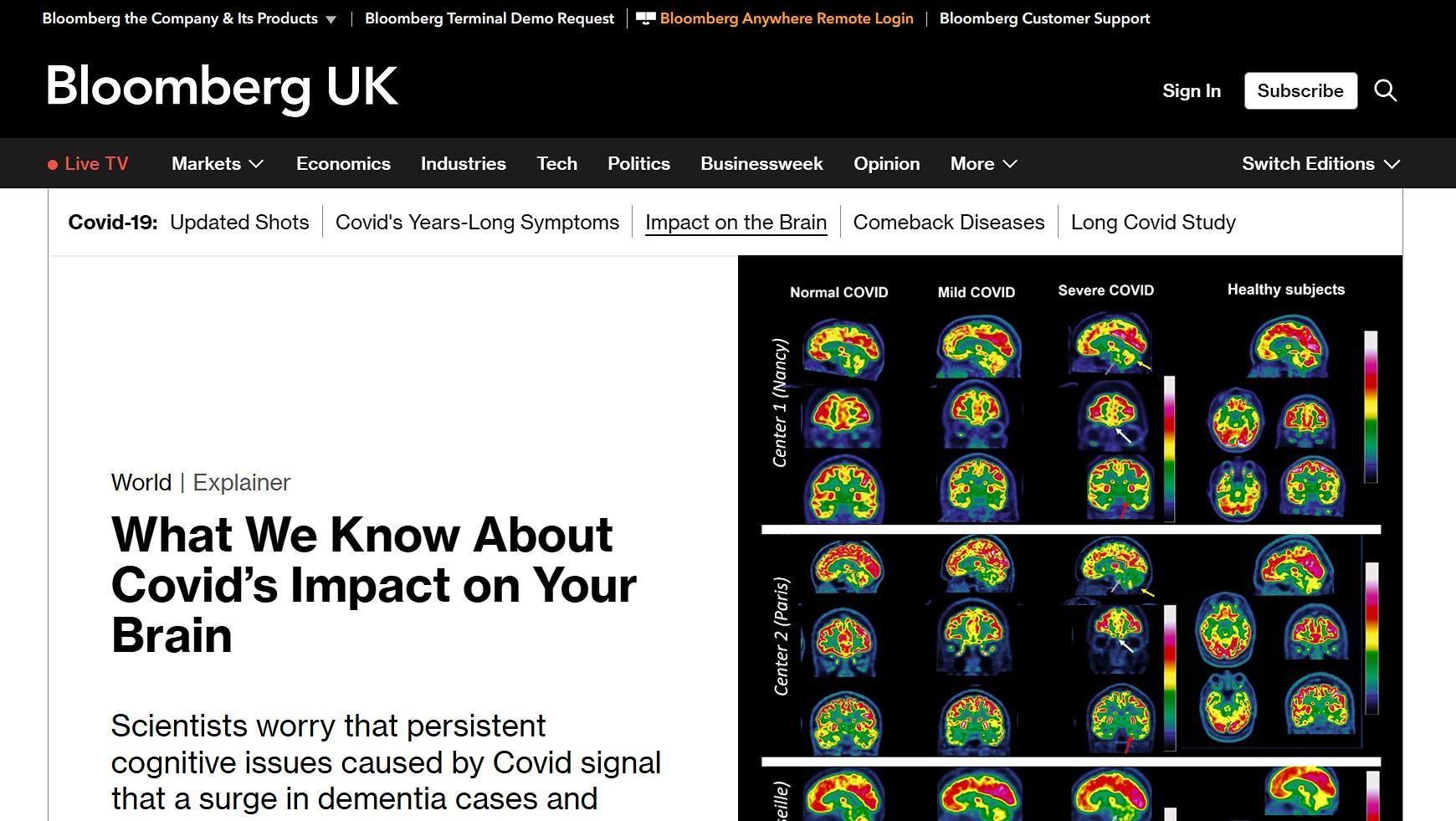
by Jason Gale / Bloomberg UK • 3 March 2025
‘For patients already battling Alzheimer’s disease, studies indicate that Covid can exacerbate brain inflammation, damage immune cells, and accelerate the disease. Even previously healthy older adults face an increased risk of cognitive impairment and new-onset dementia after infection. Mild Covid cases in younger adults have also been linked to brain issues affecting memory and thinking. ’
Show More Articles