📖 SARS-CoV-2 spike-driven reactivation of latent herpesviruses as a mechanistic link to post-viral diseases
‘One plausible mechanism is the reactivation of latent human herpesviruses such as HHV-6, HHV-7, and Epstein–Barr virus (EBV), which have increasingly been linked to long COVID [PASC] and ME/CFS-like phenotypes.
These viruses persist lifelong in immune and neural cell populations and can reactivate under conditions of cytokine surges, oxidative stress, immune exhaustion, and mitochondrial dysfunction – the very milieu fostered by persistent [SARS-CoV-2] spike signalling.’
✾
‘SARS-CoV-2 spike-driven reactivation of latent herpesviruses as a mechanistic link to post-viral diseases’.
© 2026 Jana et al / Trends Open: Cell Press.
❦ SARS-CoV-2 spike-driven reactivation of latent herpesviruses as a mechanistic link to post-viral diseases
By Jana et al / Trends Open: Cell Press (13 Jul 2026)
[Abridged: Please see original manuscript for full context.]
✾ Significance
‘Persistent symptoms following viral infections are increasingly recognized, yet the biological mechanisms driving long-term disease remain poorly defined.
Emerging evidence suggests that the severe acute respiratory syndrome coronavirus 2 [SARS-CoV-2] spike protein can perturb innate immune signalling and cellular metabolism, conditions known to disrupt herpesvirus latency.
We propose that spike-induced immune-metabolic stress may facilitate the reactivation of neurotropic herpesviruses such as human herpesvirus 6, human herpesvirus 7, and Epstein–Barr virus, thereby sustaining immune dysregulation and cellular dysfunction.
This virus–virus interaction framework provides a plausible mechanistic explanation for the biology of chronic post-viral disease and highlights herpesvirus reactivation as a potential target for biomarker development and therapeutic intervention.
✾ Abstract
Severe acute respiratory syndrome coronavirus 2 (SARS-CoV-2) infection is increasingly associated with long-term biological perturbations that persist beyond the acute phase of the disease.
In this review, we examine the evidence that spike-induced immune and metabolic remodelling facilitates the reactivation of latent neurotropic herpesviruses, particularly human herpesvirus 6 (HHV-6), HHV-7, and Epstein–Barr virus, amplifying immune dysregulation through viral proteins and host–pathogen interactions that perturb mitochondrial function, innate immune responses, and neuroimmune communication.
We discuss how this virus–virus interaction represents a biologically plausible pathway linking chronic SARS-CoV-2 infection to downstream cellular dysfunction.
By integrating emerging evidence on spike persistence with established principles of herpesvirus latency biology, we argue that herpesvirus reactivation serves as a mechanistic consequence of SARS-CoV-2 infection.
Understanding how the spike protein perturbs cellular homeostasis and triggers latent virus reactivation may reveal biomarkers of reactivation and inform targeted therapeutic strategies to interrupt this cascade in post-infectious disease states.
✾ Severe acute respiratory syndrome coronavirus 2 [SARS-CoV-2] spike, herpesvirus reactivation, and post-viral diseases
Although accumulating evidence suggests that SARS-CoV-2 infection and the persistence of its spike protein can induce sustained immune activation, endothelial injury, and metabolic stress, these factors alone are unlikely to fully explain the prolonged chronicity observed in post-viral diseases.
The spike protein is typically present at low or transient levels, whereas many patients experience symptoms that persist for months or years, suggesting the involvement of additional biological drivers that sustain pathology over extended periods.
‘One plausible mechanism is the reactivation of latent human herpesviruses such as HHV-6, HHV-7, and Epstein–Barr virus (EBV), which have increasingly been linked to long COVID [PASC] and ME/CFS-like phenotypes [6,16,17].
These viruses persist lifelong in immune and neural cell populations and can reactivate under conditions of cytokine surges, oxidative stress, immune exhaustion, and mitochondrial dysfunction – the very milieu fostered by persistent [SARS-CoV-2] spike signalling [11,18–20].’
Emerging clinical and mechanistic studies suggest that
combined signatures of
SARS-CoV-2 viral persistence and
herpesvirus latency/reactivation define distinct immunopathological profiles associated with
fatigue,
neurocognitive symptoms, and
dysautonomia
[12,21].’
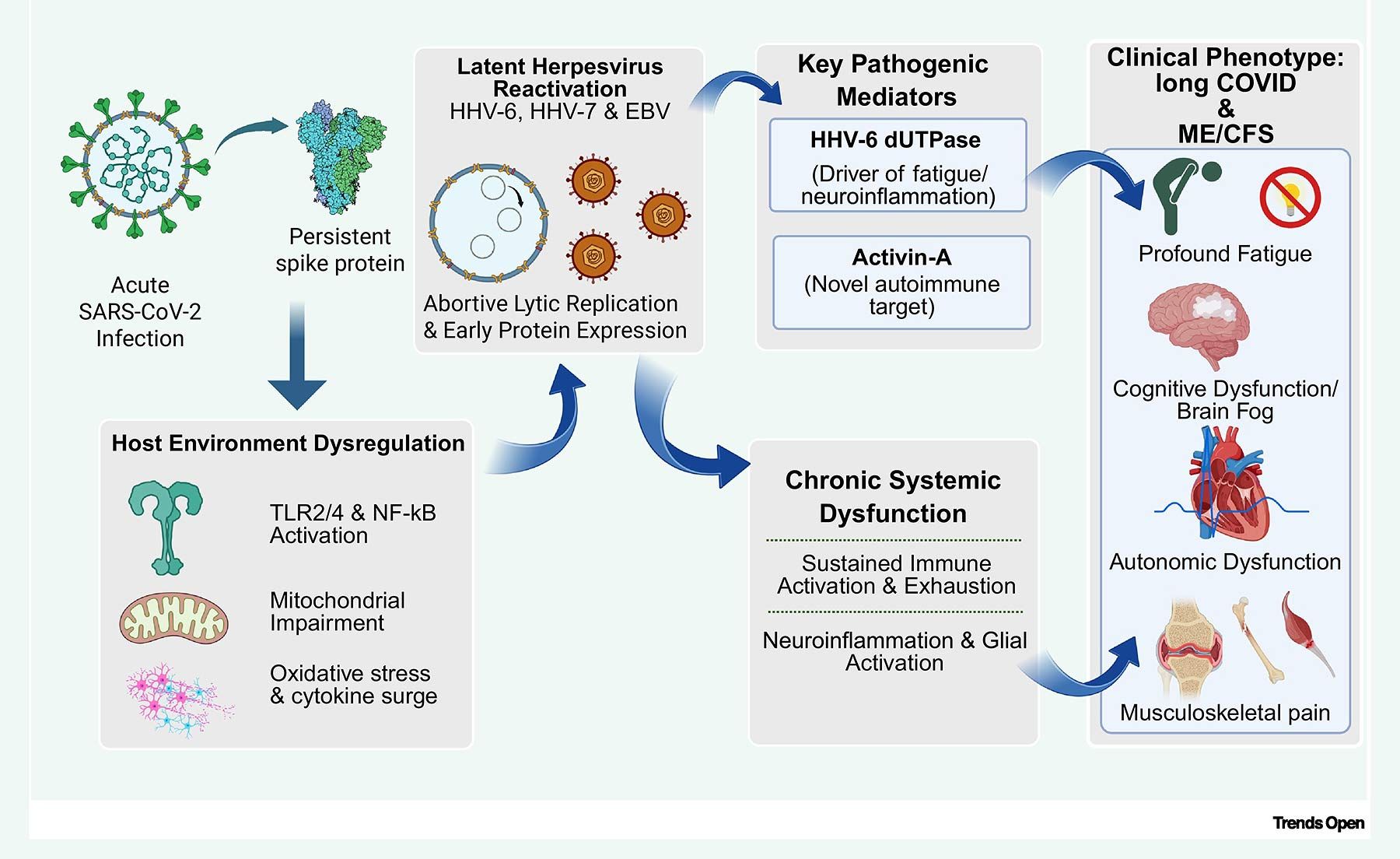
Figure 1: Schematic representation of synergistic pathogenesis of long COVID and ME/CFS.
‘The combination of acute SARS-CoV-2 infection and persistent spike proteins leads to long COVID and myalgic encephalomyelitis / chronic fatigue syndrome (ME/CFS) through a series of biological changes.
The process begins when the host environment becomes dysregulated: mitochondria stop functioning, oxidative stress increases, and inflammatory pathways such as NF-kB are activated.
The cellular stressors that affect these cells enable herpesviruses (HHV-6 and HHV-7) to emerge from their dormant state, leading to the release of pathogenic factors, including HHV-6 dUTPase and activin-A.’
‘The combination of these mediators with on-going body-wide dysfunction, including neuroinflammation and immune system depletion, leads to a common clinical presentation.
The resulting symptoms include extreme fatigue and cognitive impairment that manifests as brain fog plus autonomic system malfunction and musculoskeletal discomfort.’
© 2026 Jana et al / Trends Open: Cell Press.
✾ Key References
1. Stein, S.R. et al. (2022) SARS-CoV-2 infection and persistence in the human body and brain at autopsy. Nature.
This cohort study demonstrated, through comprehensive autopsy analyses, that SARS-CoV-2 RNA and viral protein can disseminate widely beyond the respiratory tract and persist for months in multiple tissues, including diverse brain regions.
The findings provide direct evidence of systemic and CNS viral persistence, supporting models of prolonged antigen exposure and tissue-level viral reservoirs that may potentially drive chronic immune and metabolic dysregulation in long COVID and related post-viral syndromes.
2. Kedor, C. et al. (2022) A prospective observational study of post-COVID-19 chronic fatigue syndrome following the first pandemic wave in Germany and biomarkers associated with symptom severity. Nature Communications.
This study demonstrates that a substantial subset of individuals following SARS-CoV-2 infection develop a persistent fatigue syndrome meeting diagnostic criteria for ME/CFS, confirming that post-COVID illness can evolve into a chronic post-viral disease state.
Importantly, the authors identify biological markers associated with symptom severity, providing evidence that post-COVID fatigue syndromes are linked to measurable physiological alterations rather than solely subjective symptom reports.
3. Cai, Y. et al. (2020) Distinct conformational states of SARS-CoV-2 spike protein. Science.
This study, demonstrating distinct conformational states of the SARS-CoV-2 spike protein, showed that spike dynamically shifts between closed and receptor-accessible open conformations, with structural flexibility influencing receptor binding, protease activation, and immune recognition.
These findings support the concept that persistent or structurally altered spike may sustain innate immune activation and downstream immunometabolic stress, which is relevant to the viral immune-metabolic convergence observed in ME/CFS and long COVID.
4. Klein, J. et al. (2023) Distinguishing features of long COVID identified through immune profiling. Nature.
This is the first major systematic study to identify herpesvirus reactivation along with hormonal imbalance as key distinguishing features of long COVID.
5. Swank, Z. et al. (2023) Persistent circulating severe acute respiratory syndrome coronavirus 2 spike is associated with post-acute coronavirus disease 2019 sequelae. Clinical Infectious Diseases.
This study shows that circulating SARS-CoV-2 spike protein can persist in the blood of individuals with post-acute COVID-19 sequelae, linking viral antigen persistence to long-term disease manifestations.
The findings support the concept that on-going viral antigen exposure may contribute to chronic immune activation and the pathophysiology of long COVID.
✾ Glossary
❦ Herpesvirus latency:
A reversible state in which herpesviruses persist lifelong within host cells with minimal viral gene expression and no production of infectious virions, while retaining the ability to reactivate under cellular stress or immune system perturbation.
❦ Herpesvirus reactivation:
The transition from latent persistence to active viral gene expression is often triggered by inflammatory signalling, cellular stress, or immune dysregulation, leading to viral transcription, protein production, and sometimes replication.
❦ Metabolic reprogramming:
Alterations in cellular metabolic pathways that occur during immune activation or infection, influencing energy production, biosynthesis, and inflammatory signalling.
❦ Mitochondrial dysfunction:
Impairment of mitochondrial bioenergetics, dynamics, or signalling functions, often associated with altered ATP production, oxidative stress, and dysregulated cellular metabolism.
❦ Neuroimmune communication:
Bi-directional communication between the nervous and immune systems, which can potentially lead to chronic inflammation, altered neuronal signalling, and persistent symptoms under dysfunctional conditions.
❦ Neurotropism:
The capacity of a virus to infect, persist in, or influence cells of the nervous system, including neurons and glial cells, often contributing to neurological or neuroimmune dysfunction.
❦ Post-viral diseases:
A chronic pathological state that develops following an acute viral infection and persists after the primary infection has resolved, often involving immune, metabolic, or neurological dysfunction.
❦ SARS-CoV-2 spike protein:
The surface glycoprotein of SARS-CoV-2 responsible for receptor binding and membrane fusion; beyond viral entry, spike can activate innate immune receptors and influence cellular signalling pathways.
❦ TLR2/TLR4-MyD88-NF-κB signalling:
A canonical innate immune pathway activated by PAMPs that leads to the transcription of proinflammatory cytokines and mediators of immune activation.
❦ Viral persistence:
The continued presence of viral components (genomes, proteins, or RNA) within host tissues after acute infection, which can maintain immune activation without productive viral replication.
✾ References
6. Komaroff, A.L. ∙ Lipkin, W.I.
ME/CFS and Long COVID share similar symptoms and biological abnormalities: road map to the literature
Front. Med. (Lausanne). (2023)
11. Khan, S. et al
SARS-CoV-2 spike protein induces inflammation via TLR2-dependent activation of the NF-κB pathway
Elife. (2021)
12. Landolina, N. et al
TLR2/4 are novel activating receptors for SARS-CoV-2 spike protein on NK cells
Front. Immunol. (2024)
14. Vojdani, A. et al
Persistent SARS-CoV-2 infection, EBV, HHV-6 and other factors may contribute to inflammation and autoimmunity in long COVID
Viruses. (2023)
15. Molnar, T. et al
Mitochondrial dysfunction in long COVID: mechanisms, consequences, and potential therapeutic approaches
Geroscience. (2024)
16. Peluso, M.J. ∙ Deeks, S.G.
Mechanisms of long COVID and the path toward therapeutics
Cell. (2024)
17. Liu, Y. et al
Mechanisms of long COVID: an updated review
Chin. Med. J. Pulm. Crit. Care Med. (2023)
18. Stein, S.R. et al
SARS-CoV-2 infection and persistence in the human body and brain at autopsy
Nature. (2022)
19. de Melo, B.P. et al
SARS-CoV-2 spike protein and long COVID-part 1: impact of spike protein in pathophysiological mechanisms of long COVID syndrome
Viruses. (2025)
20. Olajide, O.A. et al
SARS-CoV-2 spike glycoprotein S1 induces neuroinflammation in BV-2 microglia
Mol. Neurobiol. (2022)
21. Lee, J.S. et al
Salivary DNA loads for human herpesviruses 6 and 7 are correlated with disease phenotype in myalgic encephalomyelitis/chronic fatigue syndrome
Front. Med. (Lausanne). (2021)
✾
📖 (13 Jul 2026 ~ Trends Open: Cell Press) SARS-CoV-2 spike-driven reactivation of latent herpesviruses as a mechanistic link to post-viral diseases ➤
© 2026 Jana et al / Trends Open: Cell Press.
✾
More... on SARS-CoV-2 and reactivation of latent herpesviruses & other pathogens


More... on Immunity