๐Ÿ“– Long-term risk of herpes zoster [shingles] following COVID-19: A retrospective cohort study of 2,442,686 patients

Chen et al / Journal of Medical Virology • 18 April 2023

โฆ ‘The risk of herpes zoster (HZ) [shingles] remained significantly higher [+60%] in patients with COVID-19, compared with those without COVID-19.


The higher risk of HZ in the COVID-19 cohort compared with that in the non-COVID-19 cohort remained consistent across sub-group analyses regardless of vaccine status, age, or sex.


The risk of HZ within a 12-month follow-up period was significantly higher in patients who had recovered from COVID-19 compared with that in the control group.’


โœพ


๐Ÿ“– (18 Apr 2023 ~ Journal of Medical Virology) Long-term risk of herpes zoster following COVID-19: A retrospective cohort study of 2 442 686 patients โžค


© 2023 Journal of Medical Virology.


โœพ


More... on SARS-CoV-2 and reactivation of latent herpesviruses & other pathogens
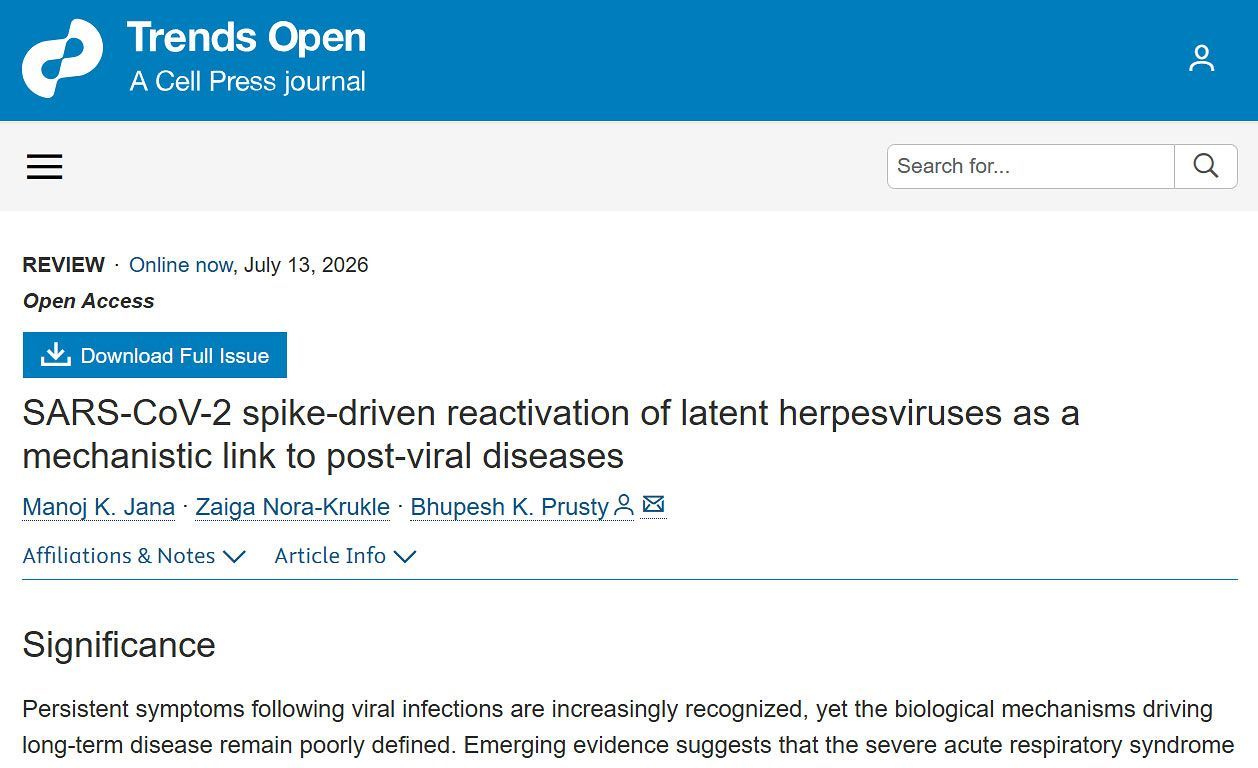

by Jana et al / Trends Open: Cell Press 13 July 2026
‘One plausible mechanism is the reactivation of latent human herpesviruses such as HHV-6, HHV-7, and Epstein–Barr virus (EBV), which have increasingly been linked to long COVID [PASC] and ME/CFS-like phenotypes. These viruses persist lifelong in immune and neural cell populations and can reactivate under conditions of cytokine surges, oxidative stress, immune exhaustion, and mitochondrial dysfunction – the very milieu fostered by persistent [SARS-CoV-2] spike signalling.’
by Cai et al / The Lancet: Infectious Diseases 1 April 2025
‘In the 12 months of follow-up, people with COVID-19 who did not require admission to hospital during the acute phase of infection had increased test-positivity rates for bacterial infections (in blood, urine, and respiratory cultures) and viral diseases (including Epstein–Barr virus, herpes simplex virus reactivation, and respiratory viral infections). Compared with people admitted to hospital for seasonal influenza, those admitted for COVID-19 had higher rates of admission to hospital for infectious illnesses (increased risk of 24%), admission to hospital for sepsis (increased risk of 35%), and in-hospital use of antimicrobials (increased risk of 23%).’
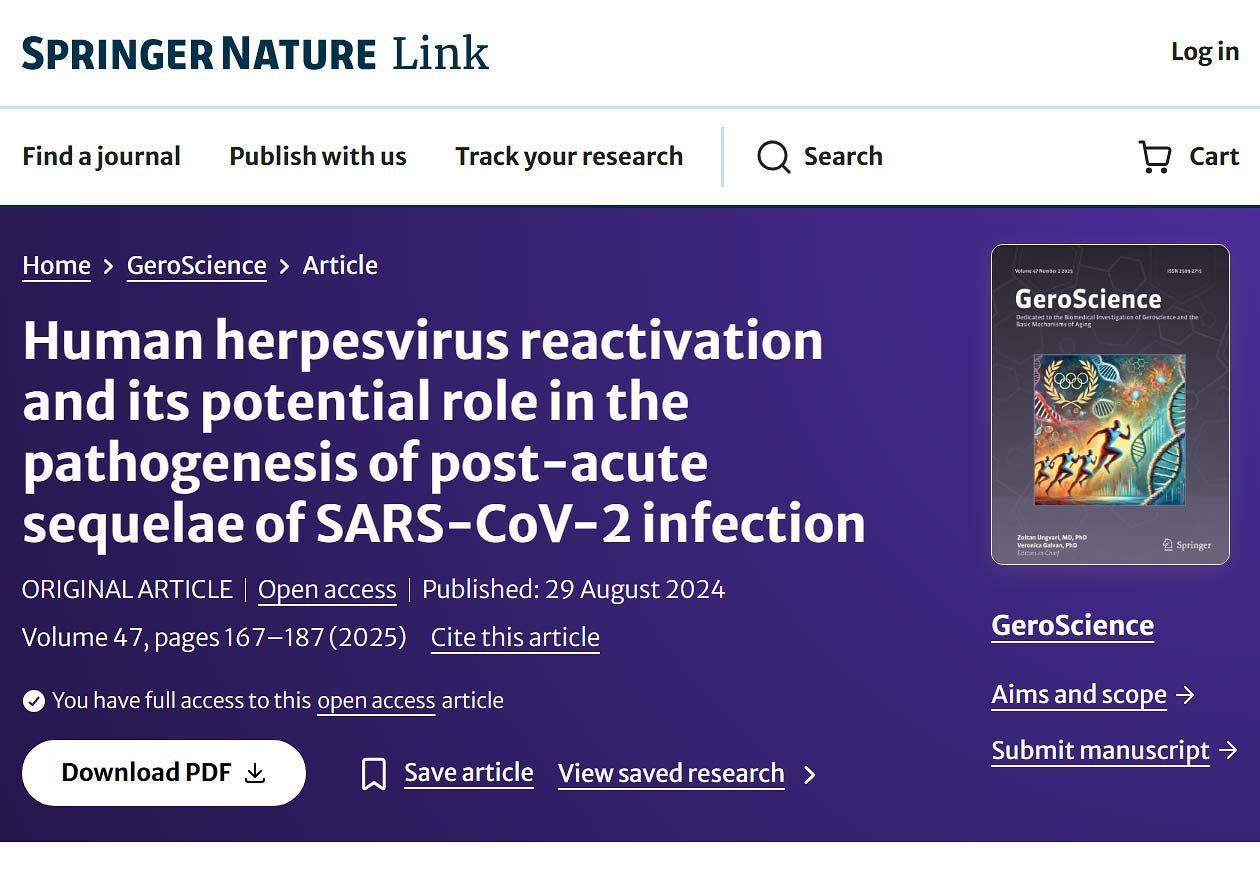
by Gáspár et al / Springer Nature: GeroScience 29 August 2024
‘The reactivation of latent herpesviruses, such as EBV [Epstein–Barr virus / human herpesvirus 4], CMV [cytomegalovirus], and HHV-6 [human herpesvirus 6], is a significant concern in patients with COVID-19. Several factors associated with COVID-19, including immune dysregulation, systemic inflammation, and direct viral interactions, can trigger the reactivation of these latent viruses.’