☣ Variant Watch: 📖 Host cell entry and neutralisation sensitivity of SARS-CoV-2 BA.3.2
‘Since late 2024, a potential third major evolutionary shift in SARS-CoV-2 evolution might be unfolding.
In November 2024 and January 2025, a highly mutated descendant of the Omicron subvariant BA.3 was detected in South Africa.’
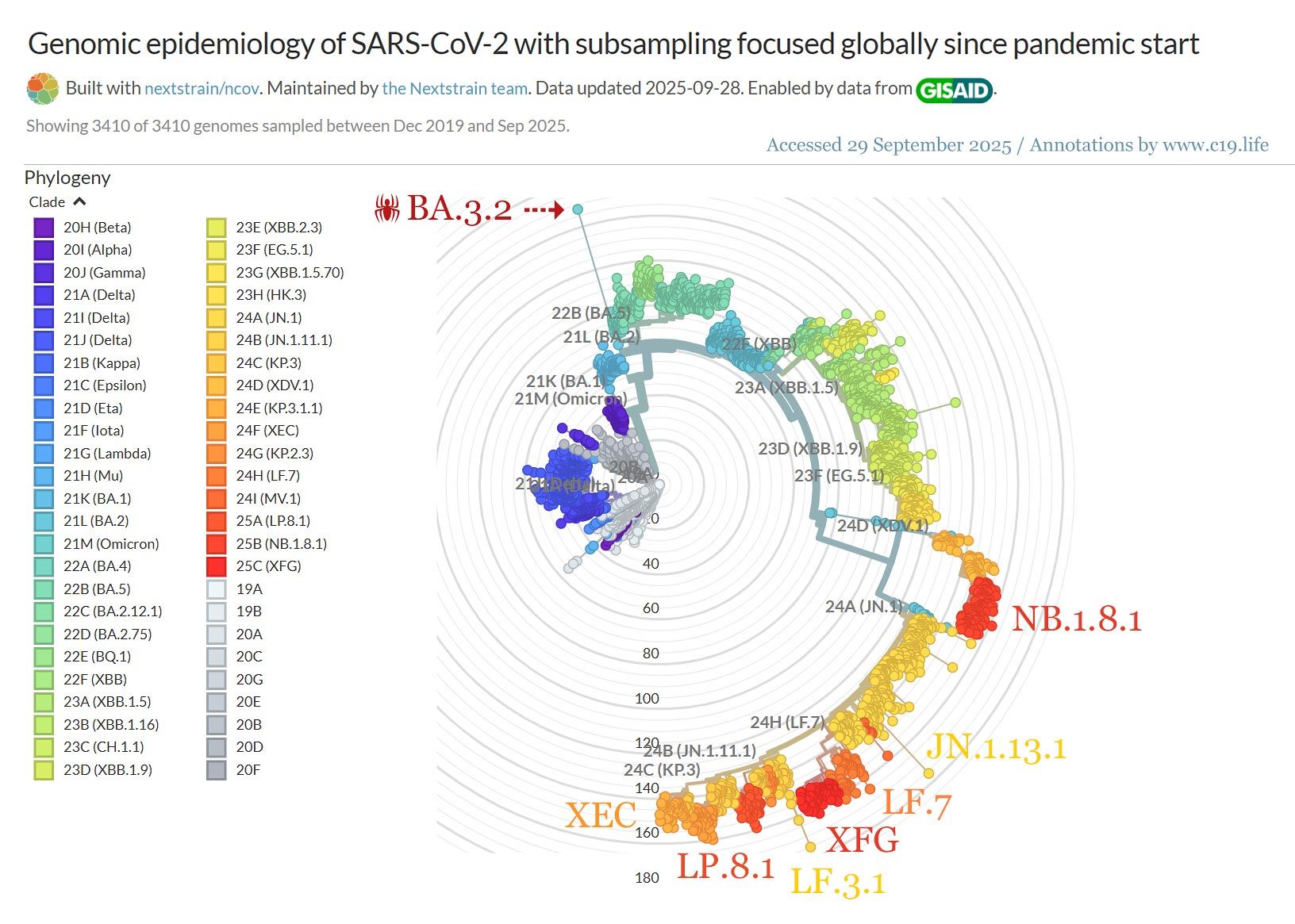
(Accessed 29 Sep 2025) Genomic epidemiology of SARS-CoV-2 with subsampling focused globally since pandemic start, showing emergence of BA.3.2. ➲
Data & data visualisation by © 2025 NextStrain.org / GISAID.org.
❦ Correspondence ~ ‘Host cell entry and neutralisation sensitivity of SARS-CoV-2 BA.3.2’
By Zhang et al / The Lancet: Microbe (3 Jun 2025)
‘The COVID-19 pandemic and the ensuing endemic have been characterised by the continuous emergence of novel SARS-CoV-2 variants, each showing augmented antibody evasion due to mutations in the viral spike (S) protein.
These new variants usually harbour a few S protein mutations, conferring a modest growth advantage within the population.
‘However, a quantum leap of SARS-CoV-2 evolution was observed on two occasions.
The first occurred at the end of 2021, when the highly mutated Omicron variant (B.1.1.529) became dominant, showing unprecedented antibody evasion.’ *
* 📖 (3 Feb 2022 ~ Cell) The Omicron variant is highly resistant against antibody-mediated neutralization: Implications for control of the COVID-19 pandemic ➤
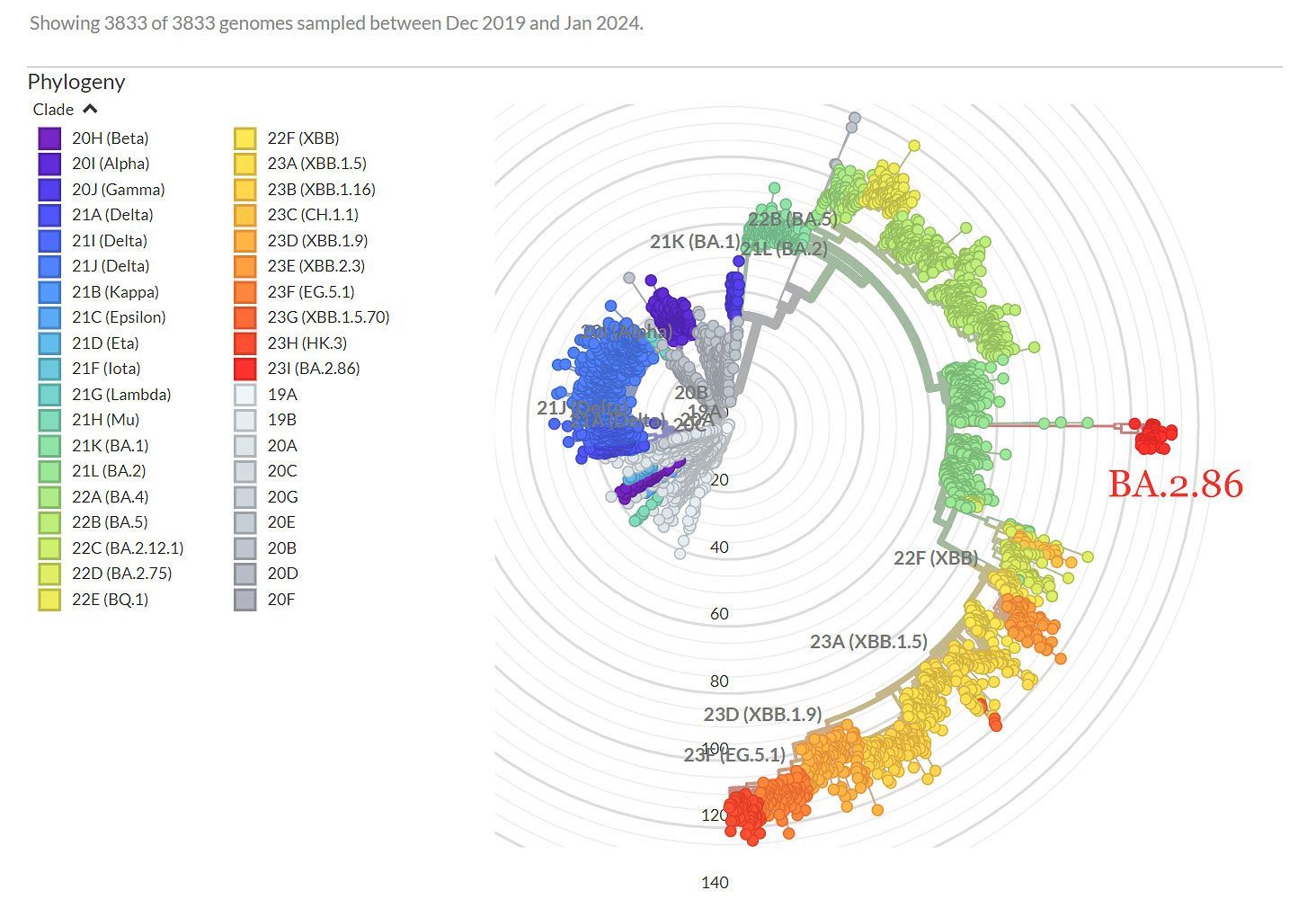
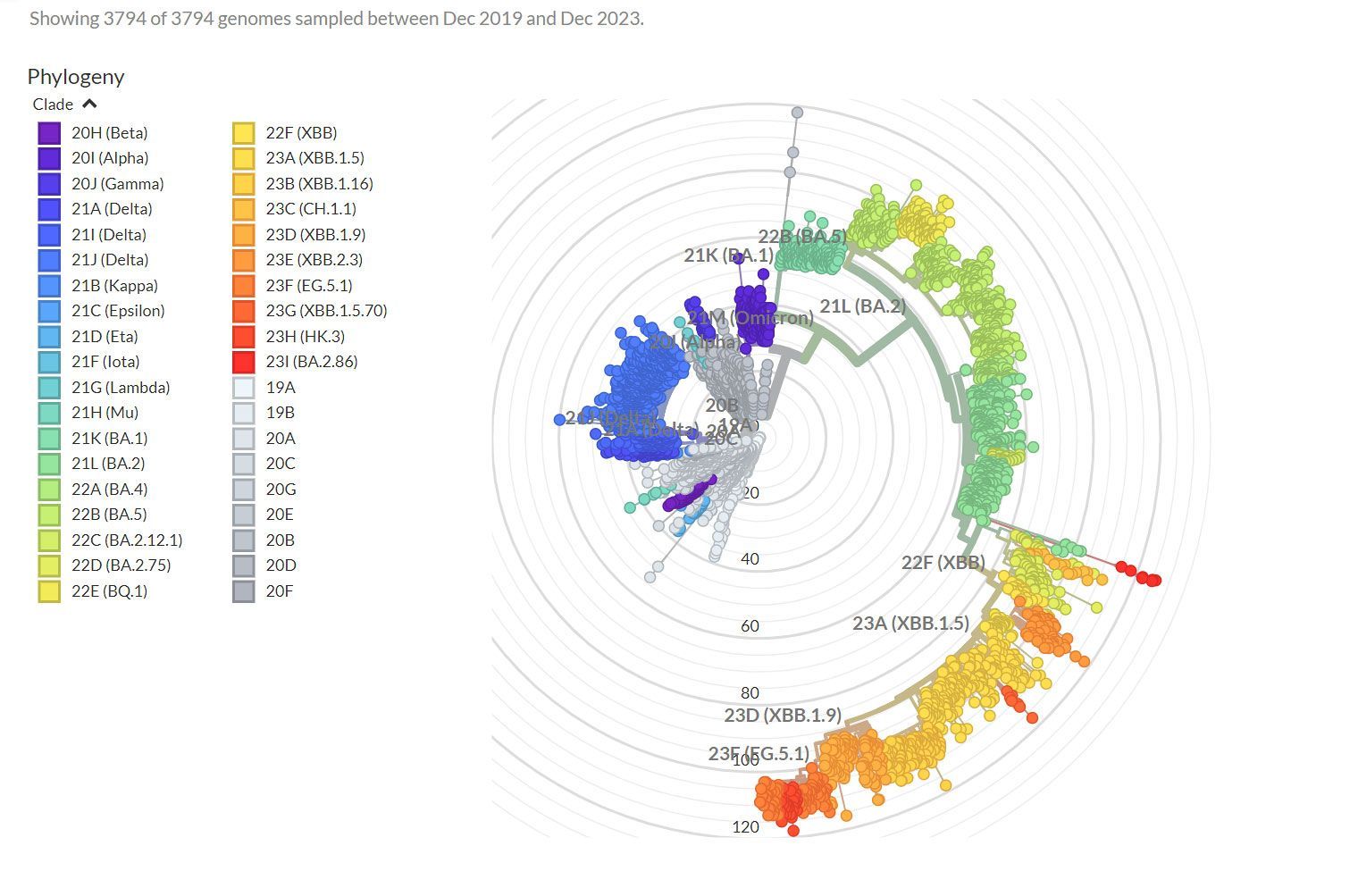
‘The second major evolutionary shift was observed in July 2023, when the subvariant BA.2.86 – a highly mutated descendant of the BA.2 variant – emerged and dominated globally in 2024.’ *
* 📖 (27 Sep 2023 ~ The Lancet: Infectious Diseases) Sensitivity of the SARS-CoV-2BA.2.86 variant to prevailing neutralising antibody responses ➤
📖 (18 Sep 2023 ~ The Lancet: Infectious Diseases) Transmissibility, infectivity, and immune evasion of the SARS-CoV-2 BA.2.86 variant ➤
📖 (19 Sep 2023 ~ The Lancet: Infectious Diseases) Antigenicity and infectivity characterisation of SARS-CoV-2 BA.2.86 ➤
📖 (1 Feb 2024 ~ Cell) SARS-CoV-2 BA.2.86 enters lung cells and evades neutralizing antibodies with high efficiency ➤
Since late 2024, a potential third major evolutionary shift in SARS-CoV-2 evolution might be unfolding. In November 2024 and January 2025, a highly mutated descendant of the Omicron subvariant BA.3 was detected in South Africa *.
* 📖 (18 May 2022 ~ The New England Journal of Medicine) Neutralization of the SARS-CoV-2 Deltacron and BA.3 Variants ➤
In April 2025, the variant, designated as BA.3.2, was also detected in the Netherlands, raising the possibility of global dissemination. BA.3.2 harbours more than 50 S protein mutations compared with BA.3, which might have profoundly altered the cell entry and antibody-mediated neutralisation of BA.3.2.
Our findings suggest that BA.3.2 (A) and BA.3.2 (B) might enter cells slightly less efficiently than the parental BA.3 variant; however, BA.3.2 (A) and BA.3.2 (B) might be able to evade the neutralising antibodies used for COVID-19 therapy or those induced by vaccination with a markedly higher efficiency.
The evasion of antibodies by the variants in individuals vaccinated with the JN.1-booster vaccine was similar to, or greater than, that observed for the currently dominating LP.8.1.1 variant. [Note: this is not a good thing.]
These observations suggest that BA.3.2 – particularly BA.3.2 (B) – may disseminate within populations with high antibody levels, thereby warranting close monitoring.’
📖 (3 Jun 2025 ~ The Lancet: Microbe) Host cell entry and neutralisation sensitivity of SARS-CoV-2 BA.3.2 ➤
© 2025
Zhang
et al
/
The Lancet.
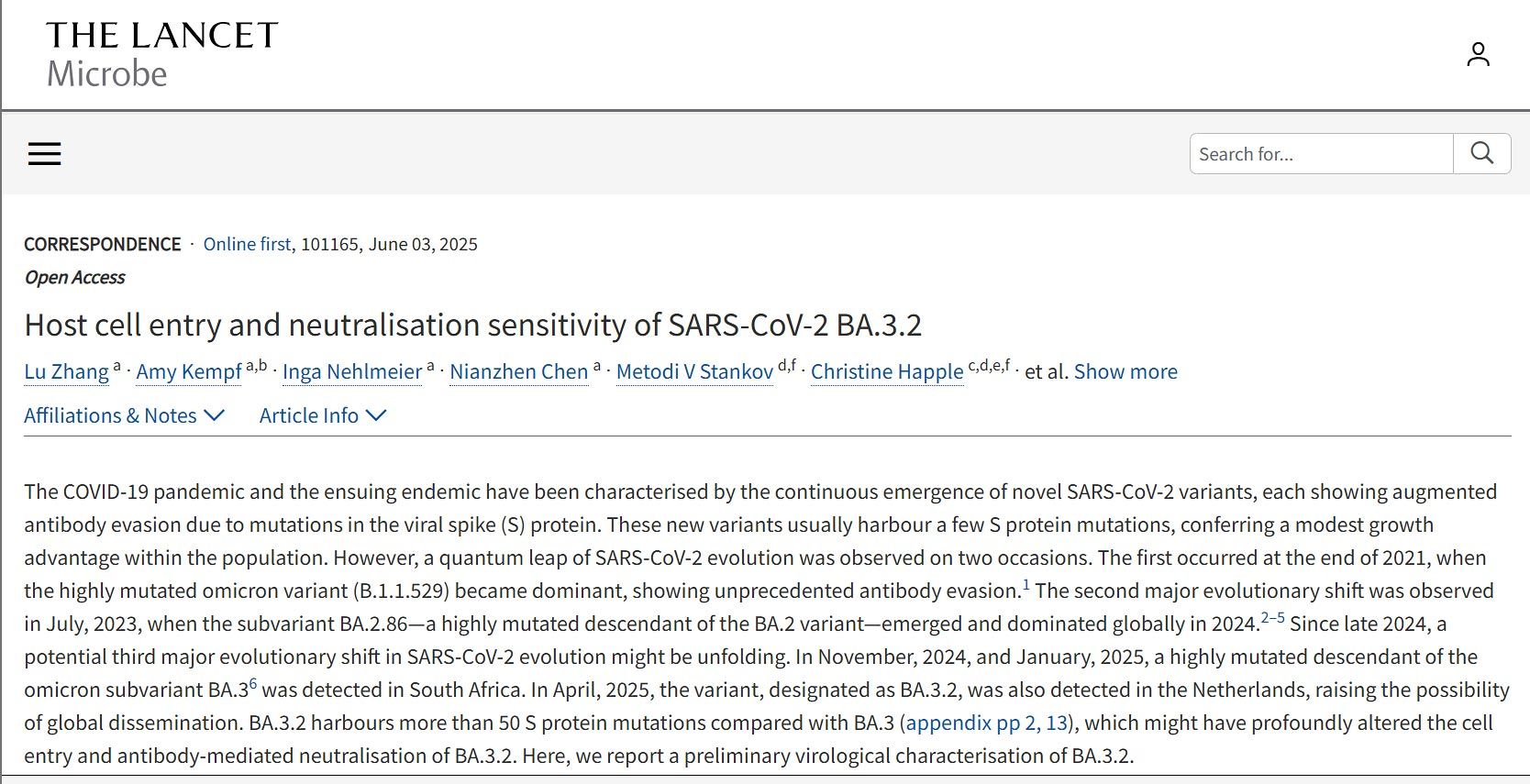
📖 (3 Jun 2025 ~ The Lancet: Microbe) ‘Host cell entry and neutralisation sensitivity of SARS-CoV-2 BA.3.2.’
© 2025 Zhang et al / The Lancet.
✾
More... Variants