📖 All variants of COVID-19 can infect the brain, study finds
A layperson-level overview from New Atlas on how all variants of SARS-CoV-2 – the virus that causes COVID-19 – are ‘neuroinvasive’, meaning that all can infect or enter the brain and the nervous system.
(From July 2023 Nature Communications study: ‘Neuroinvasion and anosmia are independent phenomena upon infection with SARS-CoV-2 and its variants’.)
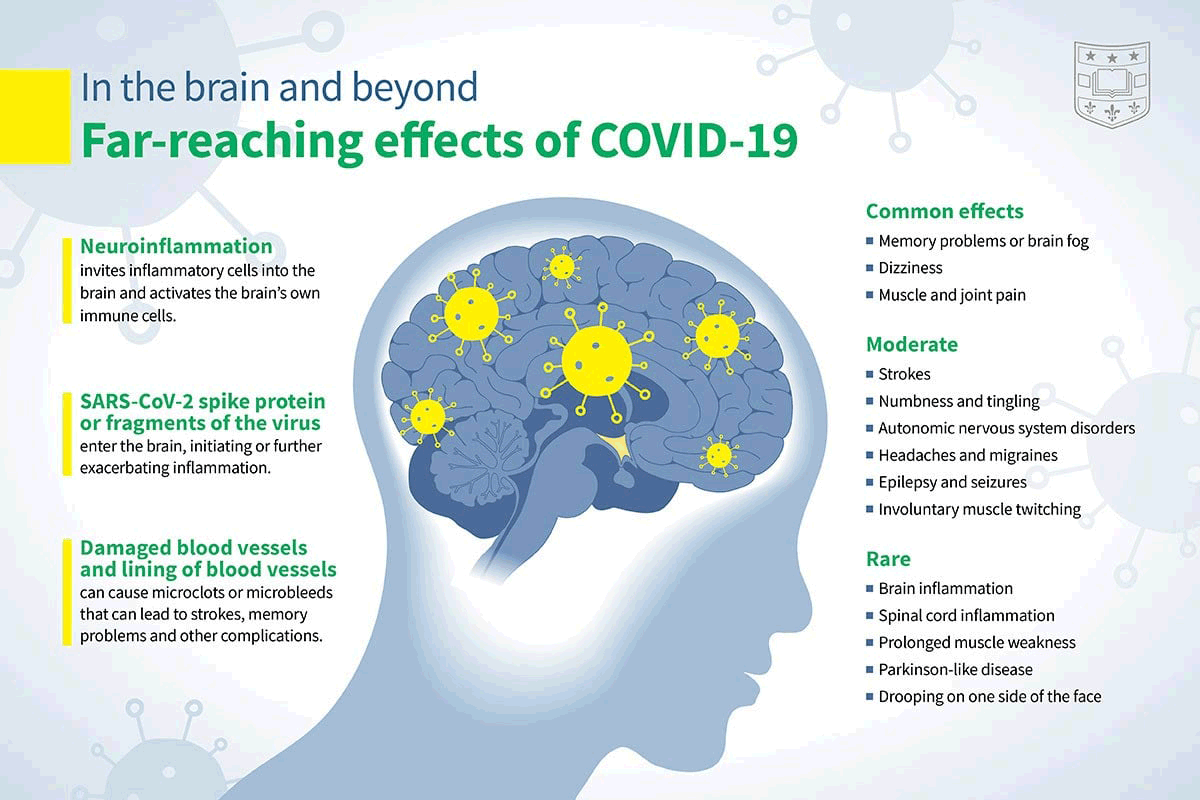
❦ ‘We know COVID is associated with a variety of neurological symptoms, both short- and long-term, but it still isn’t entirely clear whether these cognitive issues are the result of the virus directly infecting brain cells or simply due to a broader systemic inflammatory response.
Studies looking at human brain tissue have yielded contradictory results. Some have found direct traces of SARS-CoV-2, while others report only inflammatory damage.
Animal models certainly demonstrate it is possible for the virus to infect the brain, but human tissue samples are obviously taken after a patient dies – meaning researchers can only hypothesize what happens during an acute infection.
Using a hamster model, the research compared infection with the original SARS-CoV-2 virus from 2020 to several subsequent variants including Gamma, Delta and Omicron/BA.1 variants.
Interestingly, the findings confirmed epidemiological observations showing acute disease severity is reduced in Omicron infections – however, all [SARS-CoV-2] variants demonstrated similar neuroinvasive capabilities.
And, most strikingly, all variants infected the brain’s olfactory regions regardless of whether symptoms of anosmia (the loss of sense of smell) were present or not.
“This suggests that anosmia and neuronal infection are two unrelated phenomena. If we follow this line of reasoning, it is quite possible that even an asymptomatic infection is characterized by the spread of the virus in the nervous system.”
The researchers conclude this suggests all SARS-CoV-2 variants have the capacity to infect the brain, via the olfactory pathway, regardless of clinical disease presentations.
This means it is possible even mild infections can lead to the virus infiltrating the brain.
“The next step will be to understand... whether the virus is able to persist in the brain beyond the acute [initial, short-term] phase of infection, and whether the presence of the virus can induce persistent inflammation and the symptoms described in cases of long COVID, such as anxiety, depression and brain fog” [brain damage].’
© 2023 Rich Haridy / New Atlas.
➲ Source © 2023 Institut Pasteur.
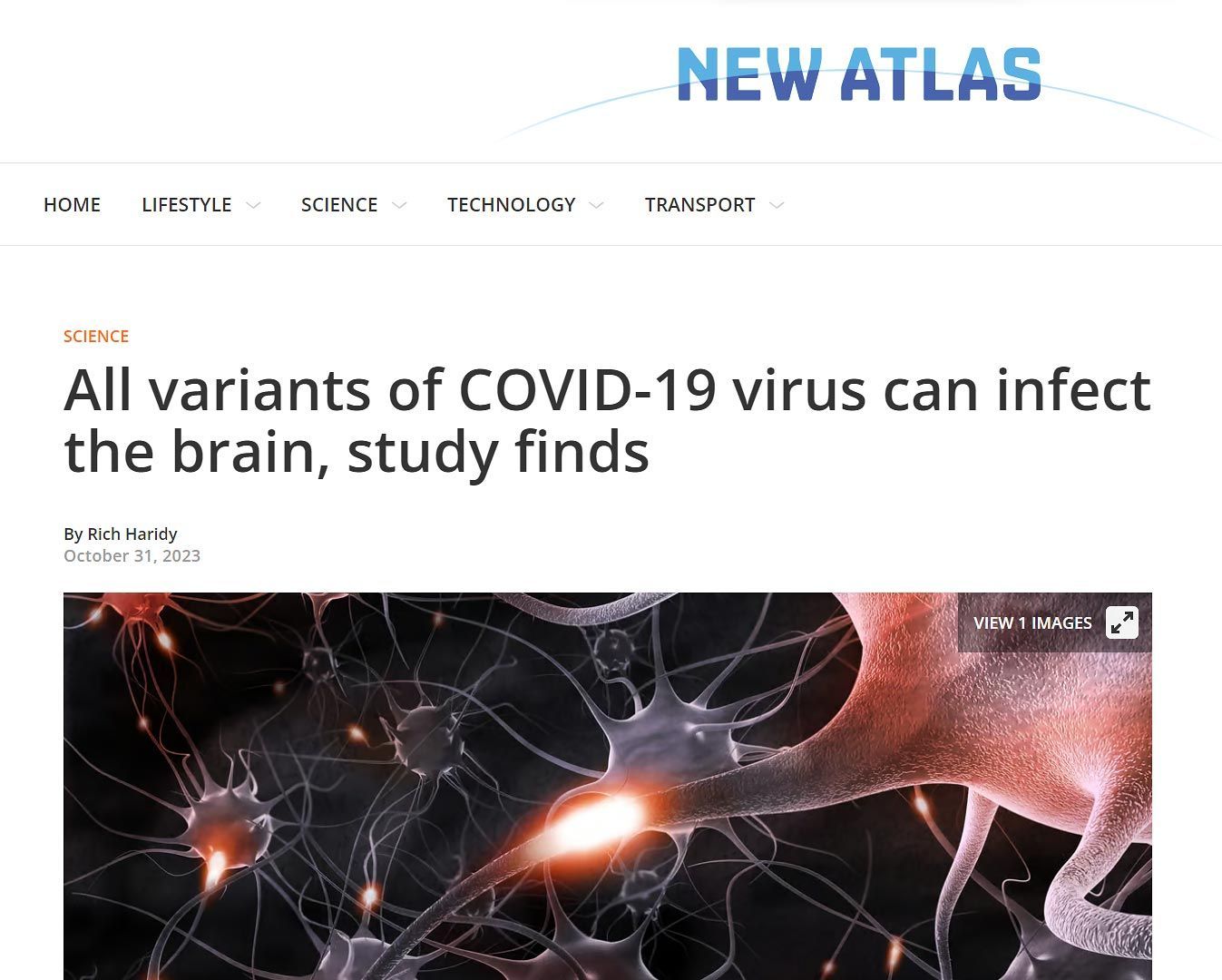
📖 (31 Oct 2023 ~ New Atlas) All variants of COVID-19 virus can infect the brain, study finds ➤
© 2023 Rich Haridy / New Atlas.

📖 (26 July 2023 ~ Nature: Communications) Neuroinvasion and anosmia are independent phenomena upon infection with SARS-CoV-2 and its variants ➤
© 2023 Nature.