On the 700-day cough
C19.Life • 16 November 2024
❦ On that 700-day cough...
It’s a new thing, but it’s only reserved for inside supermarkets and offices. And pharmacies and hospitals and care homes.
Oh, and your living-room.
But apart from that, it’s not exactly a deal-breaker.
I mean, c’mon. They put up with way worse in the 1900s.
© 2024
C19.Life

More... On the Respiratory System

❦ ‘The occurrences of respiratory disorders among patients who survived for 30 days after the COVID-19 diagnosis continued to rise consistently, including asthma, bronchiectasis, COPD, ILD, PVD*, and lung cancer. * COPD = Chronic obstructive pulmonary disease . ILD = Interstitial lung disease . PVD = Peripheral vascular disease . With the severity of the acute phase of COVID-19, the risk of all respiratory diseases increases progressively. Besides, during the 24-months follow-up, we observed an increasing trend in the risks of asthma and bronchiectasis over time, which indicates that long-term monitoring and meticulous follow-up of these patients is essential. These findings contribute to a more complete understanding of the impact of COVID-19 on the respiratory system and highlight the importance of prevention and early intervention of these respiratory sequelae of COVID-19. In this study, several key findings have been further identified. Firstly, our research demonstrates a significant association between COVID-19 and an increased long-term risk of developing various respiratory diseases. Secondly, we found that the risk of respiratory disease increases with severity in patients with COVID-19, indicating that it is necessary to pay attention to respiratory COVID-19 sequelae in patients, especially those hospitalized during the acute stage of infection. This is consistent with the findings of Lam et al., who found that the risk of some respiratory diseases (including chronic pulmonary disease, acute respiratory distress syndrome and ILD) increased with the severity of COVID-19. Notably, however, our study found that asthma and COPD remained evident even in the non-hospitalized population. This emphasizes that even in cases of mild COVID-19, the healthcare system should remain vigilant. Thirdly, we investigated differences in risk across time periods, as well as the long-term effects of COVID-19 on respiratory disease. During the 2-years follow-up period, the risks of COPD, ILD, PVD and lung cancer decreased, while risks of asthma and bronchiectasis increased. Fourthly, our study showed a significant increase of the long-term risk of developing asthma, COPD, ILD, and lung cancer diseases among individuals who suffered SARS-CoV-2 reinfection. This finding emphasizes the importance of preventing reinfection of COVID-19 in order to protect public health and reduce the potential burden of SARS-CoV-2 reinfection. Interestingly, vaccination appears to have a potentially worsening effect on asthma morbidity compared with other outcomes. This observation aligns with some previous studies that have suggested a possible induction of asthma onset or exacerbation by COVID-19 vaccination. It suggests that more care may be necessary for patients with asthma on taking the COVID vaccines. The underlying mechanisms associated with COVID and respiratory outcomes are not fully understood, but several hypotheses have been proposed. First, SARS-CoV-2 can persist in tissues (including the respiratory tract), as well as the circulating system for an extended period of time after the initial infection. This prolonged presence of the virus could directly contribute to long-term damage of the respiratory tissues, consequently leading to the development of various respiratory diseases. Second, it has been observed that SARS-CoV-2 infection can lead to prolonged immunological dysfunctions, including highly activated innate immune cells, a deficiency in naive T and B cells, and increased expression of interferons and other pro-inflammatory cytokines. These immune system abnormalities are closely associated with common chronic respiratory diseases – asthma, bronchiectasis, COPD, as well as the development of lung cancer. Next, SARS-CoV-2 itself has been shown to drive cross-reactive antibody responses, and a range of autoantibodies were found in patients with COVID-19. In conclusion, our research adds to the existing knowledge regarding the effects of COVID-19 on the respiratory system. Specifically, it shows that the risk of respiratory illness increases with the severity of infection and reinfection. Our findings emphasize the importance of providing extended care and attention to patients previously infected with SARS-CoV-2.’ ❂ 📖 (17 Feb 2024 ~ The Lancet: eClinical Medicine) Long-term risks of respiratory diseases in patients infected with SARS-CoV-2: a longitudinal, population-based cohort study ➤ © 2024 The Lancet: eClinical Medicine .

❦ “If y’all are busy weakening your immune systems with one virus, let me assure you that there are packs of other pathogens out there waiting to chew on the leftovers.”
❦ ‘Pulmonary arterial hypertension (PAH) is a pulmonary vascular disease characterized by the progressive elevation of pulmonary arterial pressures.’ Pulmonary Arterial Hypertension ( PAH ) is a progressive lung disease that affects the heart and lungs . It is caused when the tiny arteries in the lungs become thickened and narrowed , causing abnormally high blood pressure in the pulmonary artery . Symptoms include shortness of breath during exercise, fainting spells , dizziness , swelling of the ankles or legs , chest pain , and a racing pulse . ‘It is becoming increasingly apparent that inflammation contributes to the pathogenesis and progression of PAH. Several viruses are known to cause pulmonary arterial hypertension (PAH) , such as SARS-CoV-2 , Human Endogenous Retrovirus K (HERV-K), and Human Immunodeficiency Virus ( HIV ), in part due to acute and chronic inflammation .’ ❂ 📖 (18 Apr 2023 ~ International Journal of Molecular Sciences) Human Endogenous Retrovirus, SARS-CoV-2, and HIV Promote PAH via Inflammation and Growth Stimulation ➤ © 2023 International Journal of Molecular Sciences .
❦ “COVID-19 causes lung fibrosis. It affects the immune system, and it causes liver fibrosis . COVID-19 causes brain inflammation and heart inflammation, strokes, heart attacks and large blood clots. COVID-19 causes diabetes . COVID-19 can cause kidney failure. I could go on... and on. Bone necrosis, joint pain, hair and teeth falling out. Do you normally expect a cold to make your teeth fall out ? Look up ‘lung fibrosis’ and ‘liver fibrosis’. Google them, and read about the complications. Read how patients that have these progressive diseases die. (Apologies to patients that already know.) Time and again, these patients have said to me (particularly when I was a young medical student): “Don’t do what I did.” “Don’t smoke.” “Alcohol is...” “I wish I had never...” “Save yourself...” Of those dying of infectious causes of lung and liver fibrosis: “Why me...?” “I wish I could have avoided that infection...” Stop. Stop as many COVID infections as you can. Stop now. Now is your chance to avoid treading these terrible paths. Once COVID has weakened your organs and immune system, every other pathogen – and even some environmental/commensal bugs – can move in... You will feel nothing wrong, nothing wrong, nothing wrong... then... the cascade of deterioration will snowball. Stop now while you are still in the “I feel nothing wrong” phase. There may well already be stuff wrong, but it’s better to try to stay in this phase than accelerate towards death any faster than is avoidable. No, not everyone will get every effect to the same extent, but macrophages do get activated by COVID (as well as other immune pathways and cells). Some of the inflammation in the body has been observed for months. That is a recipe for damage and fibrosis. I wrote this after hearing – again and again – “I have a cough, it just won’t budge, and it’s not COVID”. I don’t know what's causing all the coughing. Could be anything... but this is one of the ways I would expect widespread prevalence of lung damage to present. It’s also one of the ways I would expect chronic infections with slow-growing pathogens (like TB or atypical pneumonias) to present... Chronic coughs can also have other malignant or serious causes. These should be assessed and monitored by a GP if it’s not budging. Please... try to look after yourselves.. .”
❦ The effects of SARS-CoV-2 infection during pregnancy on fetal lung development have been largely understudied throughout the COVID-19 pandemic. To our knowledge, this is the first study showing reduced fetal lung volume in otherwise healthy pregnant women with SARS-CoV-2 infection. This reduction was dependent on the timepoint of infection, indicating that the most significant results occurred in the third trimester. ❂ 📖 (10 Apr 2022 ~ The Lancet / Respiratory Medicine) Effects of SARS-CoV-2 on prenatal lung growth assessed by fetal MRI ➤ © 2022 Stoecklein et al / The Lancet: Respiratory Medicine.
More by... C19.Life
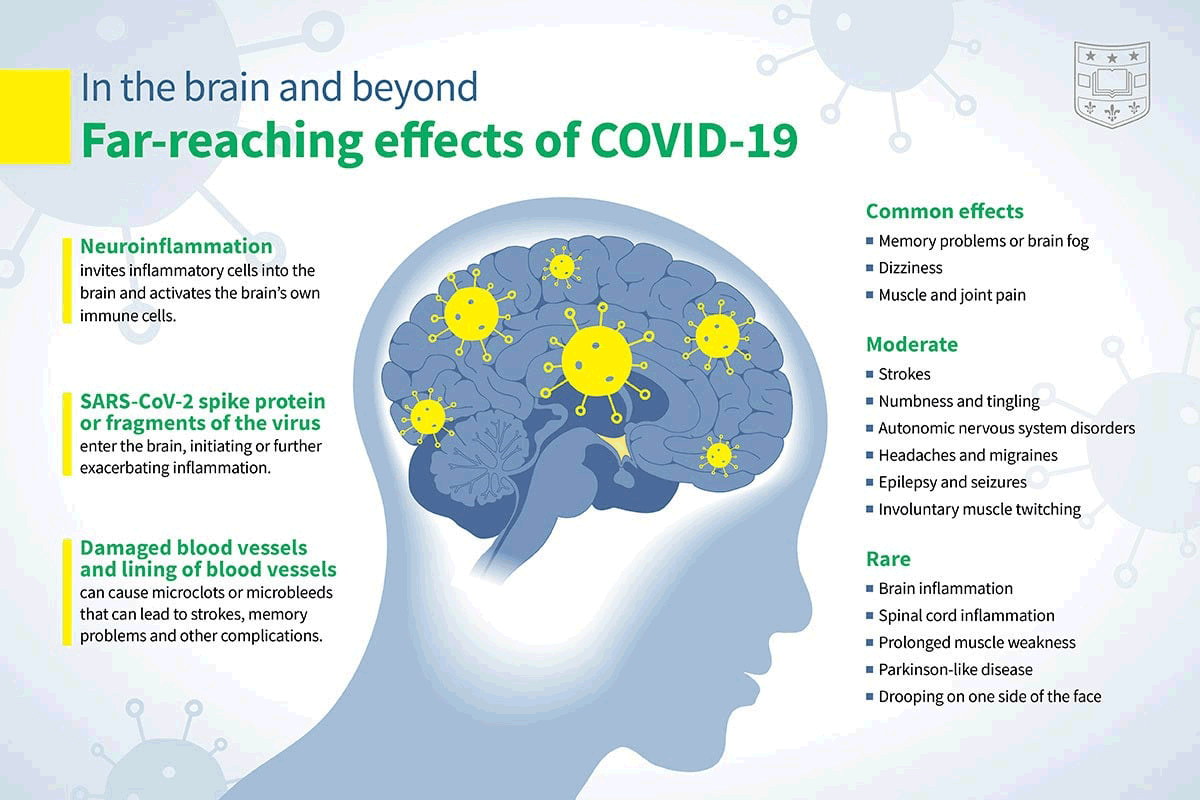
‘Although COVID-19 was originally considered a respiratory illness, it is now well established that SARS-CoV-2 infection can have far-reaching impacts on the nervous system. Common neurological symptoms in Long COVID [PASC] include new-onset cognitive difficulties, dysautonomia, fatigue, and peripheral neuropathy.’ from ‘Neuroimmune pathophysiology of long COVID’ by Moen et al / Psychiatry and Clinical Neurosciences (2025).
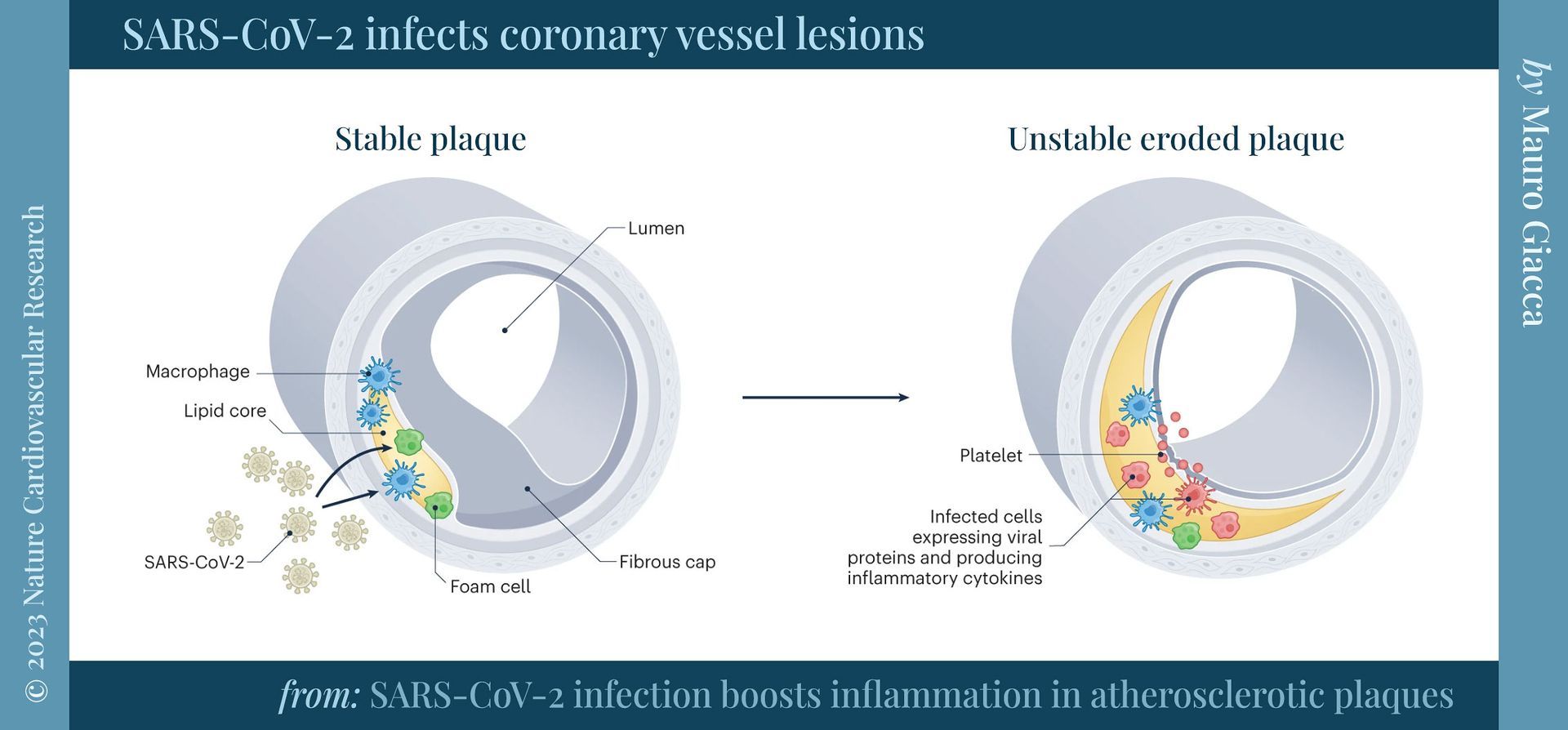
‘Symptomatic or asymptomatic SARS-CoV-2 infection was associated with increased risk of late CV [cardiovascular] outcomes, occurring at least 30 days (on average 10 months) after SARS-CoV-2 infection. Importantly, we demonstrated this effect of COVID-19 on CV events, regardless of initial presenting COVID-19 symptoms.’ The American Journal of Cardiology (15 Jul 2022) ➤
❦ If parents, and politicians and teachers, and healthcare workers and public health bodies wanted things to change, all they need do is read . It’s all there. But they don’t. They won’t. And they insist on their medical and scientific flat-earthing – hand-sanitiser for aerosol-transmitted disease – because they prefer the world to be flat. So let them walk off the edge of the world. [ Caveat: The earth is not flat, and doing nothing will not flatten the curve – but walk far enough, and you are likely to fall off a cliff.] © 2024 C19.Life

❦ NHS nurse in 1990: — “Shit, I just got a needlestick injury.” ❦ 2024: — “Yeah, well, whatever. We all gotta die of something.”

❦ SARS-CoV-2 – the virus that causes COVID-19 – is airborne . In May 2021, the WHO officially recognised that SARS-CoV-2 is airborne via microscopic aerosols – meaning that the virus is transmissible through the air at both long and short range . ✾

❦ Q . Why is it important for me to know if I have a COVID-19 infection? ❦ A . If you don’t recover well, it can help your doctor to know if you’ve had a COVID-19 infection – so that they can more effectively treat any of your on-going symptoms. It also helps you to be conscious of the fact that contact with other people might hurt, permanently damage, or kill them.
❦ Person puts hand in flame. Gets burnt. Knows fire burns flesh. Has a fear of getting burnt in the future, because fire and flesh create undesirable pain. Lives in a permanent state of fear of fire for rest of life? No. Becomes cautious of fire, and takes precautions to not be burnt again. If anybody accuses you of ‘living in fear’ for taking precautions to avoid catching SARS-CoV-2 (Covid-19) again and again, know that you are, in fact, ‘living with sensible caution’ – as you know that the headaches and heart attacks and strokes and plaque build-up in arteries and the killing of one’s own parents and the reduction of your children’s IQ and fertility, and your daily fatigue, and your memory disorders and immune dysregulation and your new-onset susceptibility to other opportunistic viral, bacterial and fungal infections, and your high blood pressure, and your aggressive, new-onset or recurrence of cancer and the rapid, aggressive, new-onset dementia – are all things you should rightly be afraid of. For yourself, and for other people. But SARS-2 is clever. You often only feel the burn weeks or months later, and you don’t make the connection between the time you stuck your hand in a fire and the now-septic wound that has worked its way into the gristle of your toes. SARS-2 isn’t stupid, you know, and it has had four years of mutating repeatedly inside several billion humans and animals to hone its game while we sit on the lawn and watch our house burn down. ❂ © 2023 C19.Life .
— “It’s in the hamsters.” (Kills hamsters.) — “It’s in the mink.” (Kills mink.) — “It’s in the white-tailed deer.” (Kills white-tailed deer.) — “It’s in the tigers, cheetahs and cats.” (Kills the tigers, cheetahs and cats.) — “It’s in the dogs.” (Kills dogs.) — “It’s in the monkeys and Great Apes.” (Kills monkeys and Great Apes.) — “It’s in the people.” (North, South, East or West first?) © 2021 C19.Life. ❂ “If you are wondering why epidemiologists are Eeyore-ing over all of the COVID-19 infections among various animals, one reason is that we currently do not have the tools to eradicate a disease with an animal reservoir. Mask up. Vax up.” Dr. Elizabeth Jacobs (14 Nov 2021) ❂