📖 Beyond breathing: How COVID-19 affects your heart, brain and other organs

Michael Merschel / American Heart Association • 16 January 2024

“I would argue that COVID-19 is not a disease of the lungs at all.


It seems most likely that it is what we call a vascular and neurologic infection, affecting both nerve endings and our cardiovascular system.”
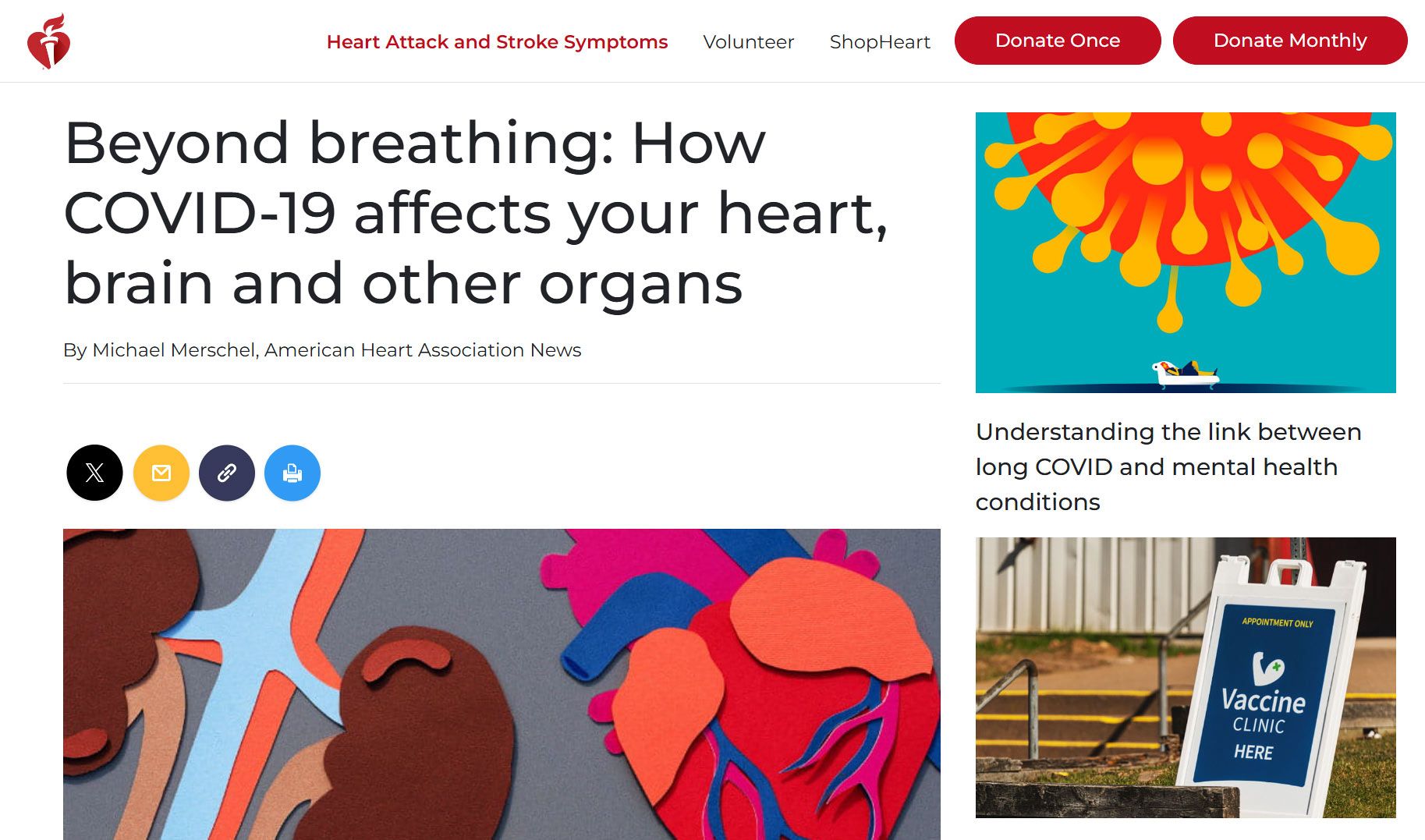
📖 (16 Jan 2024 ~ American Heart Association) ‘Beyond breathing: How COVID-19 affects your heart, brain and other organs’.


 Scientific Media Article ~ ‘Beyond breathing: How COVID-19 affects your heart, brain and other organs’


By Michael Merschel / American Heart Association (16 Jan 2024)


‘The (2023-2024) New Year started with an increase in COVID-19 hospitalizations in the U.S., prompting Hernandez and other experts to advise caution, especially for those at high risk.


While the short-term effects of COVID-19 can be flu-like, even mild cases can lead to long COVID [Post-Acute Sequelae of COVID-19, or PASC].


Because COVID-19 typically affects breathing and can lead to problems such as pneumonia, many people may think it’s primarily a lung disease.


It’s not that simple, said Dr. Nisha Viswanathan, director of the long COVID program at the David Geffen School of Medicine at the University of California, Los Angeles.


“I would argue that COVID-19 is not a disease of the lungs at all,” she said.


“It seems most likely that it is what we call a vascular and neurologic infection, affecting both nerve endings and our cardiovascular system.”


It’s no surprise that experts say SARS-CoV-2 – the name of the virus that causes COVID-19 – is complex, with many of its pathways just beginning to be understood. But some things are becoming clear.


One of the best reviews of long COVID symptoms appeared last January [2023] in Nature Reviews Microbiology. It detailed the disease’s effects throughout the body, including the pancreas, blood vessels and reproductive system.


SARS-CoV-2 is excellent at triggering your immune system to go from zero to 100,” said Dr. Lindsay McAlpine, a neurologist who is director of the Yale NeuroCovid Clinic.


That revving of the immune response leads to both a “wide swath of inflammation” and excessive blood clotting.


“Perhaps the viral replication is going on in the lungs and nasopharynx [the area at the top of the throat that connects the nose to the respiratory system]. But the inflammation that the virus triggers is systemic.”


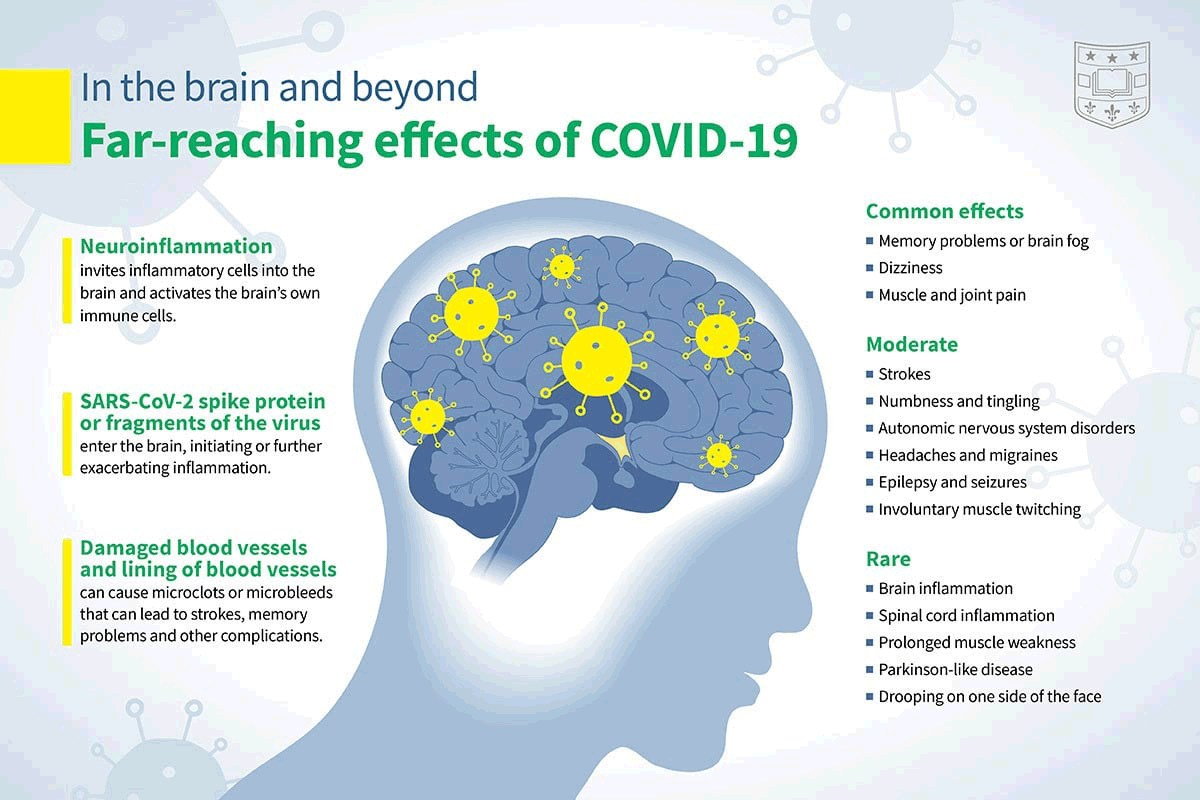
The brain & nervous system


“The virus and the immune response can have several different effects on the brain,” said McAlpine, lead author of a 2021 study looking at ischemic strokes in people with COVID-19.


The exact causes of brain-related issues are not clear, but she said it does not appear that the virus is directly attacking brain tissue.


‘Rather, it seems that the ramped-up immune response leads to clots that could cause brain problems.’


“In addition to the cognitive impairment, we see worsening or new-onset migraines,” she said. “We see new neuropathy in the legs and the arms – numbness, tingling, difficulty walking because of the neuropathy.”


COVID-19 might also be unmasking other neurodegenerative  conditions, such as Parkinson’s disease, she said. McAlpine has diagnosed new cases of Alzheimer’s disease in people who, before COVID-19, were functioning fine, then developed symptoms.


The heart & blood vessels


The risk of dangerous clotting – including deep vein thrombosis (clots in large veins) and pulmonary embolisms (clots in the lungs) – is small  but stays elevated  for up to a year after the infection.


Many factors might be playing into COVID-related heart problems, including microclots – tiny blood clots – or an autoimmune response targeting heart muscle cells.


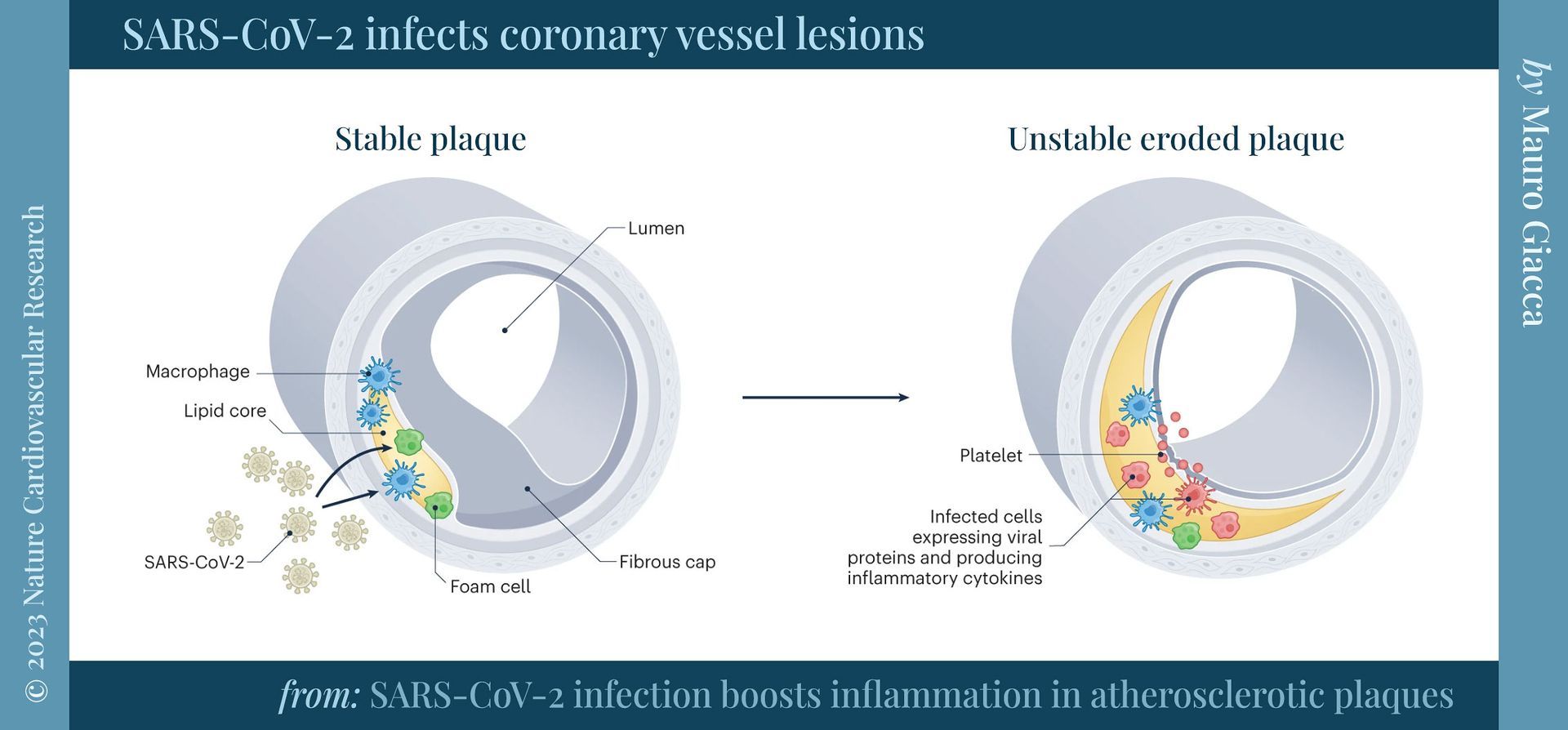
A recent study in Nature Cardiovascular Research shows the virus may infect coronary arteries, causing plaque build-up to become inflamed and break off, which can lead to a heart attack.


The Gastrointestinal system


“Interestingly, the GI system’s mechanism may be a little different than what impacts the heart,” Viswanathan said. One theory suggests that the virus finds a [‘safe’] hiding place while the rest of the body fights it off.


“And we have found now in multiple studies that COVID can remain in our GI tract for weeks and months after it has resolved in the rest of the body.”


The exact place where the virus might hide is up for debate. But gastrointestinal symptoms are clear: “People can have nausea, vomiting, diarrhea.”


A large study of veterans published last year [7 Mar 2023] in Nature Communications found people with COVID-19 had a higher risk of gastroesophageal reflux disease, irritable bowel syndrome and other gastrointestinal problems more than 30 days after infection compared to people without COVID-19.


The risk was elevated even among people who had mild cases of the disease.


The Kidneys


Kidney problems were common in a 2023 study published in The Lancet Respiratory Medicine that looked at organ damage  after COVID-19 infection.


What to do?


The first step is to be cautious if COVID-19 is surging in your area. Consider wearing a mask in crowded public places.


[If you don’t want repeat reinfections, and their cumulatively higher risk of life-altering or fatal consequences, wear a well-fitting (N95/N99 or FFP2/FFP3) respirator in all public spaces, particularly in the highest-risk settings of healthcare, education and transport.]


“A lot of people have COVID now, and it may take a while for them to test positive.


The second thing is get vaccinated.”


The [USA’s] Centers for Disease Control and Prevention recommends everyone ages 5 and older get the updated COVID-19 vaccine to avoid getting seriously ill from the virus.*


* [Pre-2025 Trump election in the USA. Pre-2024 Summer / Autumn / Winter cancellation of SARS-CoV-2 vaccines for those aged 50-plus in the UK.]


“The third thing is controlling your cardiovascular risk factors,” she said. That means getting high blood pressure, diabetes or other chronic medical conditions under control. 


McAlpine added that if you have COVID-19 symptoms, stay away from other people to avoid putting them at risk.


“And if you could avoid an illness like COVID or the flu – why wouldn’t you?”’


📖 (16 Jan 2024 ~ American Heart Association) Beyond breathing: How COVID-19 affects your heart, brain and other organs ➤


© 2024 Michael Merschel / American Heart Association.


‘Beyond breathing: How COVID-19 affects your heart, brain and other organs.’


© 2024 Michael Merschel / American Heart Association.


Further reading on the heart


(25 Feb 2025 ~ C19.Life) The beating heart... 70 studies and articles on SARS-CoV-2 and the cardiovascular system (2020–2024) ➲’.


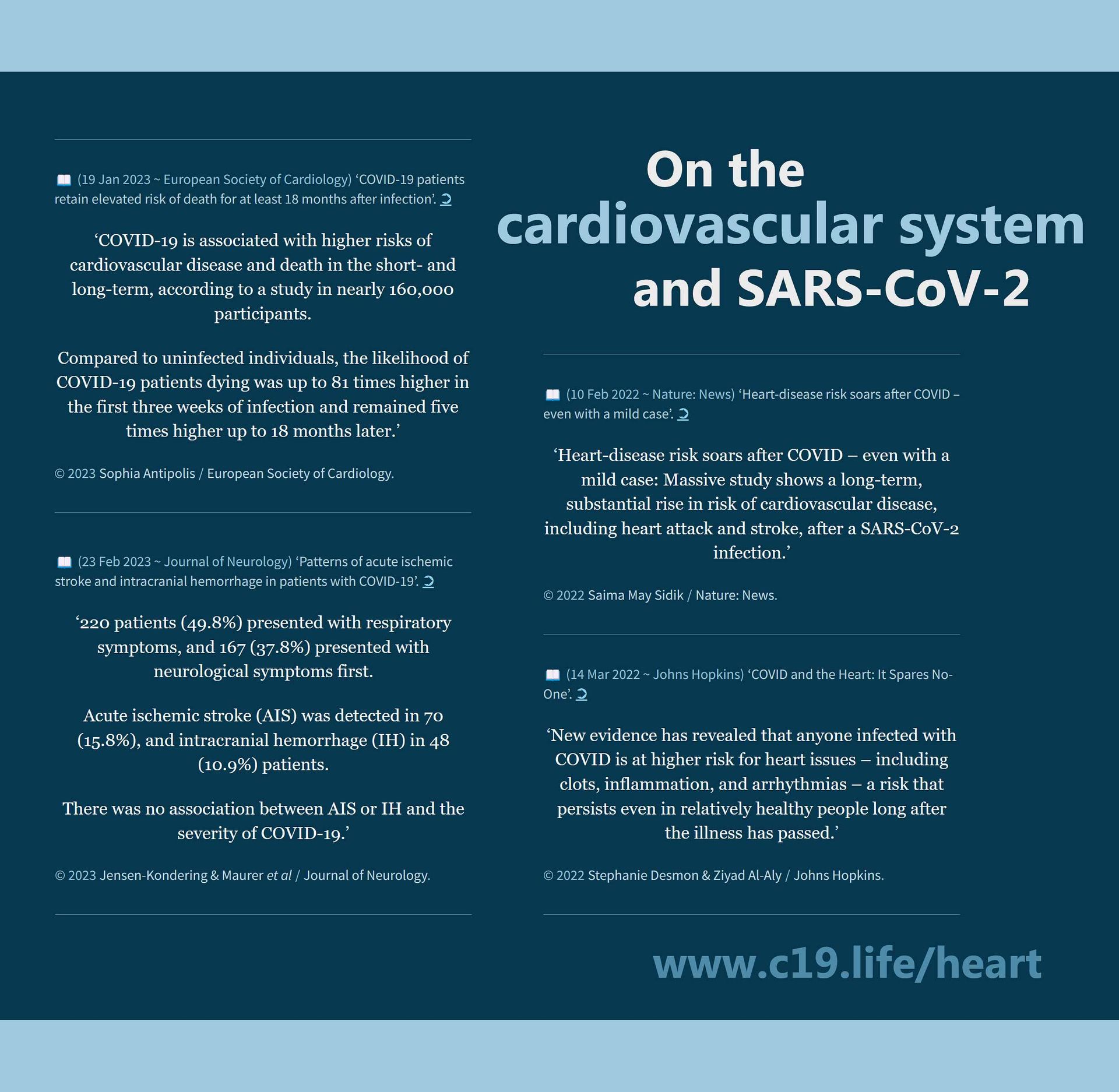
Results from this study indicated a statistically significant increased risk for a range of cardiovascular conditions as well as mortality.


While these risks were heightened for individuals who experienced a more severe acute episode of COVID-19 (ie. requiring hospitalization), it is essential to note that most individuals (72.5%) in the cohort did not experience hospitalization during the acute phase.


Many of these conditions will have lasting effects on quality of life.


© 2023 DeVries et al / JAMA Network.


More... Cardiovascular system

by C19.Life... et al 28 February 2025
‘But even people who had not been hospitalized had increased risks of many conditions, ranging from an 8% increase in the rate of heart attacks to a 247% increase in the rate of heart inflammation.’ Nature (2 Aug 2022) ‘Either symptomatic or asymptomatic SARS-CoV-2 infection is associated with increased risk of late cardiovascular outcomes and has causal effect on all-cause mortality in a late post-COVID-19 period.’ The American Journal of Cardiology (15 Sep 2023)
by Huang et al / BMC Medicine 6 February 2025
‘The proportions of PACS [PASC/Long Covid] patients experiencing chest pain, palpitation, and hypertension as sequelae were 22%, 18%, and 19% respectively.’
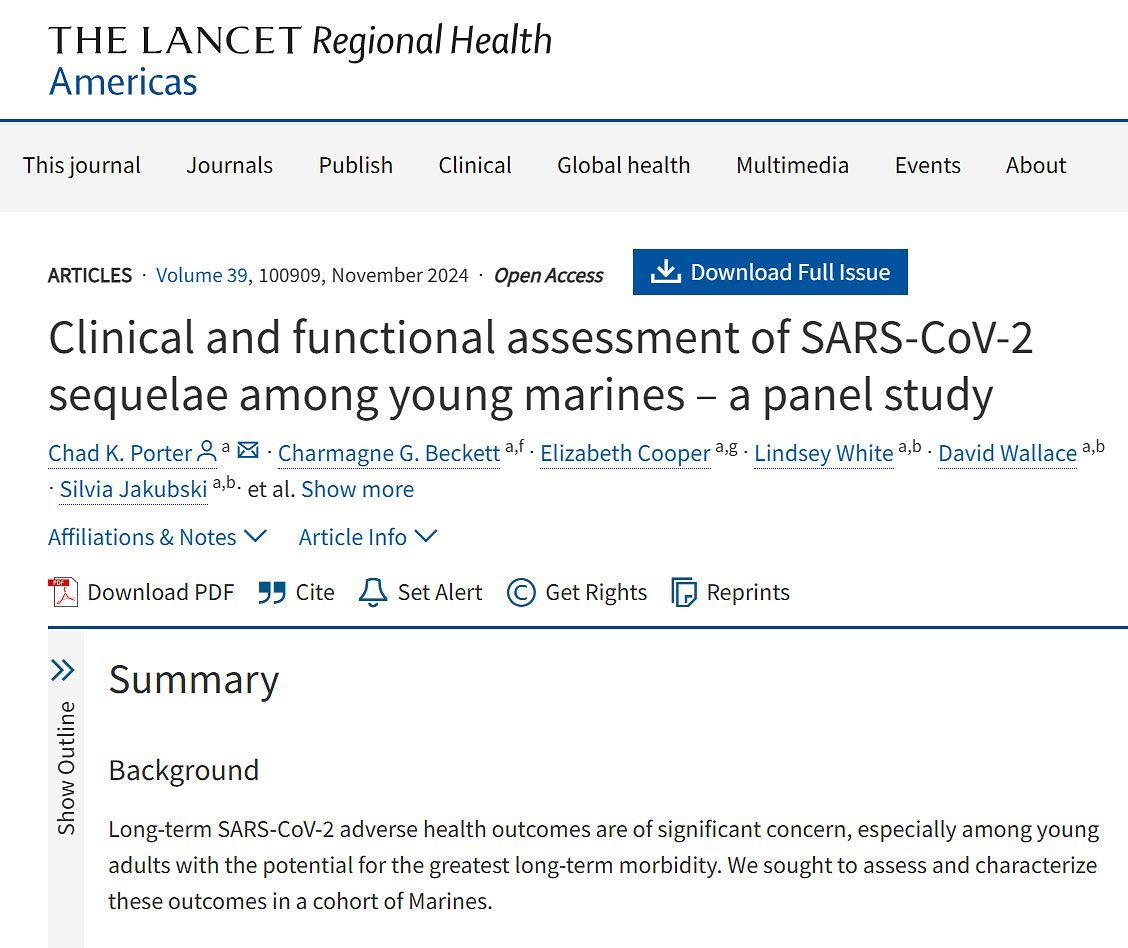
by Porter et al / The Lancet: Regional Health (Americas) 23 October 2024
❦ ‘In this population of healthy young adult US Marines with mostly either asymptomatic or mild acute COVID-19, one fourth reported physical , cognitive , or psychiatric long-term sequelae of infection. The Marines affected with PASC [Post-Acute Sequelae of COVID-19 / Post-COVID-19 Complications / ‘Long Covid’] showed evidence of long-term decrease in functional performance suggesting that SARS-CoV-2 infection may negatively affect health for a significant proportion of young adults .’ ❂ ‘Among the 899 participants, 88.8% had a SARS-CoV-2 infection. Almost a quarter (24.7%) of these individuals had at least one COVID-19 symptom that lasted for at least 4 weeks meeting the a priori definition of PASC established for this study. Among those with PASC, 10 had no acute SARS-CoV-2 symptoms after PCR-confirmed infection suggesting that PASC can occur among asymptomatic individuals. Many participants reported that lingering symptoms impaired their productivity at work, caused them to miss work, and/or limited their ability to perform normal duty/activities. Marines with PASC had significantly decreased physical fitness test scores up to approximately one year post-infection with a three-mile run time that averaged in the 65th percentile of the reference cohort. [ PASC was associated with a significantly increased 3-mile run time on the standard Marine fitness test. PASC participants ran 25.1 seconds slower than a pre-pandemic reference cohort composed of 22,612 Marine recruits from 2016 to 2019. A three-mile run evaluates aerobic exercise , overhead lifting of an ammunition can and pull-ups evaluate strength , and shooting a rifle evaluates fine-motor skills .] Scores for events evaluating upper body (pull-ups, crunches, and ammo-can lift) were not significantly reduced by PASC; however, overall physical fitness scores were reduced. ‘The poorer run times and overall scores among PASC participants are indicative of on-going functional effects.’ Standardized health-based assessments for somatization, depression, and anxiety further highlighted the detrimental health effects of PASC. Almost 10% of participants with PASC had PHQ-8 scores ≥10. Increased somatization * has been associated with increased stress, depression, and problems with emotions. * [ Somatization / Somatisation = Medical symptoms caused by psychological stress.] Additionally, PASC participants had higher GAD-7 scores suggesting increased anxiety in a population with unique inherent occupational stressors associated with higher rates of anxiety, depression, and post-traumatic stress disorder. ‘Increased severity of anxiety among those with PASC, combined with greater rates of mental health disorders in general, could portend an ominous combination and should be closely followed.’ Like others, we identified cardiopulmonary symptoms as some of the most prevalent. The high prevalence of symptoms like shortness of breath, difficulty breathing, cough, and fatigue is particularly notable when combined with decreased objective measures of aerobic performance such as running. These results suggest pathology in the cardiopulmonary system. In contrast we observed no reduction in scores assessing strength and marksmanship suggesting the lack of detectable pathology in the neuro-musculoskeletal system. We have previously found in this same cohort that SARS-CoV-2 infection causes prolonged dysregulation of immune cell epigenetic patterns like auto-immune diseases. Based on the reported PASC symptoms, the potential current and future public health implications in this population could be substantial. ‘Chronic health complications from PASC, especially in a young and previously healthy population with a long life expectancy, could decrease work productivity and increase healthcare costs.’ Significant changes in the Years-of-Life lived with a disability can disproportionally increase disability-adjusted life-years, and should be considered when allocating resources and designing policy.’ ❂ 📖 (23 Oct 2024 ~ The Lancet: Regional Health/America) Clinical and functional assessment of SARS-CoV-2 sequelae among young marines – a panel study ➤ © 2024 The Lancet .
by Dr. David Joffe PhD / FRACP (Respiratory Physician) 27 January 2024
❦ “It’s really not in the interest of the virus to kill us quickly. That’s why it has mutated to immune escape. That way it enters silently, and then eats you slowly whilst you’re still a spreading vector. Refrigerator trucks are long gone. That’s all the political class wanted. The unseen costs of CVD [cardiovascular disease] , DM [diabetes mellitus] , and both dementia and Parkinson’s Disease are the train coming down the tunnel. The economists are catching up. The actuaries are already there. Politicians and most people? Not yet...” ❂ © 2024 Dr. David Joffe PhD / FRACP (Respiratory Physician) ➲
by Wolfram Ruf / Science 18 January 2024
❦ ‘Acute infections with severe acute respiratory syndrome coronavirus 2 (SARS-CoV-2) cause a respiratory illness that can be associated with systemic immune cell activation and inflammation , widespread multi-organ dysfunction , and thrombosis . Not everyone fully recovers from COVID-19, leading to Long Covid, the treatment of which is a major unmet clinical need. Long Covid can affect people of all ages , follows severe as well as mild disease , and involves multiple organs . Patients with Long Covid display signs of immune dysfunction and exhaustion , persistent immune cell activation , and autoimmune antibody production , which are also pathological features of acute COVID-19. The complement system is crucial for innate immune defense by effecting lytic destruction of invading micro-organisms, but when uncontrolled, it causes cell and vascular damage . The complement cascade is activated by antigen–antibody complexes in the classical pathways or in the lectin pathway by multimeric proteins (lectins) that recognize specific carbohydrate structures, which are also found on the SARS-CoV-2 spike protein that facilitates host cell entry. Both pathways may contribute to the pronounced complement activation in acute COVID-19. Long Covid symptoms include a postexertional exhaustion reminiscent of other post-viral illnesses , such as myalgic encephalomyelitis ( ME ) – chronic fatigue syndrome ( MECFS ) with suspected latent viral reactivation . Antibody titer changes in Long Covid patients indicate an association of fatigue with reactivation of latent Epstein-Barr virus ( EBV ) infections , and Cervia-Hasler et al found that the severity of Long Covid symptoms is associated with cytomegalovirus ( CMV ) reactivation . A better understanding of the connections between viral reactivation, persistent interferon signaling, and autoimmune pathologies promises to yield new insights into the thromboinflammation associated with Long Covid. Although therapeutic interventions with coagulation and complement inhibitors in acute COVID-19 produced mixed results, the pathological features specific for Long Covid suggest potential interventions for clinical testing. Microclots are also observed in ME-CFS patients , indicating crucial interactions between complement, vWF, and coagulation-mediated fibrin formation in post-viral syndromes. A better definition of these interactions in preclinical and clinical settings will be crucial for the translation of new therapeutic concepts in chronic thromboinflammatory diseases .’ ❂ 📖 (18 Jan 2024 ~ Science) Immune damage in Long Covid ➤ © 2024 Wolfram Ruf / Science .
by Pearson-Stuttard et al / The Lancet (Regional Health Europe) 1 December 2023
❦ 'For middle-aged adults ( 50–64 ) in this period [June 2022 – June 2023 ], the relative excess for almost all causes of death examined was higher than that seen for all ages .' ➲ ‘Since July 2020, the Office for Health Improvement and Disparities (OHID) has published estimates of excess mortality. In the period from week ending 3rd June 2022 to 30th June 2023 , excess deaths for all causes were relatively greatest for 50–64 year olds ( 15% higher than expected ), compared with 11% higher for 25–49 and < 25 year olds , and about 9% higher for over 65 year old groups. Several causes, including cardiovascular diseases , show a relative excess greater than that seen in deaths from all-causes ( 9% ) over the same period (week ending 3rd June 2022–30th June 2023), namely: all cardiovascular diseases ( 12% ), heart failure ( 20% ), ischaemic heart diseases ( 15% ), liver diseases ( 19%) , acute respiratory infections ( 14% ), and diabetes ( 13% ). For middle-aged adults (50–64) in this 13-month period, the relative excess for almost all causes of death examined was higher than that seen for all ages . Deaths involving cardiovascular diseases were 33% higher than expected, while for specific cardiovascular diseases, deaths involving ischaemic heart diseases were 44% higher , cerebrovascular diseases 40% higher and heart failure 39% higher . Deaths involving acute respiratory infections were 43% higher than expected and for diabetes , deaths were 35% higher . Deaths involving liver diseases were 19% higher than expected for those aged 50–64 , the same as for deaths at all ages. Looking at place of death, from 3rd June 2022 to 30th June 2023 there were 22% more deaths in private homes than expected compared with 10% more in hospitals . The greatest numbers of excess deaths in the acute phase of the pandemic were in older adults. The pattern now is one of persisting excess deaths which are most prominent in relative terms in middle-aged and younger adults , with deaths from CVD [cardiovascular] causes and deaths in private homes being most affected.’ ❂ ➲ [C19.Life Note ] : Considering their findings and conclusion, I’m not sure why the authors would choose to use the term ‘post-pandemic’ in this title – when their evidence points to an on-going pandemic, fueled by continuing high rates of infection, that is now simply killing younger age-groups than previously seen.] ❂ 📖 (1 Dec 2023 ~ The Lancet (Regional Health Europe) Excess mortality in England post Covid-19 pandemic: implications for secondary prevention ➤ © 2023 Pearson-Stuttard et al / The Lancet (Regional Health Europe) .
by Sayyadi et al / Annals of Hematology 19 April 2023
❦ ‘COVID-19 patients have a hypercoagulability state, and thrombosis is a life-threatening complication of them.’ ✻ Hypercoagulability , also known as thrombophilia , is a condition in which there is an abnormally increased tendency towards blood clotting . ‘From the early days of the severe acute respiratory syndrome coronavirus-2 (SARS-CoV-2) outbreak to the present, clinical and basic studies have indicated that coronavirus disease 2019 (COVID-19) may be associated with coagulopathy ( CAC ), which is involved in its related morbidity and mortality. Deep vein thrombosis ( DVT ) and pulmonary embolism ( PE ) are common in COVID-19 patients and are remarkably high in the intensive care unit (ICU)–admitted patients. CAC can lead to the formation of circulating microthrombi and macrothrombi which can involve multiple sites, including the lungs , brain , heart , and visceral organs like kidneys and spleen . There is a close relationship between the immune system and coagulation. The components of the hemostatic system play a role in the body’s immunity, and the activation of the immune system strongly influences the hemostatic system. Abnormal activation of the immune system may promote the growth of pathologies associated with thrombosis. COVID-19 is accompanied by an immune-cell hyperactivation and excessive production of proinflammatory cytokines , known as “ cytokine storm ”. CAC is theorized to result from dysregulated interactions between the immune and coagulation systems .’ ❂ 📖 (19 Apr 2023 ~ Annals of Hematology) Status of major hemostatic components in the setting of COVID-19: the effect on endothelium, platelets, coagulation factors, fibrinolytic system, and complement ➤ © 2023 Annals of Hematology .
by Wang et al / International Journal of Molecular Sciences 18 April 2023
❦ ‘Pulmonary arterial hypertension (PAH) is a pulmonary vascular disease characterized by the progressive elevation of pulmonary arterial pressures.’ Pulmonary Arterial Hypertension ( PAH ) is a progressive lung disease that affects the heart and lungs . It is caused when the tiny arteries in the lungs become thickened and narrowed , causing abnormally high blood pressure in the pulmonary artery . Symptoms include shortness of breath during exercise, fainting spells , dizziness , swelling of the ankles or legs , chest pain , and a racing pulse . ‘It is becoming increasingly apparent that inflammation contributes to the pathogenesis and progression of PAH. Several viruses are known to cause pulmonary arterial hypertension (PAH) , such as SARS-CoV-2 , Human Endogenous Retrovirus K (HERV-K), and Human Immunodeficiency Virus ( HIV ), in part due to acute and chronic inflammation .’ ❂ 📖 (18 Apr 2023 ~ International Journal of Molecular Sciences) Human Endogenous Retrovirus, SARS-CoV-2, and HIV Promote PAH via Inflammation and Growth Stimulation ➤ © 2023 International Journal of Molecular Sciences .
by De Michele et al / Frontiers in Cardiovascular Medicine 18 January 2023
❦ ‘Acute ischemic stroke (AIS) is a fearful complication of Coronavirus Disease-2019 (COVID-19). SARS-CoV-2 infection seems to play a major role in endothelium activation and infarct volume extension during AIS.’ ❂ 📖 (10 Jan 2023 ~ Frontiers in Cardiovascular Medicine) SARS-CoV-2 infection predicts larger infarct volume in patients with acute ischemic stroke ➤ © 2023 Frontiers in Cardiovascular Medicine .
by Davis et al / Nature Reviews: Microbiology 13 January 2023
‘The narrative that COVID-19 had only respiratory sequelae led to a delayed realization of the neurological, cardiovascular and other multi-system impacts of COVID-19.’
by Sabatino et al / Journal of Clinical Medicine 26 December 2022
❦ ‘Our findings shed new light on the cardiac impact of COVID-19 in paediatric age. 60% of children who recovered from asymptomatic or mildly symptomatic COVID-19 still exhibit mild subclinical systolic cardiac impairment after an average follow-up.’ ❂ 📖 (26 Dec 2022 ~ Journal of Clinical Medicine) Mid- and Long-Term Atrio-Ventricular Functional Changes in Children after Recovery from COVID-19 ➤ © 2022 Journal of Clinical Medicine .
by Constantinescu-Bercu et al / Journal of Thrombosis and Haemostosis 12 December 2022
❦ ‘Post-COVID syndrome (PCS) is an emerging condition linked to an uncharacterized prothrombotic state. Post-COVID syndrome can lead to increased platelet recruitment and larger thrombi under flow. The median time of 23 months from symptom onset suggests potential long-term thrombogenicity .’ ❂ 📖 (12 Dec 2022 ~ Journal of Thrombosis and Haemostosis) Analysis of thrombogenicity under flow reveals new insights into the prothrombotic state of patients with post-COVID syndrome ➤ © 2022 Journal of Thrombosis and Haemostosis .
by Puntmann et al / Nature: Medicine 5 September 2022
‘At follow-up (329 days after infection), 57% of participants had persistent cardiac symptoms.’
by Janice Hopkins Tanne / The British Medical Journal 14 February 2022
❦ ‘ Infection with SARS-CoV-2 can cause cardiovascular problems for up to a year , not just during the acute phase, a large study has found. One year after covid-19 infection people were at higher risk of cardiovascular disease , including cerebrovascular disorders , dysrhythmias , ischaemic and non-ischaemic heart disease , pericarditis , myocarditis , heart failure , and thromboembolic disease . Even those who had not been admitted to hospital with covid-19 were at risk of these problems , but the risk increased with the severity of the infection, from people not admitted to hospital to those admitted to intensive care. Those who had had covid-19 had a 72% increased risk of heart failure , 63% increased risk of heart attack , and 52% increased risk of stroke compared with controls. The researchers wrote that the increased risks “were evident regardless of age , race , sex , and other cardiovascular risk factors , including obesity, hypertension, diabetes, chronic kidney disease, and hyperlipidemia; they were also evident in people without any cardiovascular disease before exposure to covid-19 , providing evidence that these risks might manifest even in people at low risk of cardiovascular disease.” The researchers said that the risk of cardiovascular disease in people who have had covid-19 is substantial . While the best way to prevent cardiovascular problems is to prevent infection in the first place , governments and health systems must prepare to deal with possible big problems in future. The cardiovascular problems seen in some people who have had covid-19 are chronic and may have long-lasting consequences for the individual and for health systems , economic productivity , and life expectancy , the researchers say.’ ❂ 📖 (7 Feb 2022 ~ Nature: Medicine) Long-term cardiovascular outcomes of COVID-19 ➤ 📖 (14 Feb 2022 ~ The BMJ) Covid-19: Even mild infections can cause long term heart problems, large study finds ➤ Related: 📖 (10 Feb 2022 ~ Nature: News) Heart-disease risk soars - even with a mild case ➤ © 2022 The British Medical Journal .
by Sirico et al / European Heart Journal: Cardiovascular Imaging 5 July 2021
❦ ‘SARS-CoV-2 infection may affect left ventricular deformation in 26% of children despite an asymptomatic or only mildly symptomatic acute illness. A follow-up is needed to verify the reversibility of these alterations and their impact on long-term outcomes.’  ❂ 📖 (5 July 2021 ~ European Heart Journal: Cardiovascular Imaging) Left ventricular longitudinal strain alterations in asymptomatic or mildly symptomatic paediatric patients with SARS-CoV-2 infection ➤ © 2021 Sirico et al / European Heart Journal: Cardiovascular Imaging.
by Valverde et al / Circulation 9 November 2020
❦ ‘A total of 286 children from 55 centers in 17 European countries were included. The median age was 8.4 years (interquartile range, 3.8-12.4 years) and 67% were boys. The most common cardiovascular complications were shock, cardiac arrhythmias, pericardial effusion, and coronary artery dilatation. Cardiac involvement is common in children with multisystem inflammatory syndrome associated with the Covid-19 pandemic.’  ❂ 📖 (9 Nov 2020 ~ Circulation) Acute Cardiovascular Manifestations in 286 Children With Multisystem Inflammatory Syndrome Associated With COVID-19 Infection in Europe ➤ © 2020 Valverde et al / Circulation.