📖 Long COVID: major findings, mechanisms and recommendations
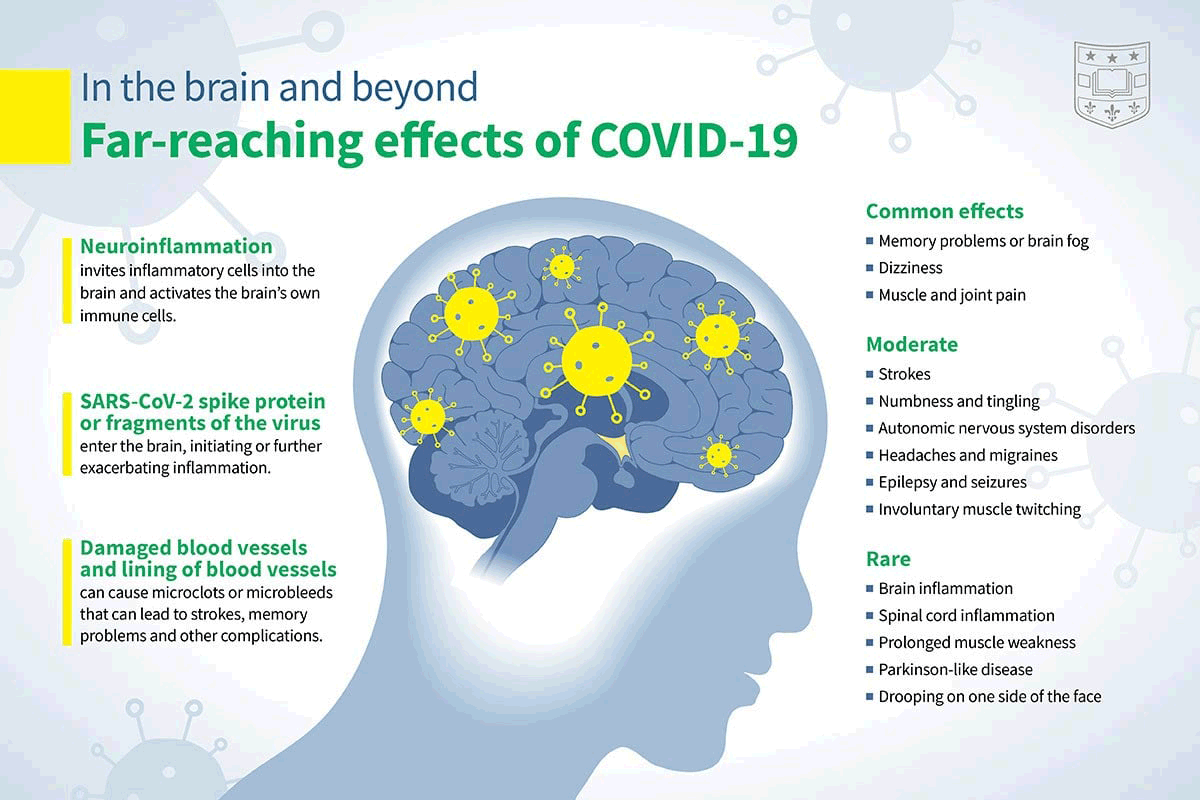
‘The narrative that COVID-19 had only respiratory sequelae led to a delayed realization of the neurological, cardiovascular and other multi-system impacts of COVID-19.’
❦ ‘Long COVID is a multi-systemic illness encompassing ME/CFS, dysautonomia, impacts on multiple organ systems, and vascular and clotting abnormalities.
Circulatory system disruption includes endothelial dysfunction and subsequent downstream effects, and increased risks of deep vein thrombosis, pulmonary embolism and bleeding events.
Microclots detected in both acute COVID-19 and long COVID contribute to thrombosis.’
*
Note: Endothelial dysfunction precedes atherosclerosis and is an independent predictor of cardiovascular events.
Atherosclerosis is a condition where plaque, a sticky substance made up of fat, cholesterol, calcium, and other substances found in the blood, hardens and narrows the arteries, limiting the flow of oxygen-rich blood to the body.
Deep vein thrombosis (DVT) is a blood clot that forms in a deep vein, usually in the pelvis, calf, or thigh.
A pulmonary embolism [PE] is a blood clot that blocks and stops blood flow to an artery in the lung. Often the clot starts in a leg and travels to the lung.
*
‘Long-term changes to the size and stiffness of blood cells have also been found in long COVID, with the potential to affect oxygen delivery.
A long-lasting reduction in vascular density, specifically affecting small capillaries, was found in patients with long COVID 18 months after infection.
Long COVID has already debilitated millions of individuals worldwide, and that number is continuing to grow.
On the basis of more than two years of research on Long COVID and decades of research on conditions such as ME/CFS, a significant proportion of individuals with Long COVID may have lifelong disabilities if no action is taken.
Diagnostic and treatment options are currently insufficient, and many clinical trials are urgently needed to rigorously test treatments that address hypothesized underlying biological mechanisms, including viral persistence, neuroinflammation, excessive blood clotting and autoimmunity.’
❂
📖 (13 Jan 2023 ~ Nature Reviews: Microbiology) Long COVID: major findings, mechanisms and recommendations ➤
© 2023 Davis et al / Nature.
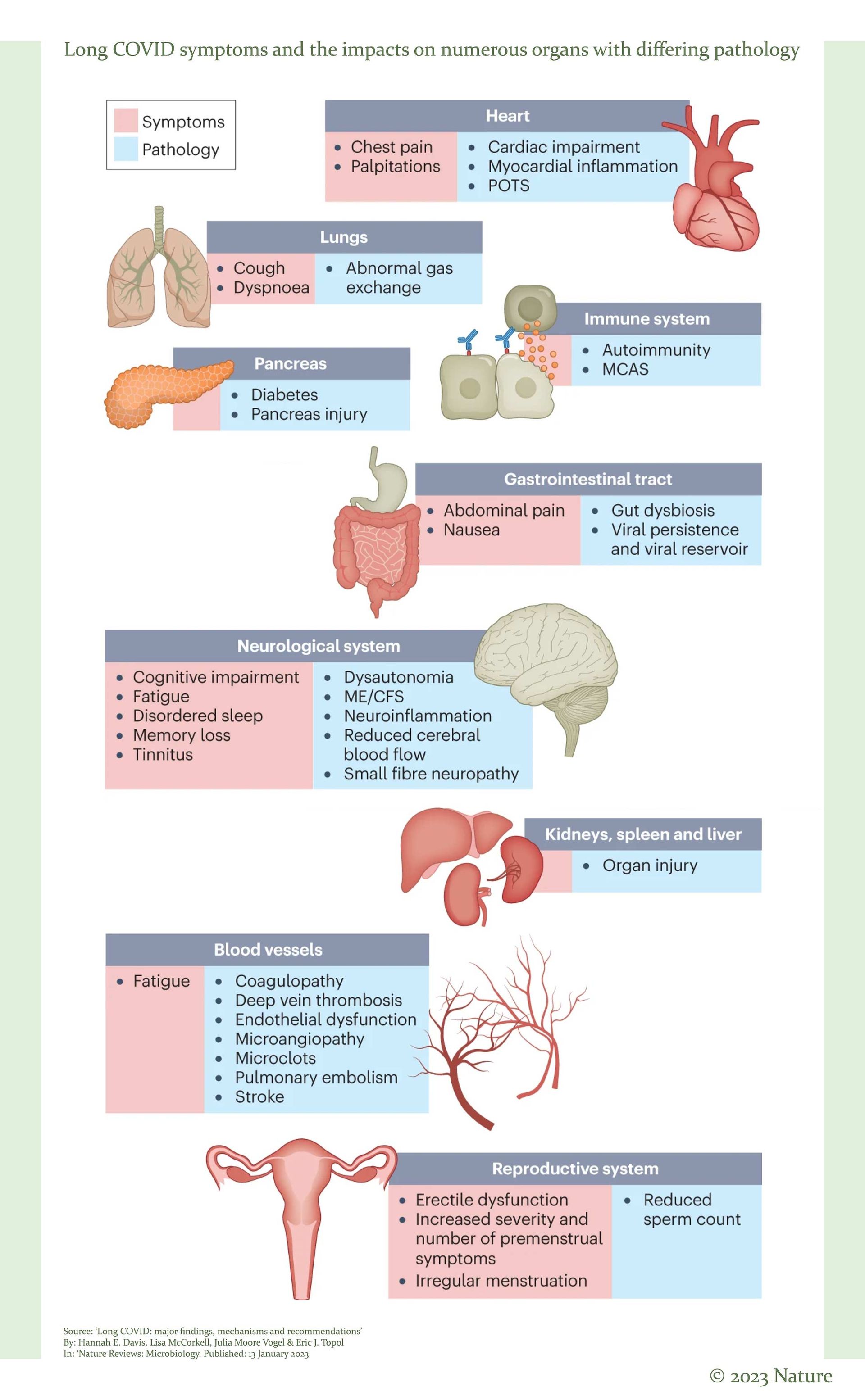
© 2023 Nature: Figure 1: Long COVID symptoms and the impacts on numerous organs with differing pathology ➤.
Notes:
➲ MCAS = Mast cell activation syndrome.
Mast cell activation syndrome is a condition in which the patient experiences repeated episodes of the symptoms of anaphylaxis — allergic symptoms such as hives, swelling, low blood pressure, difficulty breathing and severe diarrhoea.
High levels of mast cell mediators are released during those episodes.
➲ ME / CFS = Myalgic encephalomyelitis / Chronic fatigue syndrome.
Myalgic encephalomyelitis, also called chronic fatigue syndrome, is a long-term condition that causes extreme tiredness and a range of other symptoms.
➲ PoTS = Postural orthostatic tachycardia syndrome.
Postural tachycardia syndrome (PoTS) is an abnormal increase in heart rate that occurs after sitting up or standing.
Some typical symptoms include dizziness and fainting.
❂
📖 (13 Jan 2023 ~ Nature Reviews: Microbiology) Long COVID: major findings, mechanisms and recommendations ➤
© 2023 Nature.