On ACE2 receptors and bicycles
❦ When SARS-CoV-2 infects a cell, it takes over the cell’s machinery for its own benefit.
Imagine a factory that produces cars.
Each section of the factory has a specific job: some parts assemble the engine, some the body, and others paint and finish the car.
Now, imagine if a group of saboteurs entered this factory.
Instead of letting the factory produce cars, these saboteurs force the machinery to produce something entirely different, like bicycles.
Not only does the factory stop producing cars, but it’s also now churning out bicycles at a rapid pace, which then exit the factory and convince other factories to do the same.
Once SARS-CoV-2 enters a cell by binding to the ACE2 receptor*, it releases its RNA into the cell.
* The ACE2 receptor acts as a cellular doorway for SARS-CoV-2 to hook into and infect a wide range of human cells. ACE2 receptors are highly expressed in the heart, kidneys, and lungs.
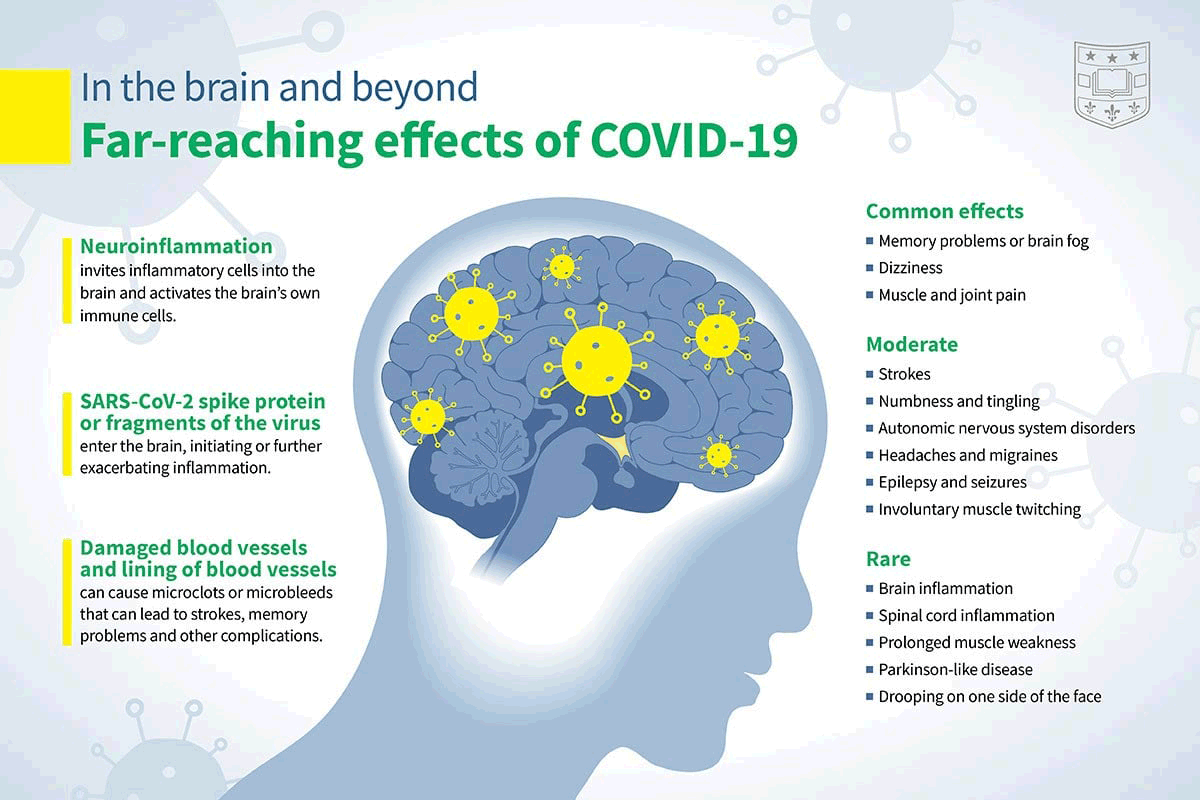
The widespread nature of this receptor – found, for example, in the oral and nasal mucosa, the nasopharynx, stomach, small intestine, colon, skin, testes, lymph nodes, thymus, bone marrow, spleen, liver, kidney and brain – explains why so many organs can be affected by SARS-CoV-2.
ACE2 = Angiotensin-converting enzyme 2.
This viral RNA then heads to the cell’s machinery (ribosomes) and essentially tricks it into making viral proteins instead of the cell’s own proteins.
As a result, the cell starts producing components of new virus particles.
Once these components are assembled into new viruses, they exit the cell and go on to infect other cells, repeating the cycle.
Over time, this hijacking leads to cell damage and death, contributing to the tissue and organ damage observed in COVID-19.
© 2023 Outbreak Updates ➲