📖 What we now know about Long COVID and our brains
❦ Globally, millions of people have contracted COVID-19 over the past few years, and some have even caught the virus two or more times.
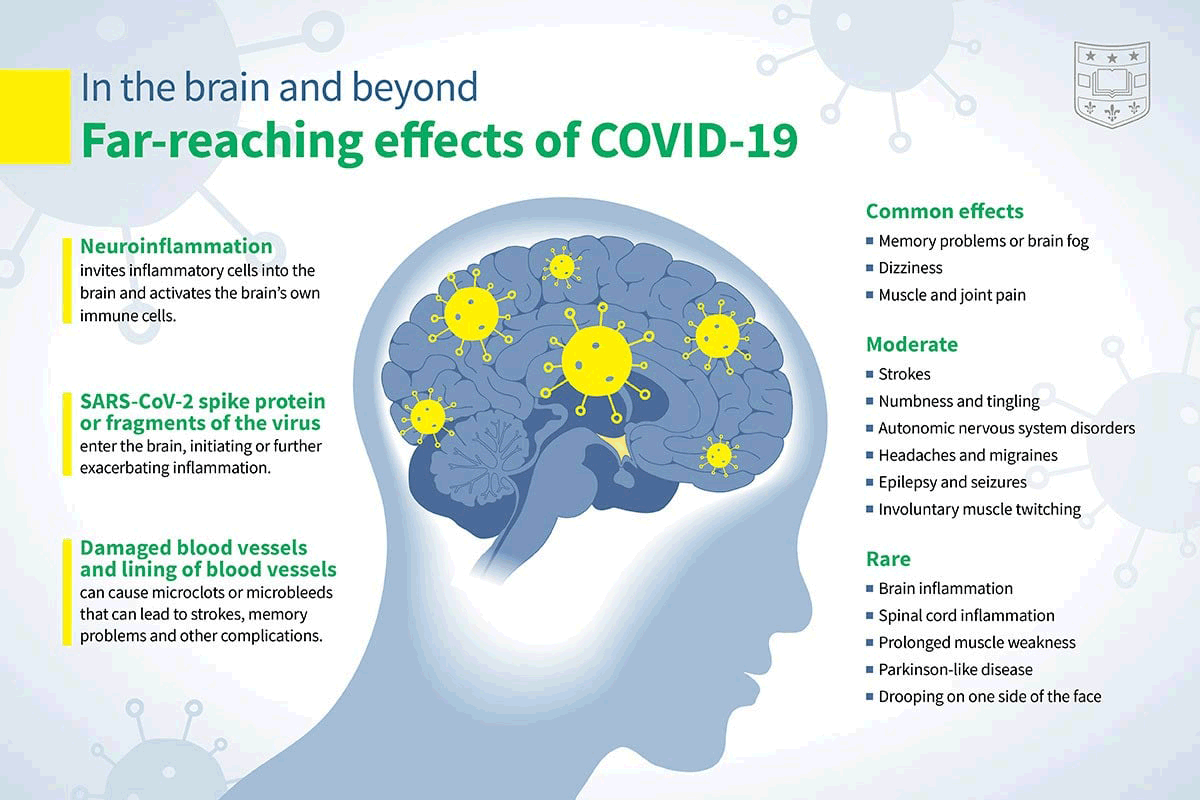
Of more than 665 million cases worldwide, nearly one in two people with COVID-19 is at risk of developing Post-COVID-19 Neurological Syndrome (PCNS).
Symptoms of Post-COVID-19 Neurological Syndrome (PCNS) mimic some of the symptoms we see after a stroke, and younger adults seem to be at particular risk.
It’s worth noting that a link between brain health and Coronavirus infections has been known since 2006, so in this context the long-term impact of COVID-19 on the brain may arguably be the expectation rather than the exception.
Nearly one in two people who have reportedly recovered from acute COVID-19 cite disabling fatigue – that is, fatigue lasting more than twelve weeks – coupled with a series of attention and cognitive deficits similar to persistent post-stroke neurological symptoms.
We have already reported on the shared pathobiology between stroke and COVID-19 at a cellular level.
So, it should not be surprising to see the long-term impact on the brain with a persistent inflammatory response (potentially due to viral persistence, immune dysregulation or autoimmunity).
❂
📖 Related: (1 Jan 2023 ~ The Lancet) The prevalence and long-term health effects of Long Covid among hospitalised and non-hospitalised populations: A systematic review and meta-analysis ➤
📖 Related: (7 Mar 2022 ~ Nature) SARS-CoV-2 is associated with changes in brain structure in UK Biobank ➤
📖 Related: (12 Jan 2021 ~ Australian Journal of General Practice) COVID-19 and long-term neurological problems: Challenges ahead with Post-COVID-19 Neurological Syndrome ➤
📖 Related: (1 Feb 2006 ~ Nature Reviews Microbiology) Coronavirus infection of the central nervous system: host-virus stand-off ➤
📖 Related: (28 Jan 2021~ Frontiers in Neurology) COVID-19 Pathophysiology Predicts That Ischemic Stroke Occurrence Is an Expectation, Not an Exception - A Systematic Review ➤
❂
📖 (6 Jan 2023 ~ University of Melbourne) What we now know about long COVID and our brains ➤
© 2023 Wijeratne et al / University of Melbourne.
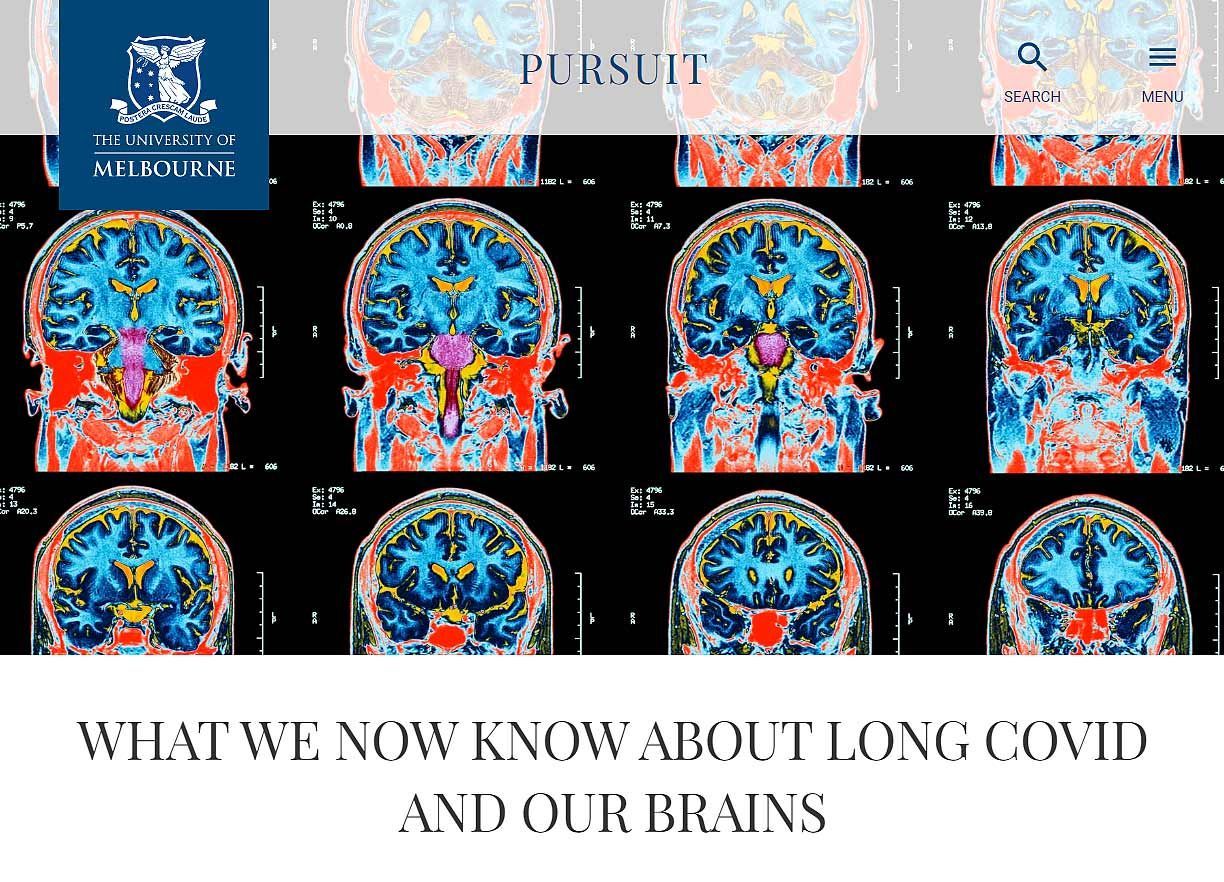
📖 (6 Jan 2023 ~ University of Melbourne) What we now know about long COVID and our brains ➤
© 2023 Wijeratne et al / University of Melbourne.