📖 Unravelling the connection between COVID-19 and Alzheimer’s disease: a comprehensive review
‘[COVID-19’s] ability to invade the central nervous system through the hematogenous and neural routes, besides attacking the respiratory system, has the potential to worsen cognitive decline in Alzheimer’s disease patients.
The severity of this issue must be highlighted.’
❦ ‘Alzheimer’s disease (AD) is acknowledged by the World Health Organisation (WHO) as a global public health concern.
AD is the primary cause of dementia and accounts for 50–70% of cases.
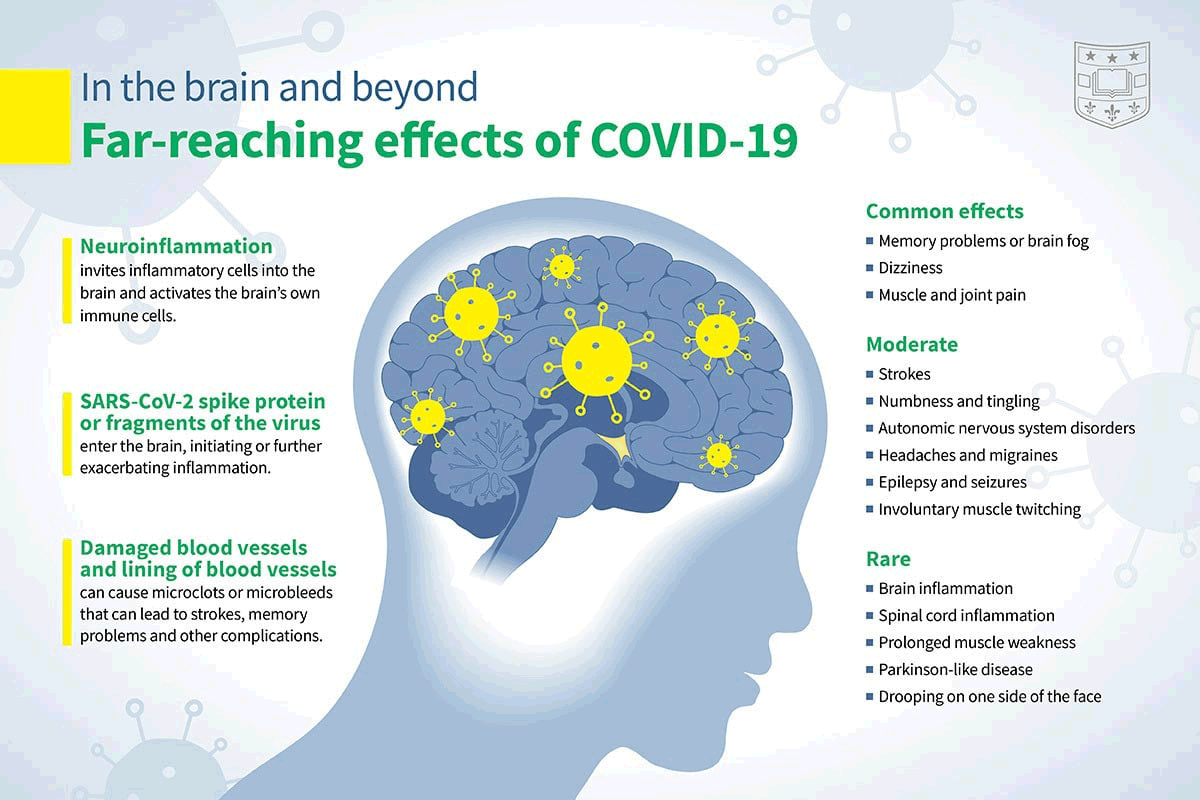
SARS-CoV-2 can damage the peripheral and the central nervous system (CNS) through both direct and indirect pathways, potentially leaving COVID-19 patients at higher risks for neurological difficulties, including depression, Parkinson’s disease, AD, etc., after recovering from severe symptoms.
Patients who recovered from severe COVID-19 infection are more likely to acquire stable neuropsychiatric and neurocognitive conditions like depression, obsessive-compulsive disorder, psychosis, Parkinson’s disease, and Alzheimer’s disease.
SARS-CoV-2 infection causes immune system dysfunction, which can lead to suppression of neurogenesis, synaptic damage, and neuronal death, all of which are associated with the aetiology of Alzheimer’s disease.
Severe systemic inflammation caused by SARS-CoV-2 is predicted to have long-term negative consequences, such as cognitive impairment.
Research has demonstrated that SARS-CoV-2-infected AD patients had a higher mortality rate. In a study from the Department of Neuroscience at the University of Madrid, 204 participants with Frontotemporal Dementia (FTD) and Alzheimer’s disease (AD) were enrolled.
According to the study, 15.2% of these individuals had COVID-19 infection, and sadly, 41.9% of those who had the virus died as a result of their illness.
COVID-19 causes a secondary effect on underlying brain pathologies, as SARS-CoV-2 has been shown to trigger or accelerate neurodegeneration processes that possibly explain long-term neurodegenerative effects in the elderly population.
In response to the impact of COVID-19 in 2020, governments worldwide acted promptly by implementing various public health measures.
During this period, people with cognitive impairments such as dementia or AD may have experienced greater stress and anxiety due to sudden changes in the environment and people’s behaviour.
It is also significantly harder for AD patients to comprehend and execute defensive measures such as wearing face masks and sanitising frequently.
❂
COVID-19 has generated a worldwide outbreak, resulting in a slew of issues for humans, particularly those suffering from Alzheimer’s disease.
Its ability to invade the central nervous system through the hematogenous and neural routes, besides attacking the respiratory system, has the potential to worsen cognitive decline in Alzheimer’s disease patients.
The severity of this issue must be highlighted.’
❂
📖 (8 Jan 2024 ~ Frontiers in Aging Neuroscience) Unravelling the connection between COVID-19 and Alzheimer’s disease: a comprehensive review ➤
© 2024 Shajahan et al / Frontiers in Aging Neuroscience.