📖 UKHSA Advisory Board: Preparedness for infectious disease threats ~ Airborne (droplet or aerosol) transmission
✻ Accessed: 4 Dec 2023.
➲ Date published: 24 Jan 2023.
➲ Date last updated: 2 Feb 2023.
❦ The UKHSA’s definition of ‘Airborne’, and how it applies to SARS-CoV-2 / COVID-19:
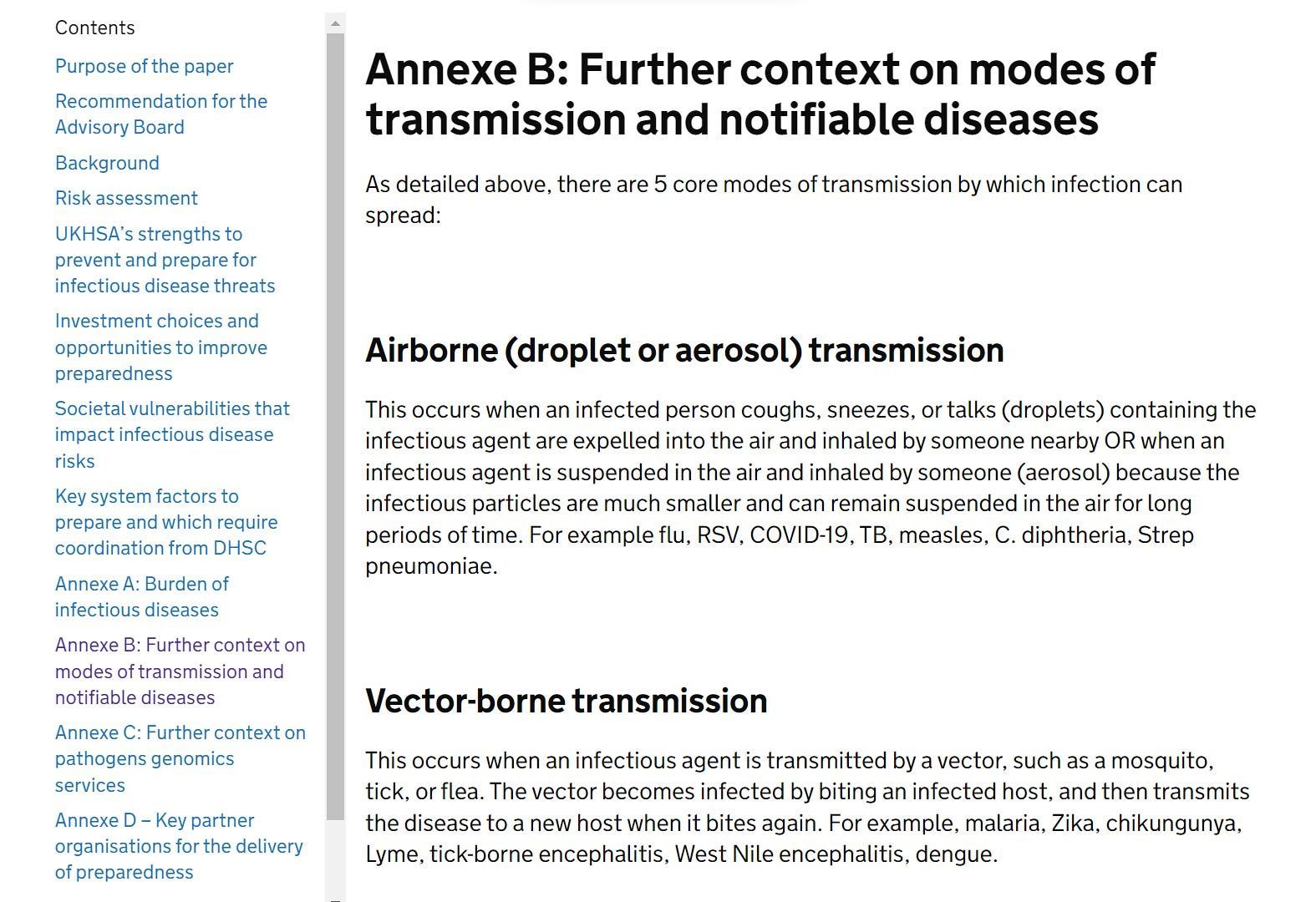
➲ Airborne (droplet or aerosol) transmission:
‘This occurs when an infected person coughs, sneezes, or talks (droplets) containing the infectious agent are expelled into the air and inhaled by someone nearby OR when an infectious agent is suspended in the air and inhaled by someone (aerosol) because the infectious particles are much smaller and can remain suspended in the air for long periods of time.
For example flu, RSV, COVID-19, TB, measles, C. diphtheria, Strep pneumoniae.’
❂
➲ [Note]: The accepted scientific definition of ‘airborne transmission’ most certainly also includes the act of breathing.
While the UKHSA admits to close-range SARS-CoV-2 transmission via droplet (and aerosol), it neglects to emphasise far-range transmission via infectious aerosols.
❂
📖 (24 Jan 2023 / Updated 2 Feb 2023 / Accessed 4 Dec 2023 ~ UK Health Security Agency) UKHSA Advisory Board: preparedness for infectious disease threats ~ Airborne (droplet or aerosol) transmission ➤
© 2023 UKHSA.

Illustration of short-range droplet and aerosol transmission, and long-range aerosol transmission of infectious SARS-CoV-2 particles.
Illustration: World Health Organization (WHO) / Adapted by C19.Life.
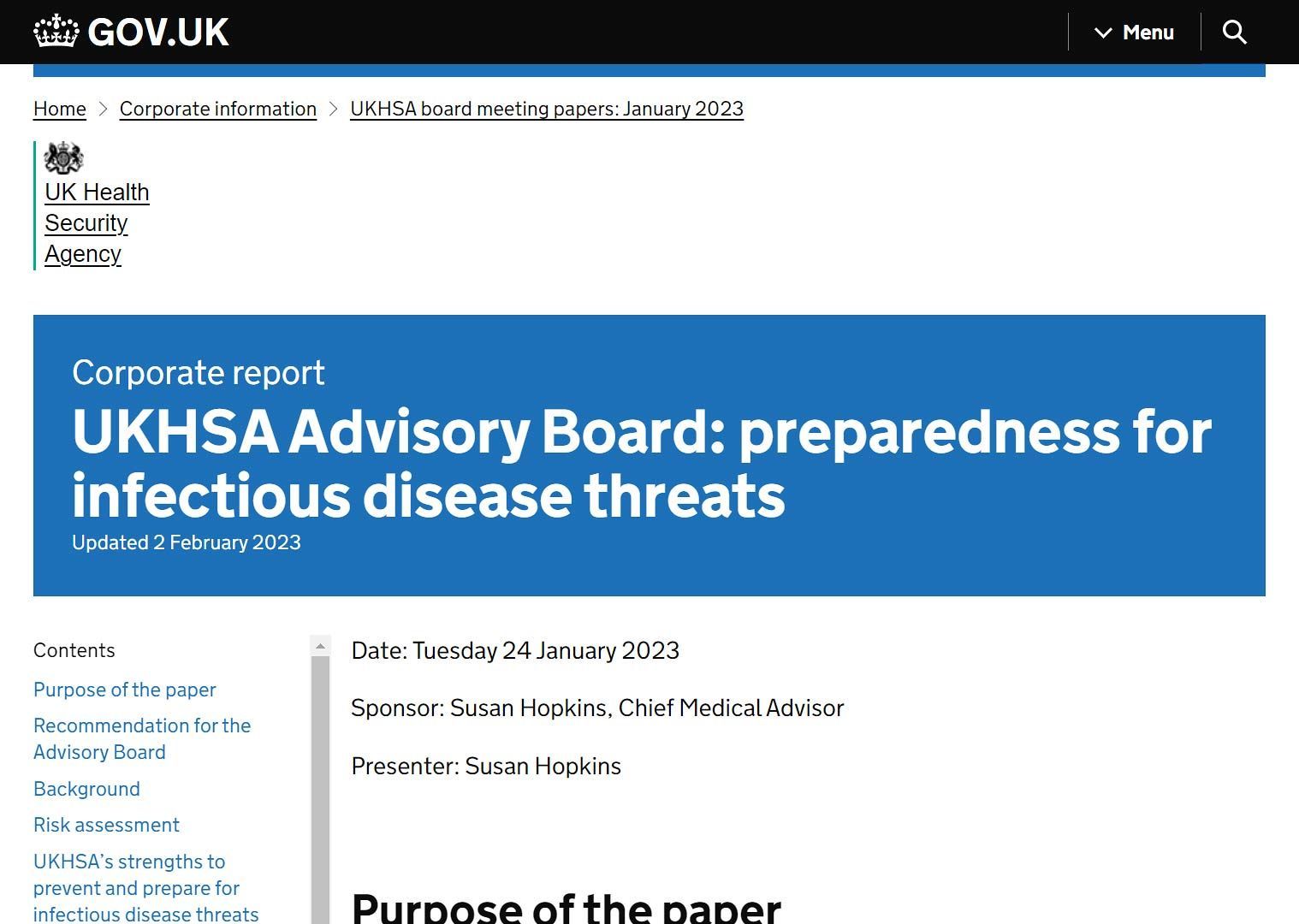
📖 (24 Jan 2023 / Updated 2 Feb 2023 / Accessed 4 Dec 2023 ~ UK Health Security Agency)
UKHSA Advisory Board: preparedness for infectious disease threats ~ Airborne (droplet or aerosol) transmission ➤
© 2023 UKHSA.