📖 SARS-CoV-2 and “Textbook” Immunity
❦ Prior to 2020, there were four endemic human coronaviruses – OC43, NL-63, 229E, and HKU1 – which were known to cause 10 to 15 percent of common colds – or the ‘Common Cold Coronaviruses’ (CCCs).
From at least the 1970s, we’ve known that infection with these coronaviruses does not lead to lasting protection from reinfection – this is textbook knowledge.
CCCs are not just colds – they can cause severe pneumonias, and exhibit a risk profile very similar to SARS-CoV-2 with age.
If reinfection really did strengthen immunity against CCCs, then older people would be the least affected – because they would have been regularly infected with diverse variants of these viruses in their past.
But that is not the case – and SARS-CoV-2 is not a CCC.
SARS-CoV-2 has a wide array of accessory proteins that silence and disrupt our normal immune responses.
As we get older, our immune systems start to lose their effectiveness – and we become more susceptible to disease.
This process is called immunosenescence.
Repeated exposure to a virus like SARS-CoV-2 is fast-tracking more people into immunosenescence at ever-earlier ages, with potentially serious repercussions for their health and longevity.
SARS-CoV-2 is a particularly nasty virus that can also trigger the hyperactivation of our own immune systems to cause severe disease.
Infection by SARS-CoV-2 has been shown to lead to an increase in autoantibodies and autoimmune disease.
Approximately 25 percent of people who develop an autoimmune disease will experience multiple autoimmune syndrome, and will risk a cascade of autoimmune conditions.
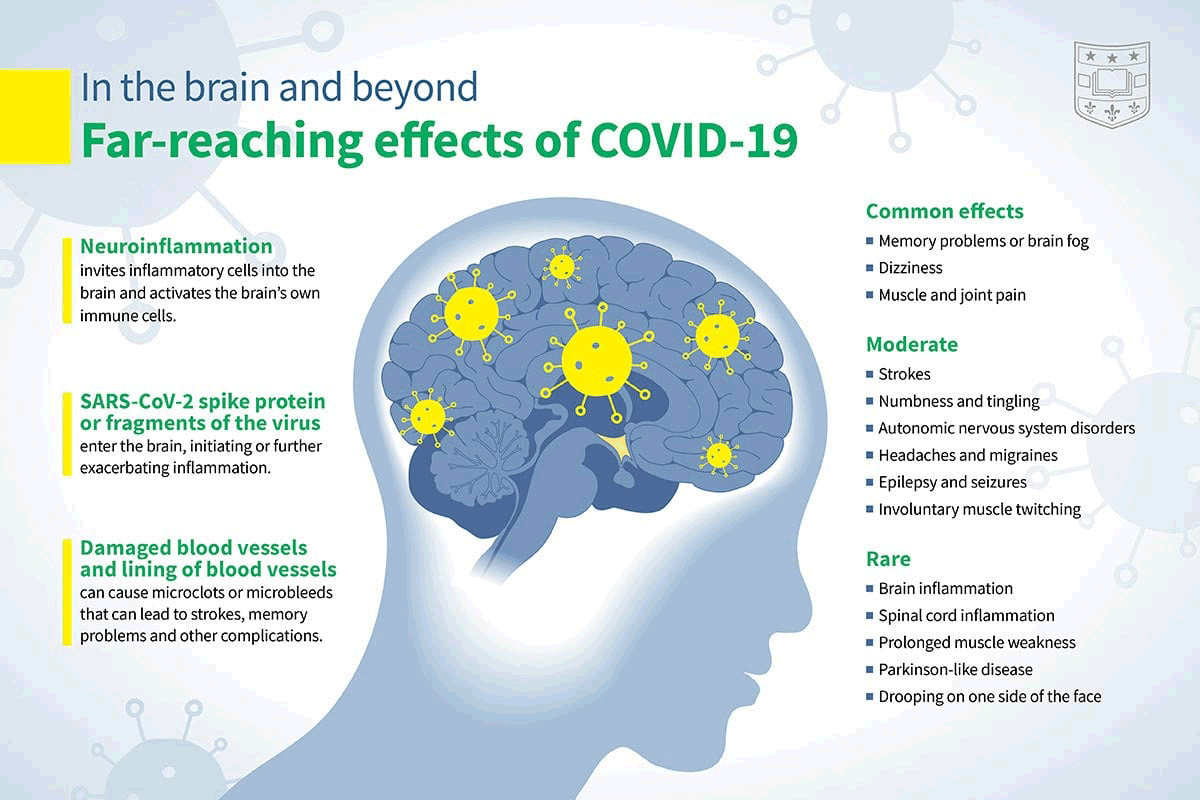
SARS-CoV-2, like its 2002 predecessor SARS-CoV-1, is both a respiratory and a systemic virus, with an extremely broad cell-type and tissue-tropism covering nearly the whole body.
Its ability to infect and do damage to lungs, hearts, kidneys, cardiovascular systems and brains is particularly well-documented.
If each subsequent infection results in additional internal organ and immune-system damage, then at some point the damage accumulated – together with the accelerated immune-system aging and normal aging processes – can reasonably be expected to outweigh the protective benefits of immunity developed from previous infections.
SARS-CoV-2 reinfects more frequently than influenza or the common cold, infects a wider range of organs, does more damage and seems capable of persisting in a range of organs.
So if SARS-CoV-2 behaves like a textbook virus – but does more damage more quickly and more regularly – at what point does the body reach its tipping point?
❂
There are two versions of this article: a 7-minute read in simplified language; and the full editorial version complete with references, which is an 18-minute-read and aimed towards the medical and scientific communities.
❦ 7-minute primer ~ ‘SARS-CoV-2 and “Textbook” Immunity’ ➤
❦ Full 18-minute editorial ~ ‘SARS-CoV-2 and “Textbook” Immunity’ ➤
❂
📖 (5 May 2023 ~ The John Snow Project) SARS-CoV-2 and "Textbook" Immunity ➤
© 2023 The John Snow Project.

📖 (5 May 2023 ~ The John Snow Project) SARS-CoV-2 and "Textbook" Immunity ➤
© 2023 The John Snow Project.