📖 Post-acute sequelae of COVID-19: understanding and addressing the burden of multisystem manifestations
❦ ‘Individuals with SARS-CoV-2 infection can develop symptoms that persist well beyond the acute phase of COVID-19 or emerge after the acute phase, lasting for weeks or months after the initial acute illness.
The post-acute sequelae of COVID-19 (PASC), which include physical, cognitive, and mental health impairments, are known collectively as long COVID or post-COVID-19 condition (PCC).
The proportion of patients affected by post-COVID-19 condition might be in the range of 10–30% of those infected with SARS-CoV-2, although understanding of this condition is still evolving.
Socio-economic factors are fundamental determinants of health after COVID-19.
Individuals from low-income and middle-income countries, those from marginalised communities, and those who are socially disadvantaged are probably disproportionately affected.
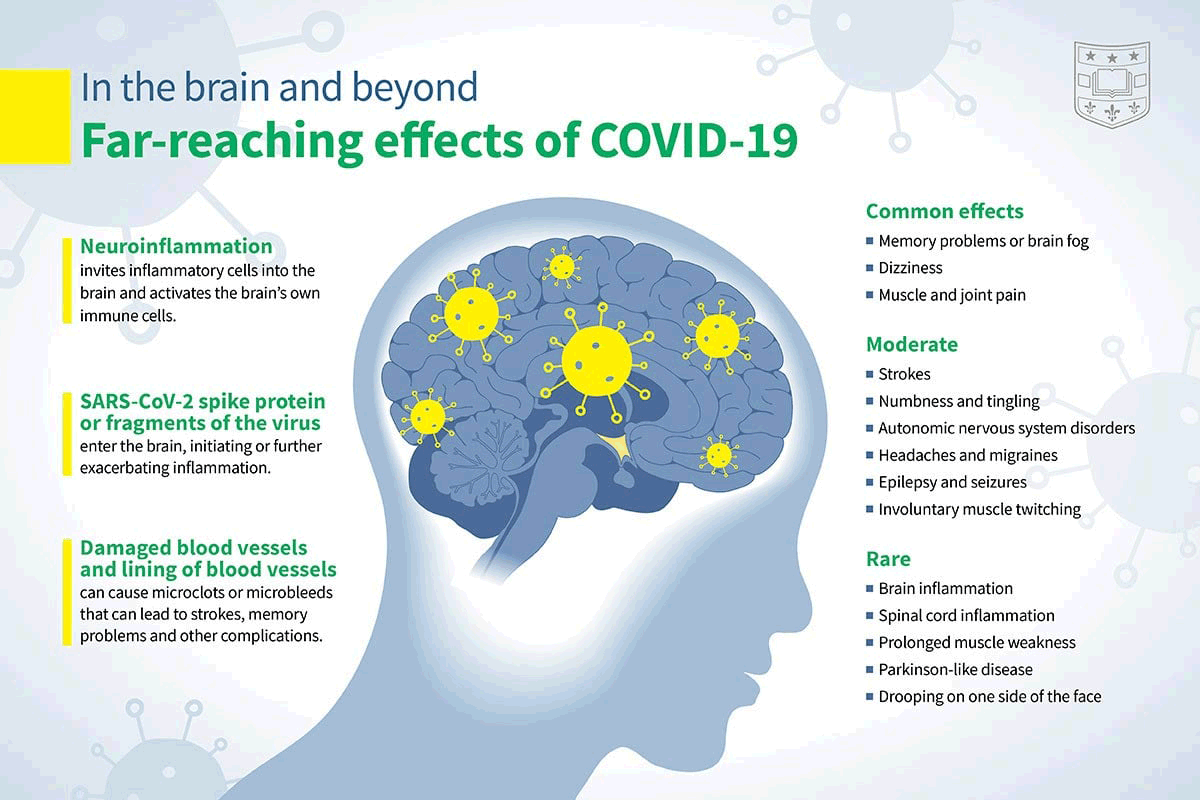
The post-COVID-19 condition is systemic, affecting various organ systems.
PCC results in:
- an increased use of healthcare resources;
- a decreased quality of life;
- an increased susceptibility to subsequent viral or bacterial infection;
- and leads to heightened vulnerability to perioperative morbidity and mortality for individuals who require a surgical procedure for any (unrelated) indication.
With a large and growing global population of survivors of COVID-19, the impact on individuals, healthcare systems, communities, and society is likely to be substantial.
At present, there are no specific treatments for post-COVID-19-condition.’
❂
📖 (17 July 2023 ~ The Lancet) Post-acute sequelae of COVID-19: understanding and addressing the burden of multisystem manifestations ➤
© 2023 Parotto et al / The Lancet.
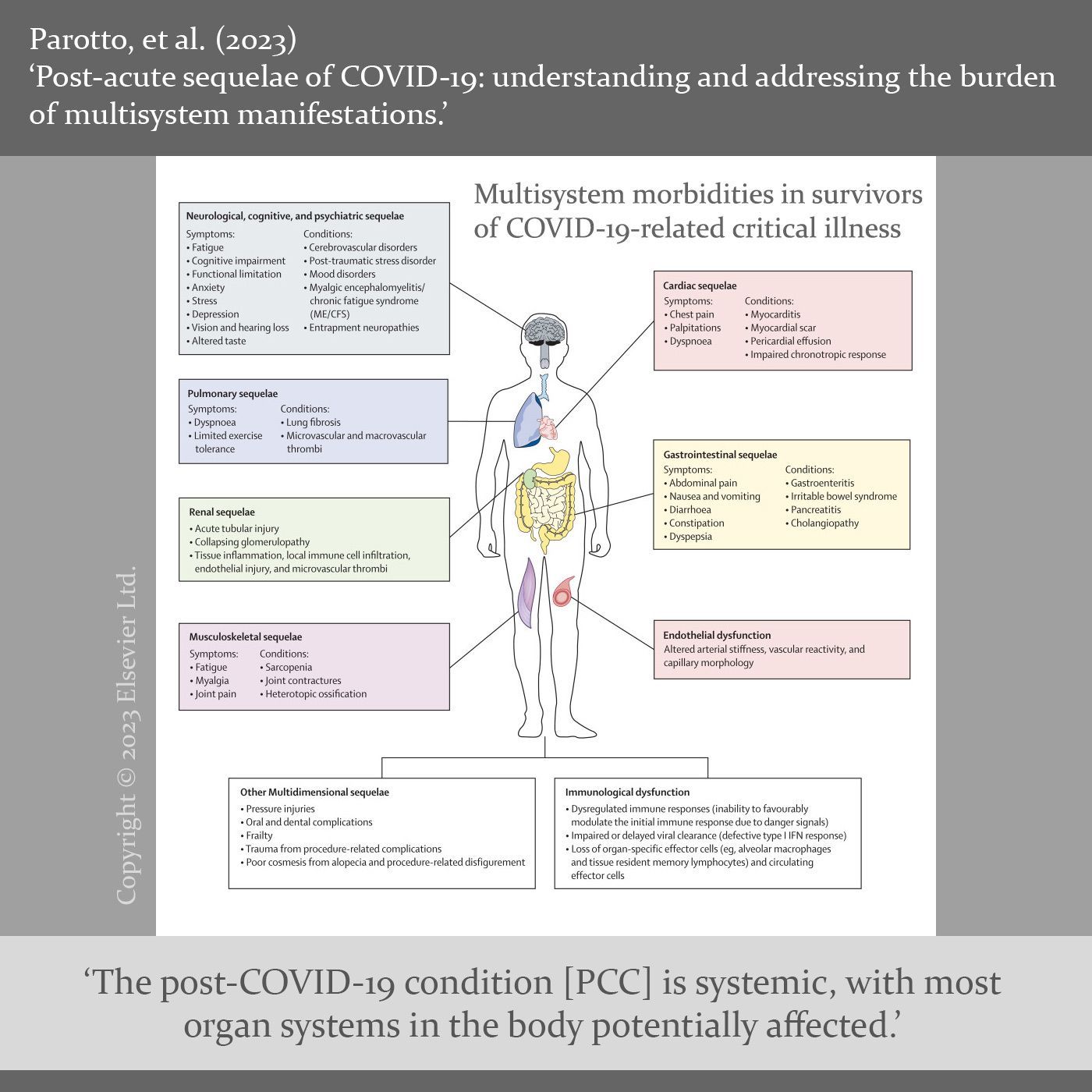
Multisystem morbidities in survivors of COVID-19-related critical illness.
📖 (17 July 2023 ~ The Lancet) Post-acute sequelae of COVID-19: understanding and addressing the burden of multisystem manifestations ➤
© 2023 Parotto et al / The Lancet.