On healthcare workers, Dr. Semmelweis, clean hands, and dirty air
❦ “Whenever I hear someone ask if we’re expected to continue masking in healthcare settings forever, I immediately think of Semmelweis – the man who discovered that healthcare workers’ dirty hands were causing fever and death in patients.
The result of his discovery wasn’t the widespread implementation of hand hygiene though...
Instead he was shunned, ostracized, lost his job and eventually institutionalized. It took around fifty years before the life-saving value of hand-washing was fully recognized in healthcare.
Fifty years.
It turns out that doctors didn’t take kindly to the idea that their own hands were unhygienic – and the source of disease and death for some of their patients.
Despite the evidence, the denial was rampant and it was strong. The majority consensus was that Semmelweis was a crank...
The resistance to the idea that the air we exhale while caring for patients can be unhygienic, and a source of illness and death for some, feels exactly the same to me.
Despite the evidence, the denial is strong. Many prefer to cling to the status quo they knew before the pandemic.
But that status quo was when we didn’t know better, and when we didn’t have such a virulent and dangerous new airborne pathogen in permanent circulation.
Now that we do, and now that we know better, we should be willing to do better.
So if the air we breathe can be unhygienic, and cause illness and death in our patients, and we know there’s a simple, effective solution – filtering it through a respirator – then it seems logical that this would become the new standard in our clinics, hospitals and long-term care facilities.
Permanently.
But as with Semmelweis’ experience, I expect that suggestion to get a lot of pushback, and for it to take a very long time for the medical field to accept that the old status quo is gone, and that masking in healthcare is the new normal.
I just hope it won’t take another fifty years.”
© 2023 Dr. Lisa Iannattone. ➲
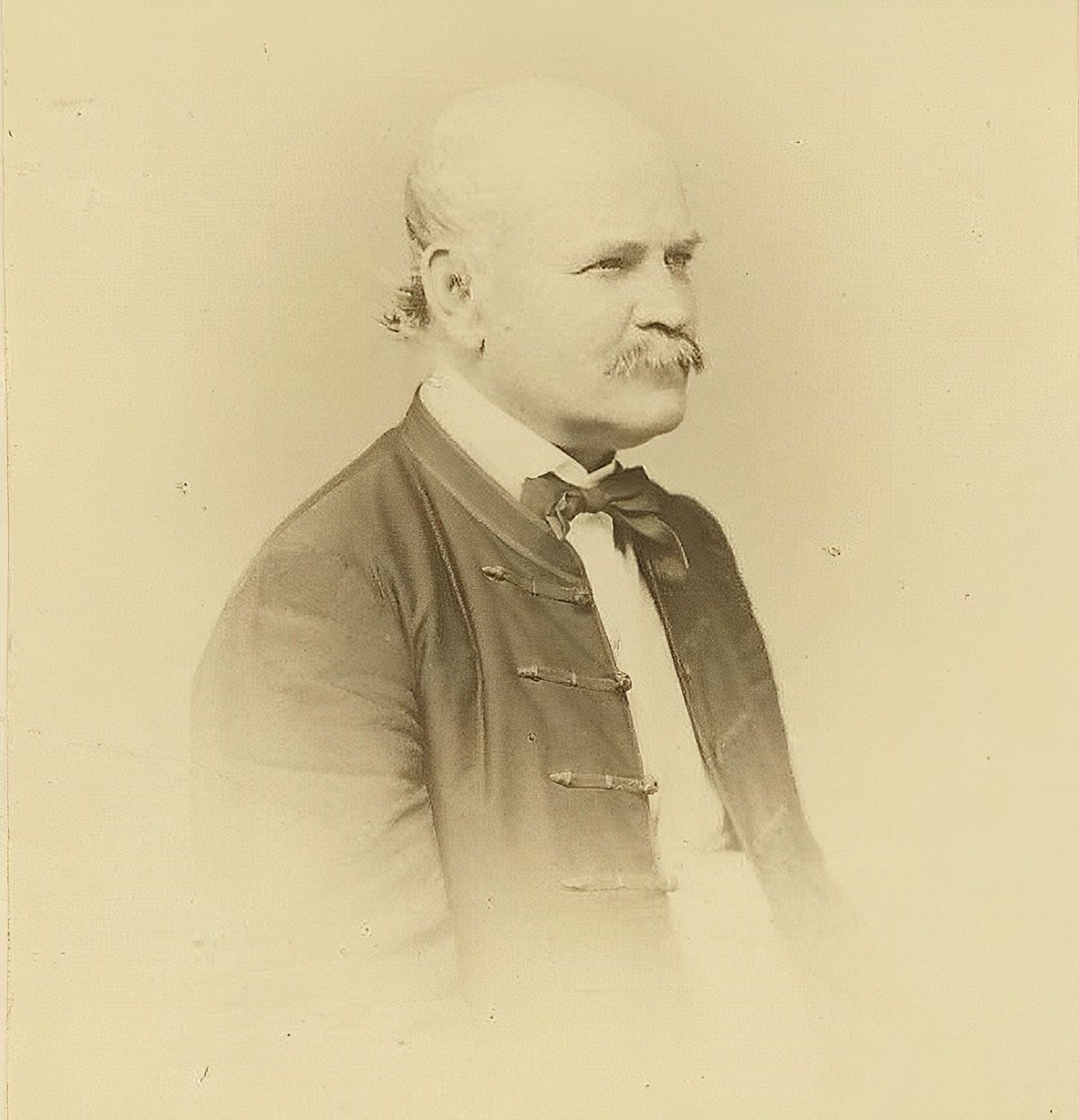
Ignaz Philipp Semmelweis ~ Hungarian physician (1818–1865).
Early pioneer of antiseptic procedures who introduced hand-disinfection standards in obstetrical clinics (1847).
In 1846, Hungarian doctor Ignaz Semmelweis noticed that women giving birth in the medical student / doctor-run maternity ward were more likely to develop a fever and die, compared to the women giving birth in the adjacent midwife-run maternity ward.
Semmelweis imposed a hand-washing policy for physicians, and those with unwashed hands were disallowed into the labor room.
The hand-washing practice for one year led to an unprecedented decrease in maternal mortality, enabling Semmelweis to establish a strong, specific, temporal causal association between unclean hands and puerperal fever.
However, some doctors were disgruntled that Semmelweis was implying that they were to blame for the deaths, and they stopped washing their hands – arguing in support of the prevailing notion of the day that water was the potential cause of disease...
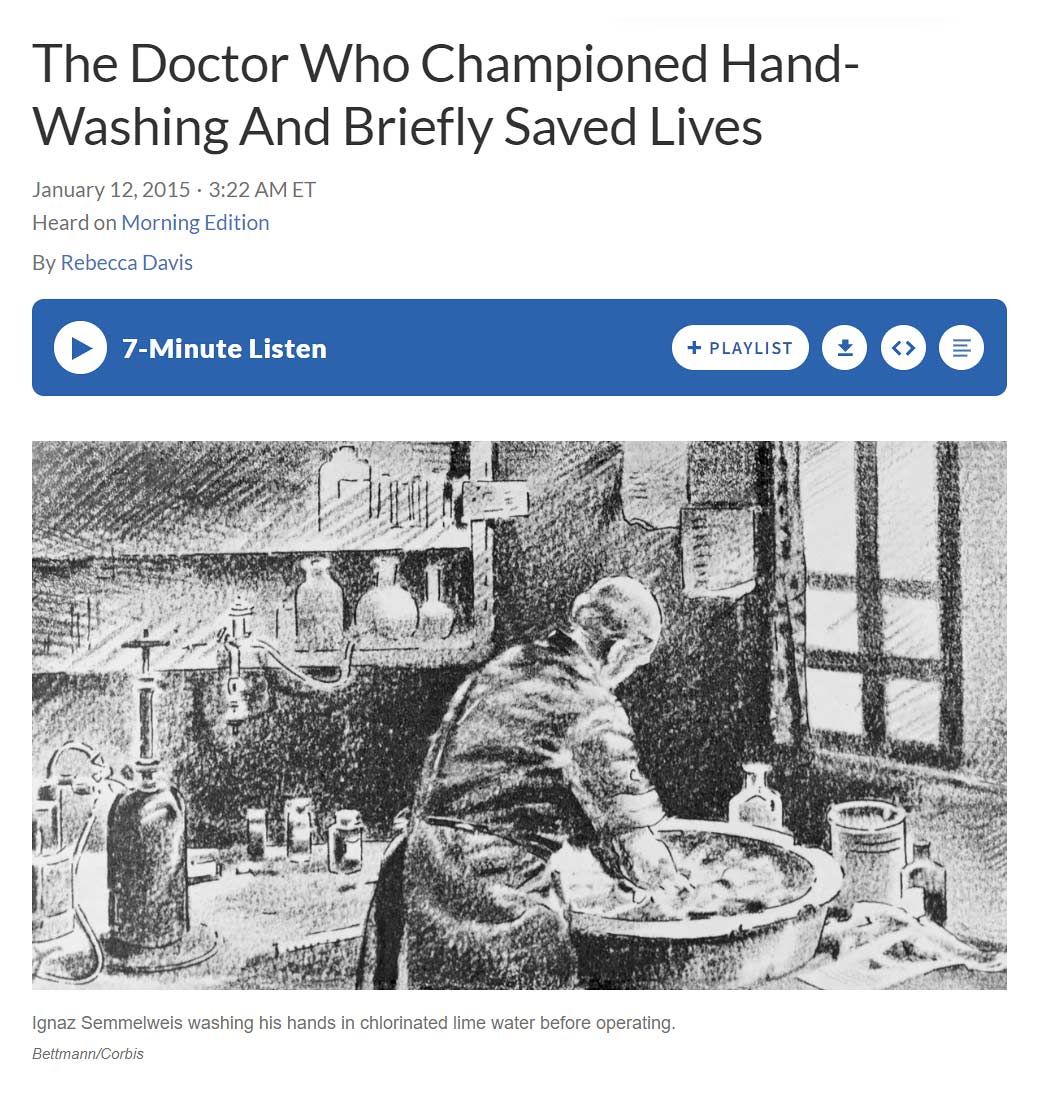
📖 (12 Jan 2015 ~ NPR / National Public Radio) The Doctor Who Championed Hand-Washing And Briefly Saved Lives ➤