📖 Long COVID in children (from ‘Long COVID: major findings, mechanisms and recommendations’)
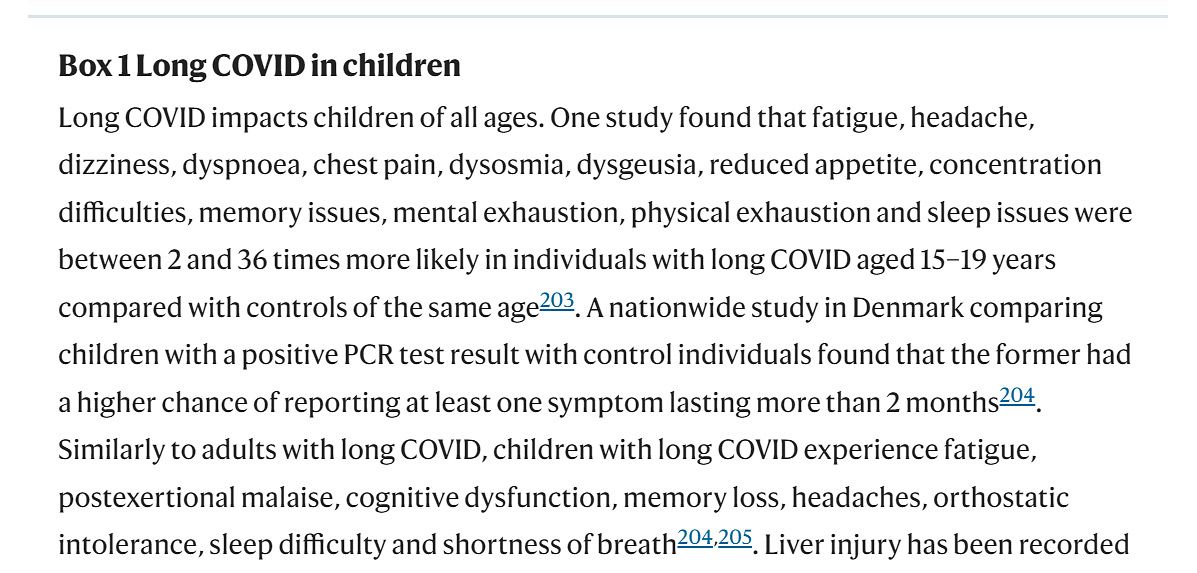
❦ ‘Long COVID impacts children of all ages.
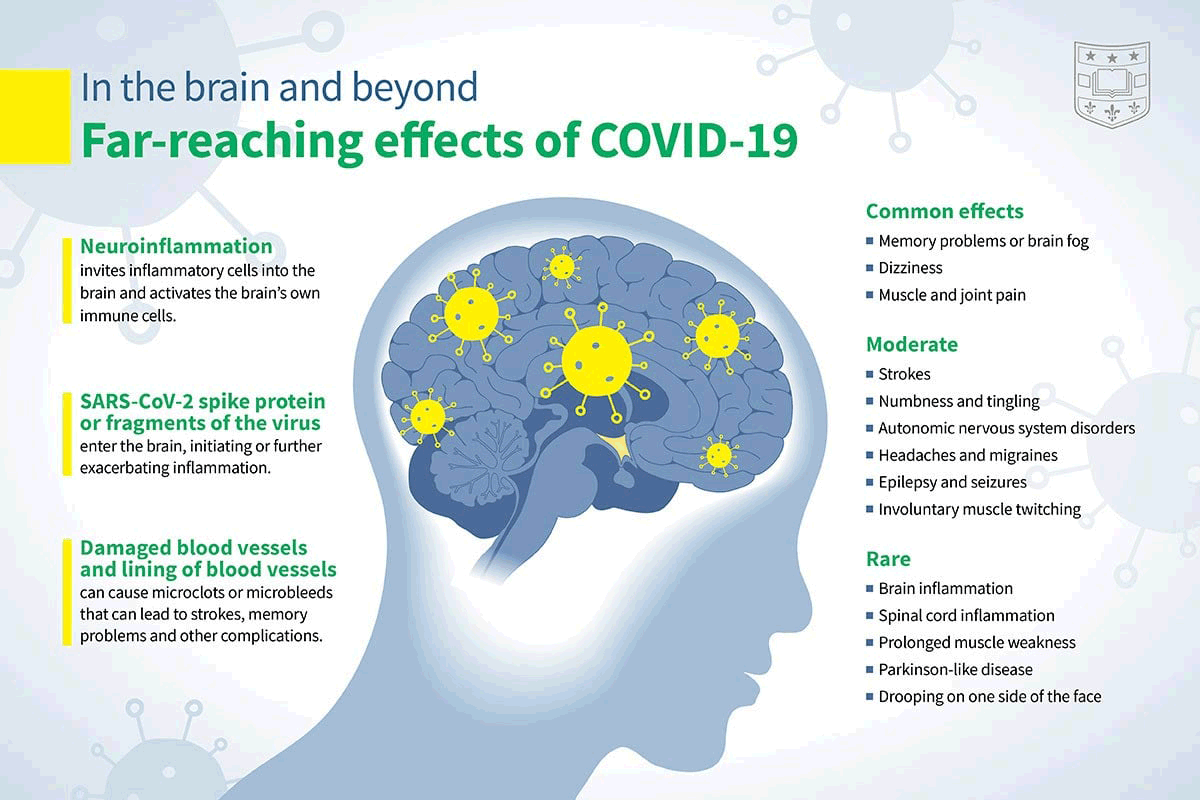
One study found that fatigue, headache, dizziness, dyspnoea, chest pain, dysosmia, dysgeusia, reduced appetite, concentration difficulties, memory issues, mental exhaustion, physical exhaustion and sleep issues were more common in individuals with long COVID aged 15–19 years compared with controls of the same age.
A nationwide study in Denmark comparing children with a positive PCR test result with control individuals found that the former had a higher chance of reporting at least one symptom lasting more than 2 months.
Similarly to adults with long COVID, children with long COVID experience fatigue, post-exertional malaise [PEM], cognitive dysfunction, memory loss, headaches, orthostatic intolerance, sleep difficulty and shortness of breath.
❦ Post-exertional malaise (PEM) = The worsening of symptoms following even minor physical or mental exertion, with symptoms typically worsening 12 to 48 hours after activity and lasting for days or even weeks.
❦ Cognitive dysfunction = deficits in attention, verbal and non-verbal learning, short-term and working memory, visual and auditory processing, problem solving, processing speed, and motor functioning.
❦ Orthostatic intolerance = The inability to remain upright without symptoms.
Liver injury has been recorded in children who were not hospitalized during acute severe acute respiratory syndrome coronavirus 2 (SARS-CoV-2) infections, and although rare, children who had COVID-19 have increased risks of acute pulmonary embolism, myocarditis and cardiomyopathy, venous thromboembolic events, acute and unspecified renal failure, and type 1 diabetes.
Infants born to women who had COVID-19 during pregnancy were more likely to receive a neurodevelopmental diagnosis in the first year after delivery.
A paediatric Long COVID centre’s experience treating patients suggests that adolescents with a moderate to severe form of Long COVID have features consistent with myalgic encephalomyelitis (ME) / chronic fatigue syndrome (CFS).
❦ Myalgic encephalomyelitis / Chronic fatigue syndrome = (ME/CFS) is a condition that causes extreme tiredness and a range of other symptoms.
Other symptoms of ME/CFS may include:
⊙ Tender lymph nodes in the neck or armpits.
⊙ A sore throat that happens often.
⊙ Digestive issues, like irritable bowel syndrome.
⊙ Chills and night sweats.
⊙ Allergies and sensitivities to foods, odors, chemicals, light, or noise.
⊙ Muscle weakness.
⊙ Shortness of breath.
⊙ Irregular heartbeat.
Children experiencing Long COVID have hypometabolism in the brain similar to the patterns found in adults with Long COVID.
❦ Hypometabolism in the brain = Characterized by decreased brain glucose consumption, is a common feature of many neurodegenerative diseases.
The initial hypometabolic brain state created by characteristic risk factors may predispose the brain to acquired epilepsy and sporadic Alzheimer's and Parkinson's diseases.
Long-term pulmonary [lung] dysfunction is found in children with Long COVID, and in those who have recovered from COVID-19.
Children with Long COVID were more likely to have had attention deficit hyperactivity disorder, chronic urticaria and allergic rhinitis before being infected.’
❦ Dyspnoea = shortness of breath, or breathlessness.
❦ Dysosmia = a change in the ability to smell.
❦ Dysgeusia = a change in perception of taste.
❂
📖 (13 Jan 2023 ~ Nature Reviews: Microbiology) Long COVID in children ➤
📖 (13 Jan 2023 ~ Nature Reviews: Microbiology) Long COVID: major findings, mechanisms and recommendations ➤
© 2023 Nature.