📖 Impact of supplementary air filtration on aerosols and particulate matter in a UK hospital ward: a case study
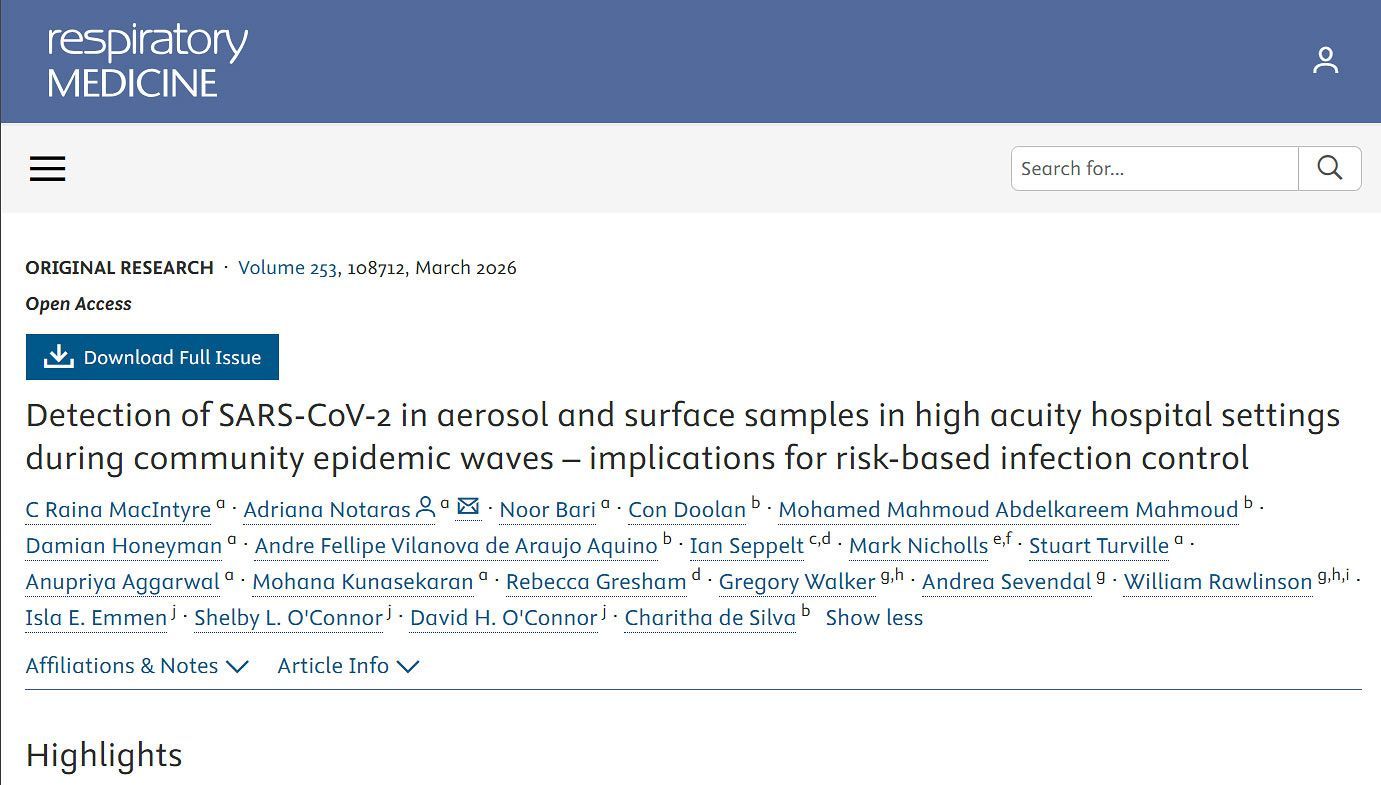
❦ ‘Aerosol spread of severe acute respiratory syndrome coronavirus-2 (SARS-CoV-2) is a major problem in hospitals, leading to an increase in supplementary high-efficiency particulate air (HEPA) filtration aimed at reducing nosocomial transmission.’
➲ Note: A nosocomial infection – also referred to as a healthcare-associated infection (HAI) – is an infection acquired during the process of receiving healthcare that was not present during the time of admission.
‘Air-cleaning units (ACUs) reduce microbial contamination in ward air, demonstrating that the application of a combined HEPA/UV-C (ultraviolet-C) ACU on an older adult inpatient ward reduced airborne particulate matter (PM) levels substantially, most notably in the size range associated with respiratory viruses, such as SARS-CoV-2.
Therefore, such devices may be applicable not only to pathogens traditionally considered airborne, such as measles and tuberculosis, but also where aerial dissemination contributes to the transmission of fungal and bacterial infections, such as with Clostridioides difficile spores.
This study found that airborne particulates associated with human activity migrated considerable distances around the ward, indicating that social-distancing measures alone are unlikely to prevent the transmission of respiratory viral infections and possibly other infections that are aerially disseminated.
Collectively, this suggests that appropriately-sized ACUs have the potential to reduce nosocomial infections, especially in inadequately ventilated hospital wards.’
❂
📖 (23 Feb 2023 ~ Journal of Hospital Infection) Impact of supplementary air filtration on aerosols and particulate matter in a UK hospital ward: a case study ➤
© 2023 Journal of Hospital Infection.